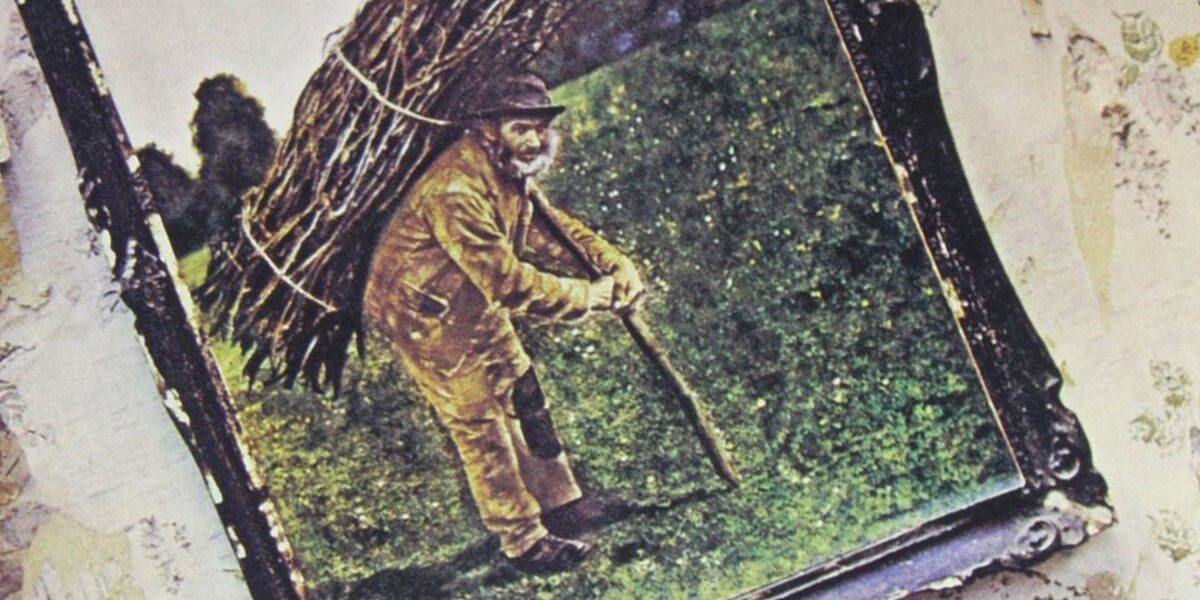

A quick guide to Led Zeppelin IV
- Album sessions Led Zeppelin recorded much of the album at Headley Grange, a rural estate in Hampshire, England.
- Album title The fourth album is commonly called Led Zeppelin IV, although the band released it without a printed title.
- Song rankings This ranking places “Stairway to Heaven” first and “Four Sticks” eighth.
- Release and certification The album arrived on Nov. 7, 1971, and has been certified 24-times platinum.
This guide explains the story behind Led Zeppelin IV and ranks its eight songs, drawing on accounts from the band members about the Headley Grange recording sessions, the album’s untitled release, and the music itself.
Led Zeppelin IV is the common name for the band’s untitled fourth album.
Led Zeppelin recorded much of its atmospheric, influential fourth album at Headley Grange, an 18th-century estate in rural Hampshire, England. The surroundings provided a setting for music that also appeared on the preceding studio album and later on Houses of the Holy and Physical Graffiti.
“We were all living in the same house,” Jimmy Page later told Music Connection magazine, “and eating, sleeping and making the music and recording the music. There might even be some eating in the music, too. We had this sort of work ethic where we were all together, and the possibilities were limitless, really.”
How do the songs on Led Zeppelin IV rank?
This ranking orders all eight songs on Led Zeppelin IV, from “Four Sticks” at No. 8 to “Stairway to Heaven” at No. 1. The list also describes how the band developed each track.
This ranking places “Stairway to Heaven” above the album’s other seven songs.
The lead single, “Black Dog,” became Led Zeppelin’s highest-charting U.S. single, but the album’s songs were also often heard together as a continuous listening experience. The follow-up to Led Zeppelin III was released on Nov. 7, 1971, and has since been certified 24-times platinum.
“The fourth album showcases perfectly everything to do with the band, whether it’s the individual performances or how it works collectively, the production and everything to do with it,” Page told the Quietus. “It’s a really strong time capsule. That’s what it is and so different from the albums that came before.”

Stepping away from fans and a sometimes dismissive press also gave Led Zeppelin room to reflect on its growing career. “After all we had accomplished, the press was still calling us a hype,” Page told Rolling Stone. “So, that is why the fourth album is untitled.”
READ MORE: Ranking Every Led Zeppelin Album – No. 7 Might Surprise You
Page initially declined interviews and offered no further explanation. During the more than year-and-a-half silence, listeners adopted several names for the LP: Untitled, Led Zeppelin IV because of its place in the discography, and Zoso or Four Symbols after the runes on its cover, which appeared to represent the band members.
Robert Plant called it “just ‘the fourth album.’ That’s it.” He later acknowledged that he did not know what anyone else should call the LP.
Where can you hear Led Zeppelin perform “Black Dog”?
Which song ranks first on Led Zeppelin IV?
“Stairway to Heaven” ranks first in this list of Led Zeppelin IV songs. The ranking considers the track alongside the album’s other seven songs and their creation stories.
“Stairway to Heaven” is the top-ranked song in this retrospective.
Led Zeppelin later recorded Presence and In Through the Out Door in Munich and Stockholm, respectively. John Paul Jones did not necessarily miss the cold, damp Headley Grange manor.
“Headley Grange was cold, damp, dirty, smelly,” Jones told Mojo. Page viewed the setting differently: “Headley was a bit austere, but there was no ‘let’s get stoned or go to the pub and get pissed.’ That wasn’t our raison d’etre. It was ‘eat, sleep, work.’”
The following ranking revisits all eight Led Zeppelin IV songs, from No. 8 to No. 1.
No. 8. “Four Sticks”
After Led Zeppelin struggled to complete the track, John Bonham saw a solo performance by his hero Ginger Baker, of Blind Faith and Cream, at London’s Lyceum Theatre. Inspired by the performance, Bonham picked up the four drumsticks that gave the song its title.
“It’s astonishing what he’s doing. He’d never employed that style of playing before,” Page said in Mick Wall’s 2008 biography When Giants Walked the Earth. “I can’t even remember what it was called, what the working title was. But it was sure as hell ‘Four Sticks’ after that. Bonzo just took it into another stratosphere.”
Page said the band recorded only two takes of “Four Sticks,” because that was all the musicians could manage.
“We just did two takes of it,” Page confirmed, “because that’s all we could sort of manage.”
No. 7. “The Battle of Evermore”
After “Black Dog” and “Rock and Roll,” Led Zeppelin IV shifts into “The Battle of Evermore,” a mandolin-driven song about good and evil. Listeners have connected its lyrics to J.R.R. Tolkien, but Plant said a book about the Scottish wars inspired him.
Plant said the song’s two-part story called for a second voice. “I started to write it so that you had a section A that told the story that would be a disaster, and I had a section B, which was the triumph and the rallying – and I tried to sing them both. And it was a very, very insane idea,” he explained on his Digging Deep podcast.
Plant invited Sandy Denny, the late Fairport Convention singer who had shared a stage with Led Zeppelin at the 1970 Bath Festival of Blues and Progressive Music, to sing on the track. Plant later told Uncut that Denny’s performance strengthened the song’s vocal cohesion.
READ MORE: Ranking All 92 Led Zeppelin Songs
No. 6. “Rock and Roll”
When the band’s attempts to finish “Four Sticks” stalled, Page suggested taking a break or trying another song. Bonham began playing the opening rhythm of Little Richard’s “Keep a Knockin’,” which prompted Page to develop a Chuck Berry-style riff.
Jones and Plant joined in, and Page told the band, “Stop. Let’s work on this.”
“Rock and Roll” became the A-side of the final single from Led Zeppelin IV, with “Four Sticks” as the B-side. Page recalled that the song initially stopped after about 12 bars, but the band heard enough potential to continue working on it.
No. 5. “Going to California”
“Going to California” was a song Page and Plant wrote with admiration for Joni Mitchell in mind. Plant reportedly joked, “When you’re in love with Joni Mitchell, you’ve really got to write about it now and again.”
Mitchell came from Canada and Led Zeppelin from England, but both made journeys to the West Coast and pursued distinct musical paths. Mitchell became part of the Laurel Canyon scene, whose members were not fans of Led Zeppelin.
The band’s admiration for Mitchell was largely expressed from a distance. The song became a pastoral moment on Led Zeppelin IV associated with that admiration.
No. 4. “Misty Mountain Hop”
“Misty Mountain Hop” combines a driving riff and heavy stomping rhythm with lyrics that some listeners have described as dated counterculture writing. The track reflects the band’s ability to combine rock power with hippie-era themes.
Plant defended the song’s ideals in Rolling Stone: “The essence of the whole trip was the desire for peace and tranquility, and an idyllic situation. That’s all anybody could ever want. So, how could it be ‘dated flower-child gibberish’? If it is, then I’ll just carry on being a dated flower child.”
“Misty Mountain Hop” brings together a stomping rhythm, a sawing riff, and counterculture lyrics.
No. 3. “When the Levee Breaks”
“When the Levee Breaks” draws on the blues and credits Memphis Minnie as a co-writer. The Led Zeppelin recording differs substantially from the original 1920s recording by Minnie and Kansas Joe McCoy.
The song refers to the Great Mississippi Flood of 1927, which killed hundreds and displaced thousands. Levees failed at more than 100 locations along the river, releasing muddy water that reached depths of as much as 30 feet.
The recording pairs the song’s expanded lyrics with music that builds a slow, threatening atmosphere. Page described the track’s changing vocal effects and added sounds in Light & Shade: Conversations With Jimmy Page.
“The whole idea was to make [the song] into a trance,” Page said. “If you notice, something new is added to every verse. Check it out — the phasing of the voice changes, lots of backward stuff is added and, at the end, everything starts moving around except the vocal, which stays stationary.”
READ MORE: Top 10 Most Head-Scratching Led Zeppelin Lyrics
No. 2. “Black Dog”
“Black Dog,” the opening track on Led Zeppelin’s untitled fourth album, combines electric blues with a shifting, complex rhythm. John Paul Jones said he wanted a rolling bass part that would not be too simple.
The changing time signature presented a challenge in the studio. Page described one passage as overlapping triplets, while John Bonham completed the turnaround with a steady four-time rhythm.
Page developed a call-and-response vocal approach inspired by Fleetwood Mac’s 1969 U.K. hit “Oh Well (Pt. 1).” Plant added blues-style lyrics, and a Labrador that lingered around Headley Grange inspired the otherwise unrelated title.
No. 1. “Stairway to Heaven”
“Stairway to Heaven” took shape after Plant completed the lyrics and Page developed the music. Page wanted a song that changed as it progressed, an approach he compared with classical music.
“The idea was to have a song which would actually change as we went through it,” Page told Music Connection. “I knew something like that wasn’t necessarily the done thing in popular music. It was done in classical music.”
Page said the lyrics helped complete the performances and gave the band room to shape the song. “Stairway to Heaven” remains a defining track in the group’s catalogue, though Plant has said it belongs to a particular time and argued that “Kashmir” better represents the band’s musical strengths.
Plant once offered $10,000 to a radio station in Portland, Oregon, if it would never play “Stairway to Heaven” again. Page, by contrast, said the song “crystallized the essence of the band.”
Why Doesn’t Denis Leary Understand Why Led Zeppelin Won’t Reunite?
Which Led Zeppelin live albums are ranked?
The gallery ranks Led Zeppelin’s live albums and notes that the band took time to get things right.
The gallery ranks the band’s live albums.
It took a while, but they finally got things right.
Gallery Credit: Nick DeRiso
Listen to Kevin Shirley on the ‘UCR Podcast’
What is Led Zeppelin IV actually called?
The album was released without a printed title, so listeners and critics use names including Led Zeppelin IV, Untitled, Zoso, and Four Symbols.
Led Zeppelin IV is an informal title for the band’s untitled fourth album.
Where did Led Zeppelin record much of the album?
The band recorded much of Led Zeppelin IV at Headley Grange, an 18th-century estate in Hampshire, England.
Headley Grange was a rural recording location for much of the album.
When was Led Zeppelin IV released?
Led Zeppelin IV was released on Nov. 7, 1971, and has been certified 24-times platinum.
Led Zeppelin IV arrived on Nov. 7, 1971.
Which song was Led Zeppelin IV’s lead single?
“Black Dog” was the album’s lead single and became Led Zeppelin’s highest-charting U.S. single.
“Black Dog” was the highest-charting U.S. single by Led Zeppelin.