
Key Insights
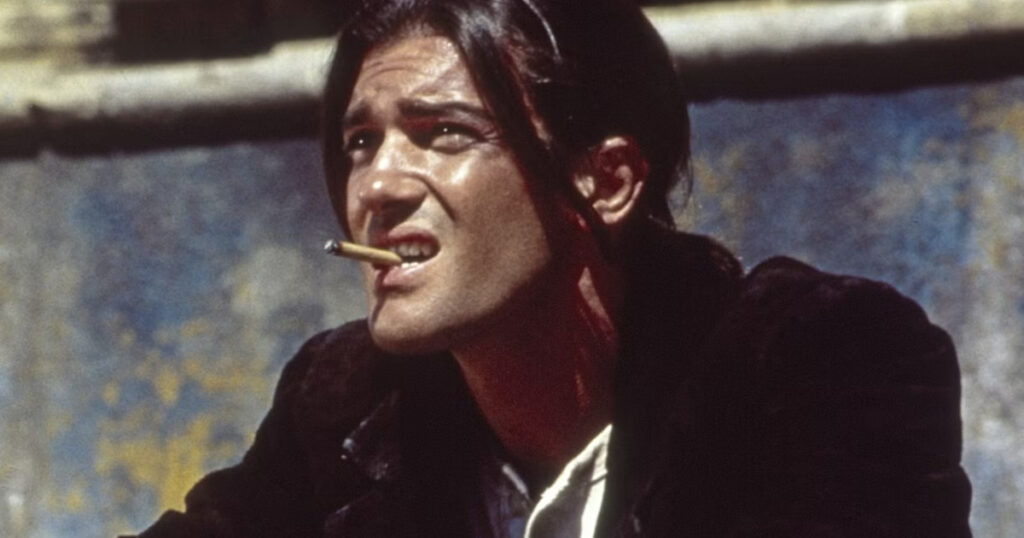
- Explosive Moments: The iconic scene of walking away from explosions has become a staple in action films.
- Historical Roots: This trope can be traced back to earlier films, predating Robert Rodriguez’s work.
- Rodriguez’s Influence: While he may not have invented the trope, his films popularized the modern interpretation.
- Cinematic Technique: The slow-motion explosion walk showcases a character’s confidence and control over chaos.
Is there anything in movies more effortlessly cool than walking away from an explosion?
You know the shot. A building erupts behind our hero, flames shoot into the sky, debris is flying everywhere, and instead of reacting like any normal human being would, they just keep walking. In fact, they don’t even bother turning around. Because apparently once you reach a certain level of confidence, massive explosions are just background scenery.
Tony Stark has done it. Wolverine has done it. Denzel has done it. The Joker almost did it, although his explosion had other plans. It’s become such a familiar piece of action movie language that we barely even think about where it came from.
But how did this trope come to be?
Because Robert Rodriguez claims the version we all know today started with Desperado, it happened almost completely by accident. But start digging into the history and you’ll find earlier examples, a second Rodriguez movie that helped cement the idea, decades of Hollywood copycats, and eventually an entire comedy song dedicated to the simple rule that cool guys do not look at explosions.
So, did Robert Rodriguez actually invent one of the most cool clichés in movie history? Or did he just perfect it?
Let’s find out.
BEFORE THE EXPLOSION WALK
Trying to figure out who first walked away from an explosion is surprisingly difficult because you immediately run into an important question: What exactly counts? Does someone calmly standing near an explosion count? What about walking through one? Do they have to cause the explosion themselves? Does it need to happen behind them? And most importantly, do they have to resist that completely understandable human urge to turn around and make sure the exploding truck behind them isn’t about to send a piece of burning metal flying toward them.
Movies had been using explosions to make their heroes look tough long before Robert Rodriguez showed up. One famous precursor comes from Goldfinger in 1964. James Bond isn’t actually doing the walk we’re talking about, but he calmly lights a cigarette while an explosion rocks the background and everyone else reacts. It establishes the basic attitude behind what would eventually become the trope: Everybody else is impressed or terrified by the explosion, while the cool at the center of the scene treats it like just another day at the office. The Goldfinger moment may be an early relative, even if it doesn’t technically qualify as the full walk-away.
The distinction becomes important because the modern version isn’t simply about surviving an explosion. Action movies have been doing that forever. There’s a very specific swagger involved. The character knows what is about to happen, turns their back on it, and continues moving with complete confidence as the rest of us watch thousands of dollars make Mother Nature take notice.
By the 1980s, we start getting much closer. When you think of cool characters in the ’80s, who’s the first person you think of? If you said the unpleasant boss in 9 to 5, then you’re correct. In 1984’s Cloak & Dagger, Dabney Coleman emerges from the flames after an airplane explosion and calmly walks toward his son. It isn’t exactly the modern version because he’s walking out of the destruction rather than deliberately away from it, but visually, you can see pieces of the language coming together.
Then comes what may be one of the strongest pre-Desperado examples. In 1985’s Remo Williams: The Adventure Begins, Fred Ward walks away from a wrecked car, lights a trail of gasoline, and tosses the flame behind him. The gasoline ignites, the car explodes and Remo continues on his way. Ranker specifically identifies it as an early example of the walk-away explosion, and if we’re being completely literal about this whole thing, it makes it pretty hard to declare Desperado the first movie to ever do it.
Paul Verhoeven gives us another variation two years later in RoboCop. A gas station erupts into flames and Peter Weller’s RoboCop comes walking straight through the fire without the slightest concern, continuing his pursuit while everything burns around him. Again, he isn’t necessarily performing the exact “I caused that and refuse to look back” move, but the attitude is absolutely there. Of course, RoboCop being a giant walking piece of armored machinery gives him a pretty good excuse. If I were bulletproof and mostly made of metal, I’d probably be a lot less worried about the gas station too.
By 1991, Christopher Lambert was doing his own version in the wonderfully insane Highlander II: The Quickening, strolling through burning wreckage after an explosion triggers his regeneration. At this point, all the individual pieces of the trope clearly existed. Characters could ignore explosions, walk through them, emerge from them and occasionally even walk away from something they had intentionally destroyed.
That same year, James Cameron gave us an even more memorable variation in Terminator 2: Judgment Day. During the canal chase, the T-1000’s tow truck crashes into an overpass and erupts into a massive fireball. Moments later, Robert Patrick simply emerges from the flames unharmed as his liquid-metal body reforms into human shape. He isn’t walking away from an explosion in the Rodriguez sense, but the attitude is absolutely there. But more about that later.
What hadn’t quite become standardized yet was the shot.
That version would arrive in 1995. And strangely enough, the guy responsible didn’t even set out to create it.
EL MARIACHI AND THE REBEL WITHOUT A CREW
To understand how Robert Rodriguez ended up accidentally creating one of the most copied shots in action movies, you have to understand how he learned to make movies in the first place.
Long before Spy Kids 3D: Game Over, The Adventures of Sharkboy and Lava Girl, and Shorts, Rodriguez wanted to make a feature film for basically the same reason someone might build a rickety table in their garage before trying to become a carpenter. He needed practice. His plan was to make an inexpensive Spanish-language action movie, sell it to the Mexican home-video market, hopefully make enough money to do another one, and continue learning through experience. Rodriguez has described El Mariachi as essentially a test film that he never expected American audiences to see.
That helps explain why the production has become filmmaking legend. Rodriguez famously made El Mariachi for $7,225, with part of the money coming from participating in medical drug trials. Nearly half of that budget went toward film stock and processing alone. He shot the movie on 16mm over roughly two weeks in Acuña, Mexico, using locations he and star Carlos Gallardo could access for little or no money. There was no conventional crew; actors would help with production whenever they weren’t appearing in front of the camera.
Saving film became especially important. In most cases, Rodriguez only shot one take because every additional foot of film cost money. He was basically editing the movie in his head while filming, grabbing exactly what he believed he needed and then moving on. He has even talked about shooting the entire movie without knowing for certain whether the camera had properly exposed everything until he returned from Mexico and had the footage processed. Somehow, El Mariachi required no traditional reshoots.
That kind of filmmaking forces you to stop thinking about what you wish you had and start thinking about what you can actually use. Rodriguez has explained that he wrote around whatever was available to him. Someone had access to a bus; so there was a bus. Someone had access to a ranch; so the villain lived on a ranch. Real guards could wear their own uniforms; saving money on costumes meant that limitations weren’t something Rodriguez dealt with after writing the movie—they helped determine what it became.
One of the funniest examples happened while they were shooting Mariachi arriving in town. Rodriguez spotted a guy selling coconuts and decided to incorporate him into the movie. They filmed him receiving a coconut and walking away only to realize afterward that he never actually paid for it. A normal production could have simply shot another take; Rodriguez wasn’t wasting film so he fixed this problem with narration explaining that apparently free coconuts were given away in town.
This funny story also says a lot about how Rodriguez approaches filmmaking—something going wrong doesn’t automatically mean that everything is broken; sometimes solutions end up being more interesting than whatever was originally planned.
This mentality would follow him straight into Hollywood.
El Mariachi was supposed to be a cheap learning experience for Spanish-language video markets; however Rodriguez took it to Los Angeles looking for distribution and ended up signing with ICM which led to studio meetings and eventually Columbia Pictures helping bring his film to a much wider audience.
El Mariachi, won Sundance’s Audience Award in 1993 turning its virtually unknown director into one of independent film’s major success stories.
Suddenly Robert Rodriguez had something he never really had before:
DESPERADO GOES BIG
If El Mariachi, was Rodriguez proving what he could do with almost nothing,
Desperado
would be his chance to find out what would happen if somebody actually gave him some bucks.
The jump was enormous.
El Mariachi
cost just over seven thousand dollars while Desperado had roughly seven million dollars budgeted for production!
Antonio Banderas took over central role while Salma Hayek became Carolina; supporting cast included Steve Buscemi Cheech Marin Quentin Tarantino and Danny Trejo.
Rodriguez worked with far more resources but still approached production with basically same mentality trying make movie look much larger than money available.
This attitude is all over finished movie.Desperado
feels like Rodriguez took everything that worked in El Mariachi cranked volume until knob broke off.
The guns are bigger action crazier characters cooler entire movie carries energy someone suddenly realized could actually put images head onto screen.
Rodriguez also remained heavily involved practically every part process.
He wrote directed produced edited film while continuing think economical style developed El Mariachi.
Even when Columbia initially questioned whether unusually short pieces footage could actually be edited together properly Rodriguez knew exactly where each shot belonged because he was essentially cutting movie while filmed.
Then came two grenades minor problem.
TWO GRENADES MINOR PROBLEM THAT CHANGED EVERYTHING!
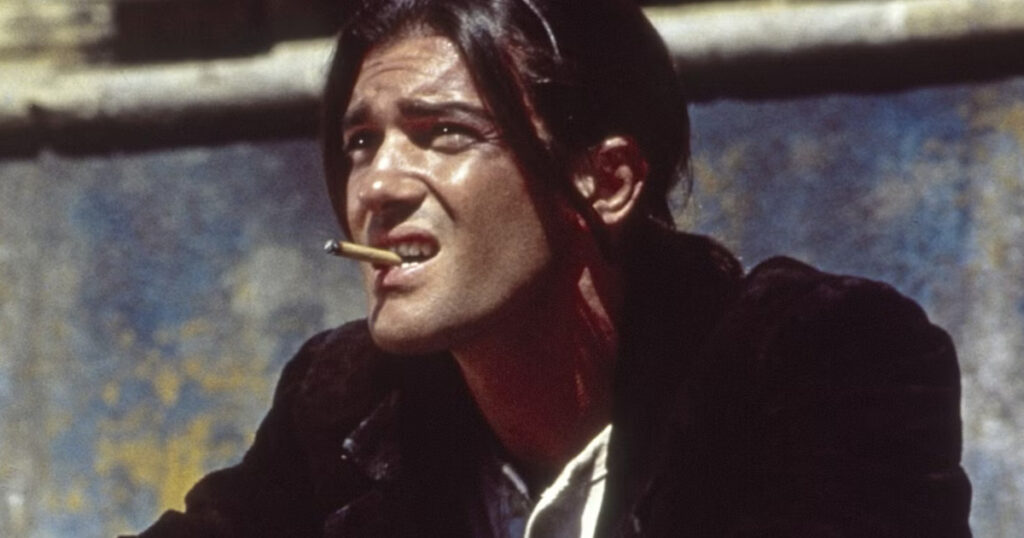
Late in Desperado El Mariachi Carolina are making escape when Banderas drops two grenades alley below them.
What follows image would become entire reason we’re here Banderas Hayek moving calmly away while gigantic orange fireball erupts behind them.
However that was not originally planned.
Grenades were supposed send pieces debris shrapnel flying high enough appear background shot.
When Rodriguez got setup effects crew didn’t have needed send everything high enough past second floor location.
Rodriguez asked what they could instead answer large propane fireball.
There was only one problem fireball would disappear almost immediately.
Rodriguez came up incredibly simple solution shoot slow motion.
Now propane burst vanish instant could expand across frame hang behind actors.
Rodriguez told Banderas Hayek walk quickly look determined as they moved away.
Most importantly told them stop turn around because fireball close enough they could potentially singe eyebrows.
That safety instruction accidentally changed entire feeling scene.
Think about happens Banderas reacts grenades explode turns around now just another person looking cool explosion instead keeps moving suddenly explosion becomes less important fact El Mariachi couldn’t care less about it knew going happen caused Why would need check work?
In slow motion looked incredible.
Rodriguez showed footage James Cameron before Desperado came out remembers Cameron reacting though hadn’t seen exact image done before.
Rodriguez now points scene beginning familiar slow-motion explosion walk although established enough earlier relatives calling absolute first requires pretty specific definition trope.
What we can say is Rodriguez knew shot worked.
We know almost immediately did again.
Makes It A Thing!
Desperado hit theaters August 1995 Less five months later From Dusk Till Dawn arrived January 1996 with Rodriguez directing Quentin Tarantino script George Clooney making one first major jumps television movies.
Rodriguez has said short gap between two films helped explosion walk stick people minds because audiences saw essentially same visual idea twice rapid succession.
This time nothing accidental about it.
At beginning From Dusk Till Dawn Gecko brothers walk away convenience store entire place explodes behind them.
Rodriguez liked happened Desperado didn’t want simply repeat exact same trick solution push joke further instead looking determined while ignoring explosion George Clooney Quentin Tarantino continue talking though giant building currently turning fireball behind them isn’t even there.
Scene designed complicated continuous shot Clooney Tarantino had walk deliver dialogue reach car drive away effects became progressively larger behind them smaller explosions could happen actors close building bigger fireballs saved until reached safer distance.
There plenty obvious things could have ruined take somebody forget line mistime walk trouble car.
Instead all worked.
However camera screwed up.
Steadicam remote focus system suddenly threw image completely out focus moment before correcting itself because shooting film couldn’t fully confirm problem until seeing footage shot designed happen once had rigged performed again additional takes prepared case something else went wrong.
There something almost perfect about that Desperado explosion walk happened planned effect couldn’t done Rodriguez intentionally tried repeat idea next movie THAT shot ran another technical problem both cases solution became part story.
More importantly From Dusk Till Dawn turned accident deliberate filmmaking choice Rodriguez now used same visual idea two major movies released within months each other first one showed looked cool second practically established rules.
Hollywood took from there.
A Hollywood Steal!
Once start looking explosion walk after Desperado begins popping everywhere sometimes characters caused destruction themselves sometimes simply tough explosion barely registered eventually visual became familiar filmmakers use shorthand without needing explain anything person doing it.
John Carpenter gave James Woods great version 1998’s Vampires After Sun-God Motel becomes something cleanup operation Woods’ Jack Crow walks away cigar planted between teeth place burns behind him fits character perfectly Crow spent life killing vampires motel going flames interrupt afternoon.
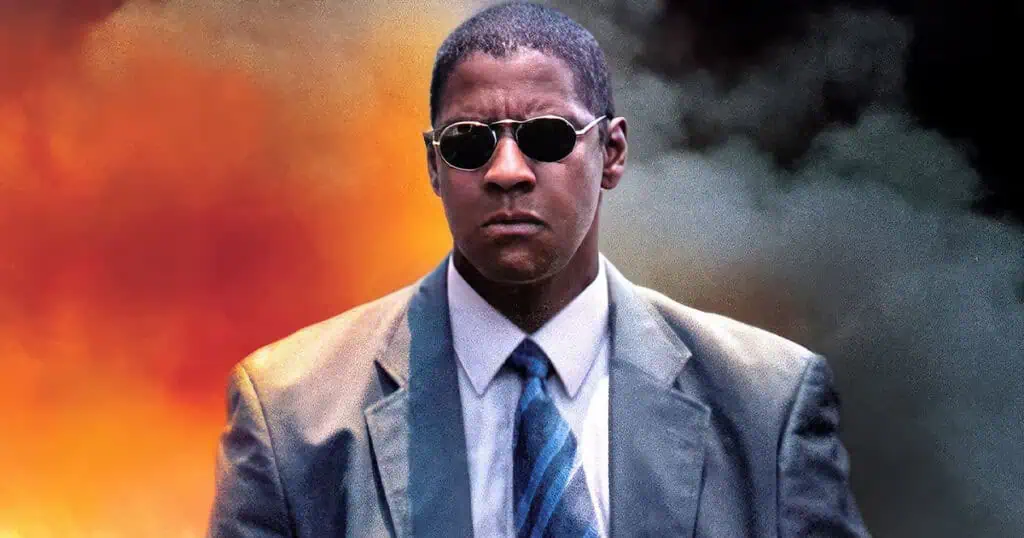
Tony Scott took idea much darker direction Man on Fire 2004 Denzel Washington’s Creasy walks away explosive planted finishes interrogation corrupt police official camera stays close Creasy rather admiring destruction makes complete lack reaction even colder explosion isn’t there make look heroic tells how far man willing go little hesitation remains inside him.
Then Coen brothers gave trope Anton Chigurh No Country for Old Men Chigurh blows vehicle outside pharmacy distraction calmly goes inside steal medical supplies while everyone understandably paying attention vehicle engulfed flames no superhero swagger involved lack concern disturbing reinforces idea Chigurh operates according rules completely different everyone around him does look awesome though.
By 2008 explosion walk basically entered superhero territory Tony Stark demonstrates Jericho missile Iron Man turns away blast throws arms open while desert erupts behind him best introductions Stark’s personality because explosion practically part sales pitch isn’t simply unfazed knows exactly cool looks standing front it.
That same year familiar enough Christopher Nolan get laugh simply screwing expectations Dark Knight Joker walks out Gotham General Hospital series explosions begin going off behind him everything seems proceeding according action-movie rulebook until explosions suddenly stop Joker pauses turns around starts fiddling detonator like someone trying get garage-door opener work before rest hospital finally erupts.
There great story repeated online years claiming explosion actually malfunctioned Heath Ledger simply stayed character improvising detonator until pyrotechnics suddenly came back life makes Ledger sound even bigger genius already was.
Unfortunately not true Sorry nerds.
Pause intentional Christopher Nolan explained special effects supervisor Chris Corbould designed demolition stages so Ledger could initially remain fairly close building during smaller explosions getting farther away enormous blast brought place down production spent months preparing demolition abandoned building because fairly obvious reasons weren’t going get second chance bring whole thing down.
Then X-Men Origins Wolverine came along 2009 decided subtlety cowards Wolverine intentionally uses claws ignite fuel leading back crashed helicopter then turns around walks away while explodes behind him isn’t merely ignoring explosion happens occur dude basically creates own explosion specifically has something cool walk away from.
At point trope gone far possibly could which meant time make fun of it.
A Cool Guy Doesn’t Look!
By 2009 walking away explosion deeply embedded pop culture Lonely Island build entire song around it Cool Guys Don’t Look at Explosions debuted during MTV Movie Awards Andy Samberg Will Ferrell singing basic principle truly cool people never bother looking whatever destruction happening behind them Even J.J.Abrams gets involved joke doesn’t require explanation because point everybody understands shot already!
That probably best indication piece filmmaking officially become cliché First somebody does audiences think looks cool Then other filmmakers copy still looks cool Eventually enough people copied everyone notices pattern comedy writers can reference without bothering explain talking about!
And yet explosion walk never really disappeared!
That’s because dumb whole thing still works!
A Why Does It Work?
Walking away from explosion makes absolutely sense think more five seconds Explosion loud hot unpredictable In fact turn around when somebody drops plate restaurant gas station blows behind probably glance shoulder see just happened!
That completely normal human reaction exactly makes movie version work!
Person doesn’t look appears completely control already know happened behind caused Everyone else reacting destruction while mentally moved whatever comes next Explosion may biggest thing happening scene audience character almost irrelevant!
That’s why exact same visual can communicate completely different things depending who doing With Tony Stark means arrogance swagger With Wolverine means toughness With Creasy means cold determination With Anton Chigurh makes seem almost human Explosion changes character changes tone changes basic message stays remarkably consistent!
This person does scare easily!
There’s also something inherently cinematic about In real life explosions horrifying Movies spectacle Putting calm human figure front all mayhem gives audience two things look at once enormous destruction came see character apparently thinks cooler all!
DID ROBERT RODRIGUEZ REALLY INVENT IT?
Which finally brings us back Robert Rodriguez!
If asking whether Desperado contains first moment film history where somebody walks without reacting explosion then no There clear earlier examples variations Cloak & Dagger Remo Williams RoboCop Highlander II all got first form another larger idea hero appearing completely unfazed destruction goes back even further
But becomes lot more convincing talking specific modern version shot
Seeing those two movies close together helped image take hold considering recognizable trope became afterward hard argue didn’t play major role popularizing!
Best part none this came Rodriguez sitting around trying invent next great action-movie cliché It came exactly same filmmaking philosophy made El Mariachi possible
Effect wanted available What IS available?
A propane fireball
It disappears quickly Shoot slow motion
Actors close enough potentially singe eyebrows Tell keep walking don’t turn around
Suddenly production problem becomes cool shot cool shot becomes something Rodriguez deliberately uses again Other filmmakers pick up image spreads throughout action movies thrillers superhero films until eventually people writing comedy songs about!
That’s extremely Robert Rodriguez way movie cliché born!
Maybe didn’t technically invent walking away explosions But damn sure showed Hollywood incredibly cool could look.
The post Did Robert Rodgriguez Invent This Classic Hollywood Trope? appeared first on JoBlo.









