Pluto TV launched on April 1, 2014, featuring short-form content across mobile before being picked up by Viacom in January 2019 for $340 million. They soon turned their attention to television, pioneering the concept of free ad-supported streaming television (FAST) and growing to 80 million monthly active users as of April 2023. It has established itself as the go-to destination for movies and classic TV shows like Family Ties, Cagney & Lacey, and Perry Mason. You can now add the Star Trek franchise to their impressive list of content, with (most) of the TV series and all 13 movies available on the streamer as of August 14th, 2026.
Star Trek Has a Long History of Places It’s Called Home Before Pluto TV
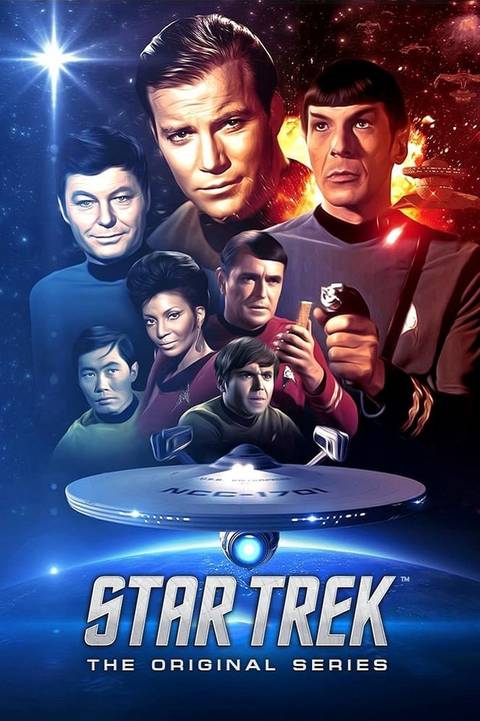
The brainchild of creator Gene Roddenberry, Star Trek: The Original Series premiered on NBC on September 8, 1966. Conceived as “Wagon Train to the Stars,” the series was “built around characters who travel to other worlds and meet the jeopardy and adventure which become our stories.” While that basic structure was left intact (and alluded to in the famed opening monologue as “to boldly go where no man has gone before”), the series was unlike any other science-fiction property to that point in execution. It showed humanity working side by side with alien lifeforms, eschewing the “shoot first, ask questions later” mentality that dominated the genre, and made less-than-subtle social commentary about hot-button topics like war and diversity. Canceled in 1969, the series rose from the ashes through syndication, prompting NBC to launch Star Trek: The Animated Series in 1973, running on Saturday mornings for two seasons.
<label for="" q7b ""class="" option-btn option-btn-cq-opt-cq-opt-cq-opt-cq-opt-cq-opt-cq-opt-cq-opt-cq-opt-cq-opt-cq-opt-cq-opt-cq-opt-cq-opt-cq-opt-cq-opt-cq-opt-cq-opt-cq-opt-cq-opt-cq-opt-cq-opt-cq-opt-cq-opt-cq-opt-cq-opt-cq-opt-cq-opt-cq-opt-cq-opt-cq-opt-cq-opt-cq-opt-bb-bb-bb-bb-bb-bb-bb-bb-bb-bb-bb-bb-bb-bb-bb-bb-bb-bb-bb-bb-bb-bb-bb-bb-bb-bbbbbb
<label for="" q8a=""class="" option-btn option-btn-option-btn-option-btn-option-btn-option-btn-option-btn-option-btn-option-btn-option-btn-option-btn-option-btn-option-btn-option-btn-option-btn-option-btn-option-btn-option-btn-option-btn-option-btn-option-btn-option-btn-option-btn-option-btn-option-btn-option-btn-option
<label for="" q8a=""class="" option-btn option-btn-option-btn-option
<label for="" q8a=""class="" option-btn option
<label for="" q8a=""class="" option
<label for="" q8a=""class=""
<label for="" q8a=""class=""
<label for="" q8a=""class=""
<label for="" q8a=""class=""
<label for="" q8a=""class=""
<label for="" q8a=""class=""
<label for="" q8a=""class=""
<label for="" q8a=""class=""
<label for="" q8a=""class=""
The franchise was kept alive through film, with the first, Star Trek: The Motion Picture, premiering in December 1979. It wouldn’t return to television until 1987, when Star Trek: The Next Generation premiered in syndication (prompting the 1960s Star Trek to be tagged as “The Original Series”), followed by Star Trek: Deep Space Nine, also in syndication, hitting airwaves in January 1993. Two other franchise entries — Star Trek: Voyager and Star Trek: Enterprise — aired on fledgling network UPN, premiering in 1995 and 2001 respectively. It would be another 12 years before Star Trek hit television airwaves again, with no less than seven series appearing on CBS All Access/Paramount+ between 2017 and today: Star Trek: Discovery, Star Trek: Short Treks, Star Trek: Picard, <em>Star Trek: Lower Decks</em>, Star Trek: Prodigy, <em>Star Trek: Strange New Worlds</em>, and Star Trek: Starfleet Academy.
Most of ‘Star Trek’ Has Beamed Aboard Pluto TV
That’s four homes over the course of 60 years for Star Trek, with Pluto TV now the fifth. That said, it isn’t quite the coup one might think for the FAST platform: Pluto’s parent company is Paramount Skydance Direct-to-Consumer, so they have access to Paramount’s extensive library of content (but not exclusively, as Pluto TV boasts content from other studios as well). They are also not the only place to find Star Trek either, with all Star Trek content still available on Paramount+.
Pluto TV, however, is the only place to find Star Trek content for free, and that is an important distinction. Paramount certainly didn’t have to beam Star Trek onto the USS Pluto. They could just have easily kept the franchise exclusive to Paramount+ subscribers alone. But it is a savvy move for the conglomerate, allowing the content to be available for everyone and, in turn, generating interest among subscribers and non-subscribers alike for a franchise celebrating its milestone 60th anniversary this year.
Also working in Paramount+’s favor? The fact that not all Star Trek content has been made available. Pluto TV has all thirteen films, but only five series: The Original Series, The Next Generation, Deep Space Nine, Voyager, and Enterprise. So once old and new Trekkers burn through it all in a massive 551-hour binge, they’ll have to subscribe to Paramount+ to watch anything from Star Trek: Discovery forward. Of course, some would still prefer to watch their Star Trek favorites on Paramount+ to avoid the ads. But for those of us who grew up timing bathroom breaks with commercial breaks, it’s not an issue. And if we can do it, PVR princesses, then so can you.

Here you can find the original article; the photos and images used in our article also come from this source. We are not their authors; they have been used solely for informational purposes with proper attribution to their original source.[/nospin]