If you’re a sci-fi fan, there’s likely been a time in your life when you’ve been show-surfing and stumbled upon a classic of a bygone era. Maybe it was The Day the Earth Stood Still or The Man From Planet X, but so many of these early sci-fi films seem to share a common thread. Extraterrestrials either land on Earth or humankind reaches out into the stars and eventually other planets. Either way, we humans are faced with a life form we’ve never seen before and have no understanding of. In these films, extraterrestrials are often met with suspicion, an intent to exploit them, or even outright violence.
One might chalk some of this up to social commentary of the time period, as 1950s science fiction, in particular, was steeped in the nuclear arms race and the rising panic instilled through McCarthyism. However, even today, there are films where extraterrestrial life is immediately acted upon in an outright hostile manner. That being said, some stories now see humanity coexisting with a menagerie of alien life — and it can all be linked back to Star Trek.
Star Trek’s Prime Directive Was First Introduced in ‘The Original Series’
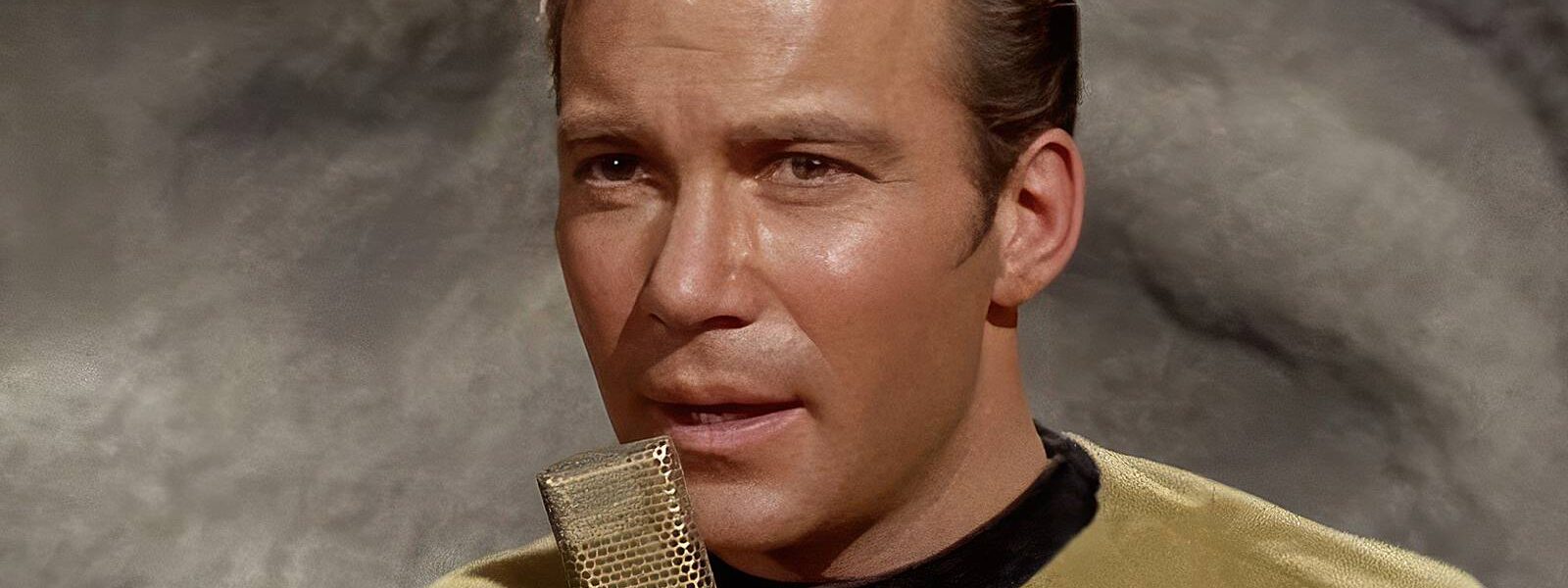
One of the biggest reasons can be traced back to the 1960s with the bright future of Star Trek: The Original Series. In Gene Roddenberry‘s vision of humanity’s next steps, we’ve turned our eyes to the stars, joining the intergalactic community as part of the United Federation of Planets. Starship captains venture into the unseen reaches of space, discovering worlds and brokering peace and collaboration between countless sentient species well beyond our own solar system. Some, even back during Star Trek‘s debut, likely wondered: if you’ve got such advanced technology at your command, why not just take what you want or do as you please? Thankfully, Roddenberry was forward-thinking about this question as well, resulting in Starfleet’s Prime Directive, also known as General Order 1.
Under this Starfleet regulation, it’s expressly advised that officers do everything in their power not to interfere with the development of another society or culture, even if the desire to intervene is for positive reasons. Throughout the Federation, its many races came to the same conclusion: People showing up with high-tech compared to the native population doesn’t tend to end well, regardless of the intent of the visitors. Captain Jean-Luc Picard (Patrick Stewart) puts this into perspective beautifully in <em>Star Trek: The Next Generation</em> during the episode “Symbiosis,” stating, “History has proven again and again that whenever mankind interferes with a less developed civilization, no matter how well-intentioned that interference may be, the results are invariably disastrous.”
Star Trek’s Prime Directive Was a Unique Concept for the Sci-Fi Genre
Even if the phenomenon isn’t violent, Captain Picard has a very good point. Just the idea of a more advanced civilization existing out there can cause severe ripples through even the most unified group of people. Thinking back to The Day the Earth Stood Still, humanity’s first reaction to an otherworldly being wasn’t positive. The benevolent extraterrestrial Klaatu (Michael Rennie) simply arrived with goodwill (and even a gift for the American President, had a nervous soldier not damaged it first) to provide humanity with a warning: That our development of atomic weapons was concerning the community beyond our own planet. Before we even had the chance to hear Klaatu out, however, he was shot by the military and placed under guard while his saucer was inspected. For a guy who was just trying to do mankind a favor, we reacted about as well as one would expect given post-WWII anxieties.
This is exactly what makes the concept of the Prime Directive so special during a crucial time in sci-fi. Starfleet officers take an oath to honor the tenets of the Prime Directive, with many openly stating that they would rather put their lives and those of their crew on the line to avoid violating the organization’s biggest rule. In reality, things aren’t always as cut and dry, as more than a few episodes in the entire Star Trek franchise deal with the inherent dilemma at the heart of the Prime Directive. Sometimes a violation is unavoidable, and officers have to simply do the best they can to minimize the damage. Depending on the show in question, the Prime Directive is a little more… flexible, but its core principles nearly always remain intact. Until a civilization has developed warp technology and can introduce itself to the intergalactic community, maybe the Federation doesn’t drop Starfleet on its planet, waving tricorders and phasers around. Even if the civilization in question is causing self-inflicted issues, every society has growing pains. It doesn’t seem unreasonable to bring a people along at their own pace as opposed to scaring the hell out of them or prompting a violent response.
Star Trek’s Prime Directive Led to a Definitive Shift in the Sci-Fi Genre

Image via Paramount Pictures
Although it’s better in theory than in practice in many Star Trek episodes, the idea of the Directive showed future science fiction aficionados that we didn’t have to blast our way through alien species we encountered. In-universe, it’s also what separates the races of the Federation from the more domineering views of the Klingon Empire or the Romulan Star Empire, who have fewer scruples about exploiting and interfering with others. The Prime Directive is far from an absolutist doctrine, but it fosters a remarkable amount of restraint within Starfleet’s technological prowess. For fans in particular, we’ve seen the result of unfettered abuse of technology in the franchise’s Mirror Universe, where Starfleet is the iron fist of the fascistic and human-centric Terran Empire. A galaxy brought to heel under force is a galaxy that has lost its freedom and self-determination, and it can all result from a mindset that is anathema to the Prime Directive.
In the wake of Star Trek’s Prime Directive, we’ve broadened our media horizons to include possible futures we often didn’t consider during the Cold War era. Steven Spielberg‘s E.T.the Extra-Terrestrial follows a child attempting to help a new friend get home beyond the stars. <em>The </em>Hitchhiker’s Guide to the Galaxy shows the incredible whimsy of existing in the universe, even after Earth is in the rearview. Arrival even puts us back in the position of less-advanced civilization thinking worst about our extraplanetary visitors until we realize that much like Klaatu they want to do us a favor. Maybe these tentacled folks aren’t living up to what one might expect from them but film’s perceived panic and understanding are wiped away once we’re able to communicate with our new visitors. Compared to earlier science fiction where humanity so often sought to conquer or immediately perceive threats where none existed all these films and many more are a significant sign of a paradigm shift in genre.
Even today Roddenberry’s vision is incredibly bright compared to much of science fiction. Star Trek has surely endured many dark moments and there’s not a thing wrong with grittier sci-fi media in general but galactic community pushing for equality and cooperation is one that can be inspiring for many. It’s worldview that many science fiction lovers can imagine living in. As cool as movies like Blade Runner, Star Wars, or Alien are being part their universe would likely be very different proposition. Earth ravaged by corporate greed? A violent authoritarian Galactic Empire imposing its worldview? Wealthy moguls attempting capture hostile life forms for war? When you put it that way letting Mintakans figure things out before joining wider community out space doesn’t sound so bad. They can take their time along with plenty other pre-warp civilizations Starfleet never out things do or places be.