Key Insights
- Common Experience: Many women feel discomfort in clothing that seems fine, indicating a deeper issue with fit systems.
- Fit System Flaws: The current fashion fit system often fails to accommodate diverse body shapes, leading to widespread dissatisfaction.
- Cultural Influence: Runway standards heavily influence what is considered stylish, often marginalizing many body types.
- Empowerment Through Knowledge: Understanding fit can transform shopping experiences, allowing women to make informed choices.
Most women know this feeling, even if they have never named it precisely. You put on a dress that should work in theory. The color is good, the silhouette is current, the overall look is not bad, and yet something in your body keeps insisting that it is off. You tug at the shoulder, shift the hem, smooth the waist, and still cannot shake the sense that the dress is wearing you instead of the other way around.
That is exactly the kind of moment that sparked this piece. In a recent Reddit post titled “I think it looks good but something feels wrong…,” a woman shared an outfit she genuinely liked but could tell was not quite working, then asked strangers to help her understand why.
Threads like that are everywhere in women’s fashion spaces, and they reveal a bigger truth: when something feels off, most of us have been taught to suspect our taste or our bodies first, rather than questioning the fit system that produced the clothes.
Fashion Still Has A Default Body

The modern fit system still relies on the fiction that there is a single neutral body from which all other sizes can be sensibly scaled. Brands build around a fit model, create a base pattern, and then grade that pattern up or down across a size range. On paper, it sounds efficient. On real bodies, it often falls apart. A size can get wider without getting smarter. A bust can still pull while the shoulders slip. A waist can gap while the hips strain.
That disconnect would be easier to excuse if it affected only a small corner of the market, but it does not. According to about 54 percent of U.S. women who wear size 14 or above, the so-called standard-fit logic is already misaligned with the huge share of people who actually buy clothes. Once that number is in view, the familiar fitting-room panic starts to look less like personal failure and more like a design system refusing to catch up with reality.
The Runway Still Decides Who Counts

Fit is not just a technical issue. It is also a cultural one. The bodies that dominate fashion imagery shape what gets treated as stylish, normal, aspirational, and worthy of design precision. If runway samples, editorial shoots, and trend presentations continue to center on the same limited frame, the rest of the market inherits that bias.
A runway tracking study found that fewer than 1% of models at major fashion weeks were plus-size, while straight-size bodies still accounted for the overwhelming majority of appearances. That matters because runway influence does not stop at luxury fashion. It shapes sample selection, trend adoption, silhouette emphasis, and the visual logic that filters down to everyday retail. When one body remains the visual default, every other body is subtly asked to adapt.
The Fitting Room Becomes A Confidence Test

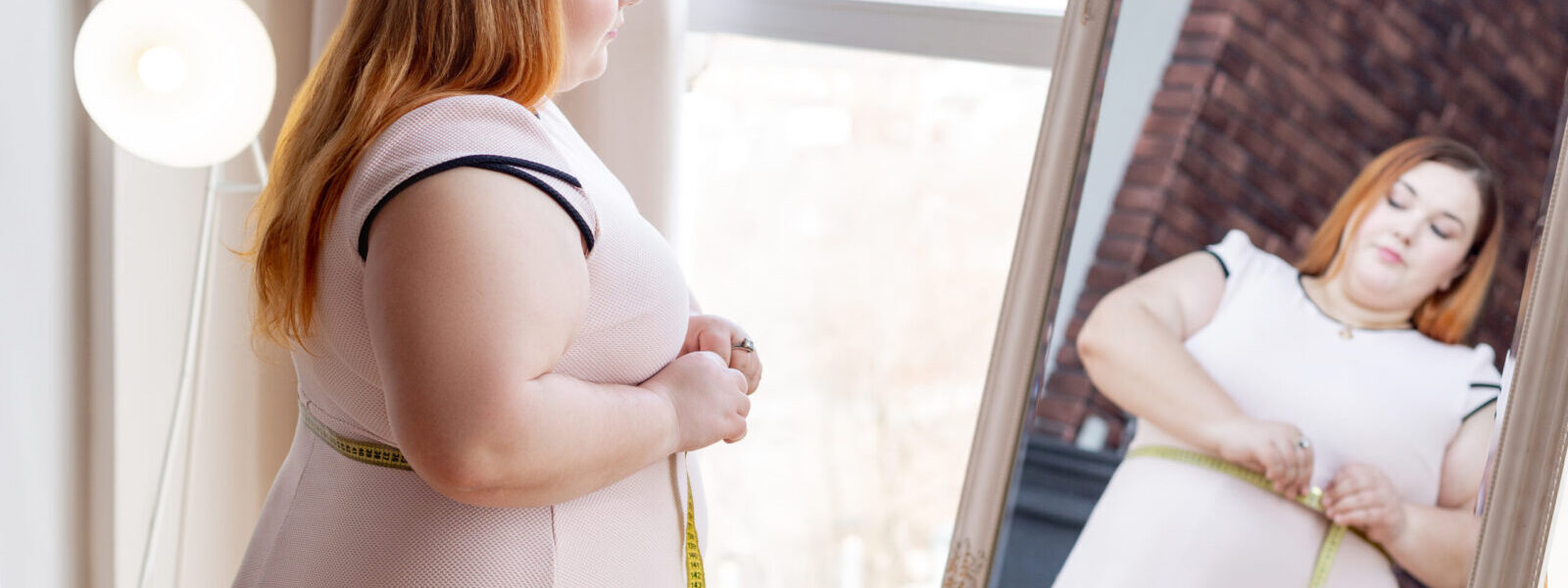
Because fit is framed as objective, women often absorb its failures as intimate truths about themselves. If the sleeves bite into the upper arm, the instinct is to critique the arm. If the waist sits too high, the instinct is to blame the stomach or torso. If the proportions feel awkward, many women assume they simply do not know how to dress for their shape.
That self-blame carries emotional weight. A body image experiment found that a more self-critical shopping mindset lowered both reported body satisfaction and implicit self-esteem in women, even though nothing about their actual bodies had changed. That helps explain why a dress can be a small aesthetic problem on the rack but a much bigger psychological problem in the mirror.
“Something Feels Off” Is Usually Specific