The Scarlet Witch’s Family and Ultron’s MCU Future Explained by VisionQuest Creator Terry Matalas


What the VisionQuest finale reveals
- Vision’s future: Terry Matalas said the creative team has ideas for what could come next, but Marvel decides the character’s future.
- Vision’s origins: The finale connects Vision and Ultron to a family history involving Virgil Horton, Phineas Horton and Jim Hammond.
- Maximoff reunion: Billy’s arrival was held until the finale so the reunion with Tommy and Vision could land at the story’s most important moment.
- Series conclusion: VisionQuest is described as the final chapter of the WandaVision trilogy, while Matalas expressed interest in exploring the family further.
This interview explains the story choices behind VisionQuest episode 8, “Forever,” and lets readers compare Terry Matalas’s comments on Vision, Ultron and the Maximoff family with the finale’s major reveals.
WARNING: This interview contains major spoilers for VisionQuest season 1, episode 8, “Forever.”
The Marvel Cinematic Universe has completed another major trilogy in the franchise.
The MCU timeline saw Thanos kill Vision in Avengers: Infinity War in 2018, but comic-book stories do not always leave the dead gone. In 2021, as Marvel Studios expanded its continuity with television series on Disney+, WandaVision focused on Wanda Maximoff, played by Elizabeth Olsen, and Vision, played by Paul Bettany. The series began a new chapter for Vision, and it took nearly five years for viewers to see the synthezoid find himself after the events of the Phase 4 series.
VisionQuest released episode 8, “Forever,” on Tuesday, November 10. The finale concludes the latest Phase 6 series and completes the WandaVision trilogy. I spoke with showrunner Terry Matalas a few weeks earlier about the season’s conclusion, its story payoffs and what might come next.
How did VisionQuest connect Vision and Ultron’s origins?
VisionQuest ties Vision and Ultron to an expanded family history, which Matalas said grew from questions about Vision’s appearance and origins. The showrunner described the connection as a way to tell a story about family and generational trauma.
VisionQuest uses the characters’ linked origins to frame its family story.
After the WandaVision finale, Vision reaches a sense of peace with himself. Asked what might follow VisionQuest, Matalas said he, Bettany and James Spader had ideas, while emphasizing that the decision rests with Marvel.
Terry Matalas: “Well, that is above my pay grade. Paul definitely has ideas, and Paul and I have ideas, and James has ideas. We have all sorts of ideas about where this could go next with this family. But it really is up to the Marvel gods as to what they want to do.”
One of the season’s biggest late revelations was that James Spader had another role in the series. After episode 7, the finale introduced Virgil Horton; Matalas explained how the team developed the expanded backstory for Vision and Ultron.
Terry Matalas: “It was really about telling a family story. You start to ask why Vision looks like Vision. Why doesn’t he look like Edwin Jarvis, the butler? The Synthetic Man existed because you saw him in Captain America and Phineas Horton. In the comics, Vision is created from parts of Jim Hammond, so I asked myself, ‘Could he be made from source code that goes back to the 1920s?’”
“That led to the question of that character’s story. What if Phineas Horton was Paul Bettany and Jim Hammond was Paul Bettany? Then you have Ultron, who picked an avatar he thinks he chose himself, but whose code contains some mapping of a James Spader/Virgil Horton who was also a descendant. So it was all one big family story. It felt like a satisfying way to tell a story about generational trauma.”
The executive producer also discussed how Spader and Bettany reacted to working together again and playing multiple characters in the Disney+ series.
Terry Matalas: “That idea was there from the very beginning, and of course, they were all about it. It’s an incredible opportunity for an actor to be in a scene with themselves, portray a very different character and then have those performances cut together. They were on board from the beginning.”
Why did VisionQuest save Billy and Tommy’s reunion for the finale?
Billy Maximoff appears in the finale because bringing him in earlier would have changed the story focused on Vision and Tommy Maximoff. Matalas said the reunion needed to happen when the characters needed it most.
VisionQuest delays Billy’s arrival to preserve the story arc and emotional timing of the reunion.
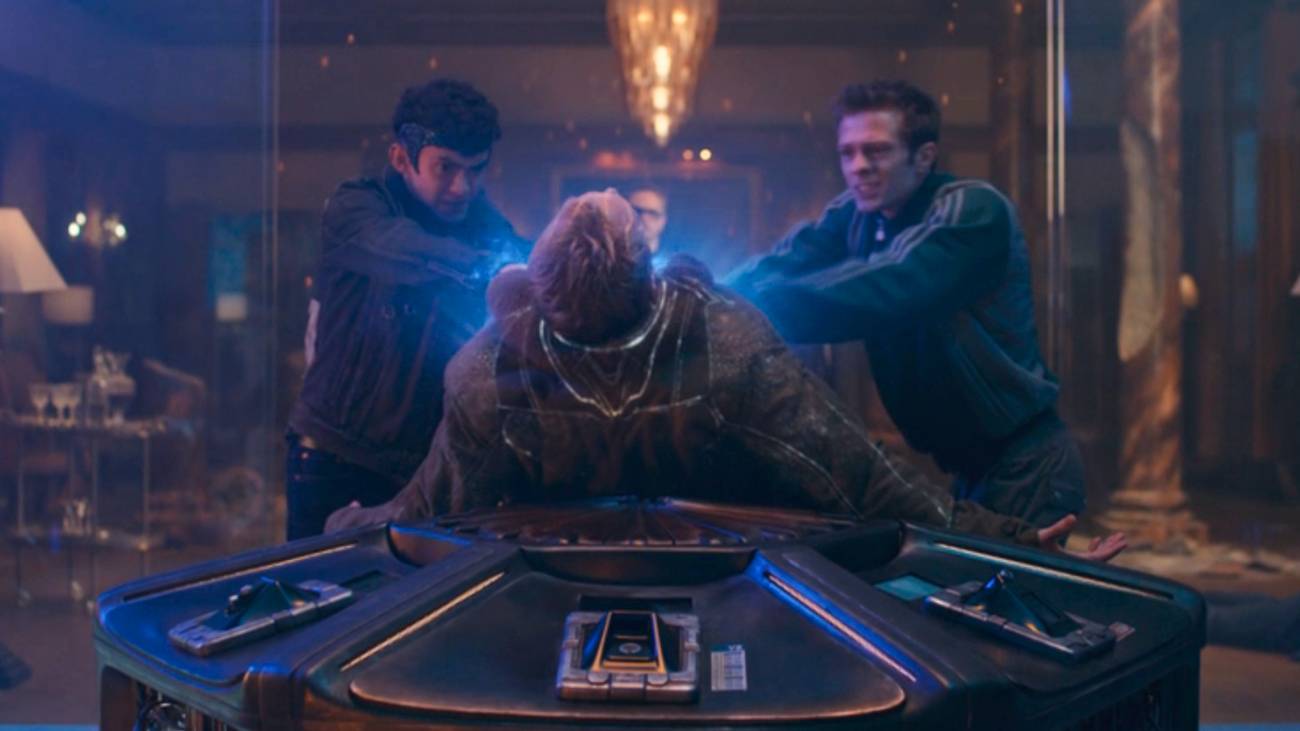
The finale reunites the Maximoff brothers, with Joe Locke returning as Billy and joining Tommy and Vision. Matalas explained why the team waited until the final episode to bring Locke’s character into the story.
Terry Matalas: “We did not want to bring Billy in early. We discussed early on when he could arrive, and every time we talked about it, it changed the arc Vision and Tommy were on. This is their show, and the second Billy appeared, it became a different story. He had to come at just the right time. The reunion needed to happen when they needed it most, and we felt that was at the very end.”
The last time viewers saw Billy, he was with Agatha, searching for Tommy. The brothers reunite in the finale, but the popular witch does not appear on screen; instead, the episode references her as Wiccan’s “imaginary friend.” Matalas explained why Kathryn Hahn did not return as Agatha.
Terry Matalas: “We can’t afford Kathryn Hahn! First of all, the second you bring Kathryn Hahn into a scene, it becomes a Kathryn Hahn scene. It’s really about Agatha, and in that moment of the reunion, it needed to be about Billy. [It] It needed to be about Tommy. You can’t detract from the story you’re trying to tell just because it would be neat to see Agatha. That’s the core of it. Down the line, of course, you’d want to see what is going on in Billy’s head and with his imaginary friend Agatha. It’s a fun idea that we leaned into when he talked to her in that moment. But the story had to belong to these three characters: Vision, Tommy and Billy.”
What inspired Tommy Maximoff’s speedster moment?
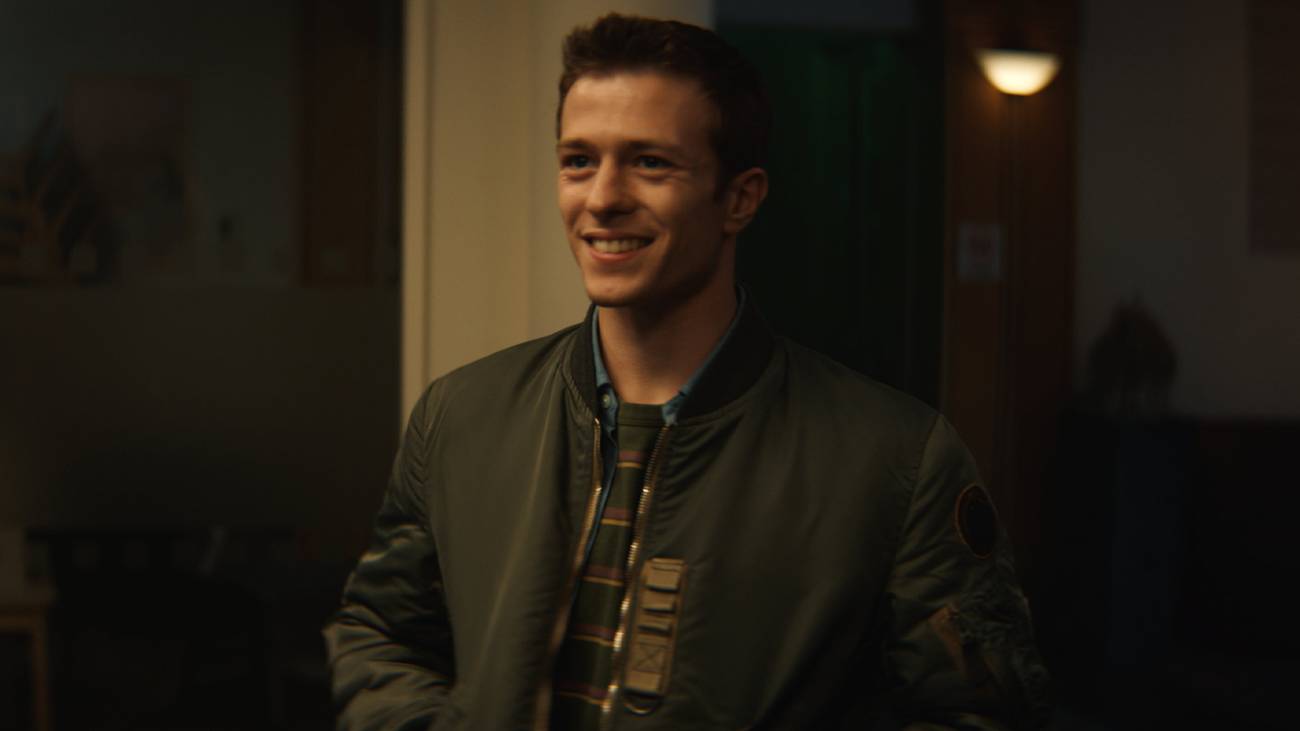
Tommy Maximoff gets a major moment in episode 8 as he grows more comfortable with his powers. Matalas said the scene takes inspiration from earlier slow-motion speedster sequences while finding a different approach.
VisionQuest gives Tommy a speedster scene that differs from the X-Men films’ celebrated slow-motion sequences.
 Credit: MovieStillsDB
VisionQuest episode 8 gives Tommy a standout moment as he learns to use his powers. The resemblance to Evan Peters’ Quicksilver scenes in the X-Men films was clear; Matalas described the sequence as an homage that also reverses aspects of the prequels’ approach.
Terry Matalas: “We knew we had to do it right, but it’s been done brilliantly before. We’re not going to beat that X-Men scene where he walks around and time slows down [for] him. First, we can’t afford it, and second, it’s perfect as it is. So what could we do differently in our own style?”
“I had the idea of building up to the moment, and then, when it finally happens, you just hear the sneakers squeaking and him circling the thing. It seemed really fun. I wasn’t sure it would work. I wrote it in the script, and some of the writers were like, ‘This is not going to work.’ I said, ‘No, I think it’ll be funny.’”
Why didn’t Wanda reunite with her family in VisionQuest?
Wanda Maximoff does not appear in the finale’s family reunion, which centers on Vision, Billy and Tommy. Matalas said that bringing Wanda into the scene would have shifted its focus, while the finale leaves her potential return open.
VisionQuest keeps the reunion focused on the Maximoff brothers and Vision rather than bringing Wanda into the scene.
When the interview took place, the version of the finale shown to members of the press did not include the post-credits scene revealing that the Scarlet Witch was alive, with Doctor Doom involved. As Tommy, Billy and Vision reunite and discuss Wanda, the finale suggests that she may still be out there, while the boys do not know what Victor von Doom is doing.
Asked whether he considered bringing Elizabeth Olsen back for a full reunion, or whether budget constraints ruled it out, Matalas explained what Wanda’s return would have meant for the story.
Terry Matalas: “If you were going to do it, you would do it for her, right? But again, the moment that happens, it becomes about Wanda. We had many conversations about it, and by the time we reached the finale, this felt like the right way. There [are] were also many conversations above my pay grade about the future of the MCU. What felt right here was the story of the Maximoff boys reuniting and the story of Vision and his father. Wanda is a major part of all of it; she started all this. But how could you do it without changing the emotion we were trying to create? [There were] We had many conversations, but I think we reached a good place.”
VisionQuest season 2 has not been announced, and the series is intended to be the third and final installment in the WandaVision trilogy. At the end of the interview, Matalas said he shared the interest in a possible Maximoff spinoff after season 1.
Terry Matalas: “I would love to. We have all sorts of ideas about what this family and Ultron could be up to. So, we’ll see how this does.”
For more of ScreenRant’s VisionQuest interviews, be sure to check out:
All episodes of VisionQuest are streaming on Disney+.
- Release Date
-
2026 – 2026-00-00
- Network
-
Disney+
- Showrunner
-
Terry Matalas
- Directors
-
Vincenzo Natali, Christopher J. Byrne, Gandja Monteiro, Terry Matalas
- Writers
-
Terry Matalas, Cindy Appel, Nicole Falsetti, Christopher Monfette, Matthew Okumura, Michael Taylor