
Key takeaways: Django Unchained is Quentin Tarantino’s first Western, though its setting makes it a Southern. spaghetti Westerns and Blaxploitation helped shape the film’s style and story. Jamie Foxx plays Django, an enslaved man who becomes a bounty hunter and sets out to rescue Broomhilda von Shaft. Franco Nero’s original Django appears in a brief cameo. This article explores the film’s Western influences and its place in Tarantino’s career. While Quentin Tarantino is known for drawing on disparate B-movie genres, it took until 2012’s Django Unchained for him to make his first Western, technically a “Southern” because of its setting. With the film streaming free on Pluto, it is worth revisiting. The director spent the ’90s making Los Angeles crime stories, from the heist gone wrong in Reservoir Dogs to the sprawling criminal underworld of Pulp Fiction. His two-part Kill Bill saga, released in 2003 and 2004, broadened his approach across genres, combining revenge thriller, kung fu, anime and music influenced by spaghetti Westerns. His next film, Death Proof, recreated the style of ’70s car-chase movies, with action scenes and a memorable performance by Kurt Russell.
In many ways, Django Unchained brought together interests Quentin Tarantino had pursued throughout his career. Tarantino has often discussed his appreciation for Spaghetti Westerns, Italian takes on American frontier stories that were frequently filmed in Spain. These films often featured stylized violence, morally ambiguous characters and historical liberties, all elements that influenced his work. Tarantino has named Sergio Leone’s The Good, the Bad, and the Ugly as a favorite, and its staging, editing and use of music are reflected in his filmmaking. Django Unchained also draws on a less widely known part of spaghetti Western history: the character Django, made famous by Franco Nero in the 1966 film of the same name.
How does ‘Django Unchained’ draw on older film genres?
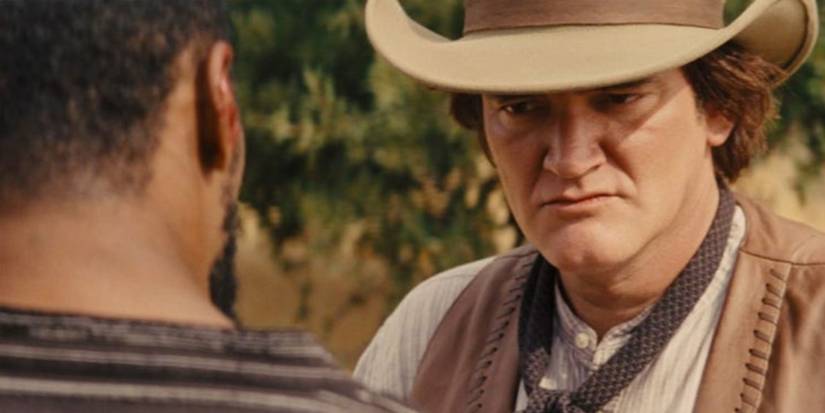
Image via The Weinstein Company
Django Unchained combines genre filmmaking with a story shaped by the history of race in American cinema. Tarantino had faced criticism over his portrayals of race, including his use of racial slurs in Pulp Fiction. In his 2022 book Cinema Speculation, he described spending much of the 1970s watching exploitation films in Los Angeles theaters alongside Black father figures. He studied movies often dismissed as low-budget or disreputable with the same attention he gave more highly regarded cinema. Blaxploitation answered demand for Black stories within familiar genre formats, with actors including former NFL players Jim Brown and Fred Williamson appearing in Westerns and action films with an explicit social dimension. Pam Grier, who later starred in Tarantino’s Jackie Brown, also appeared in many of these films.
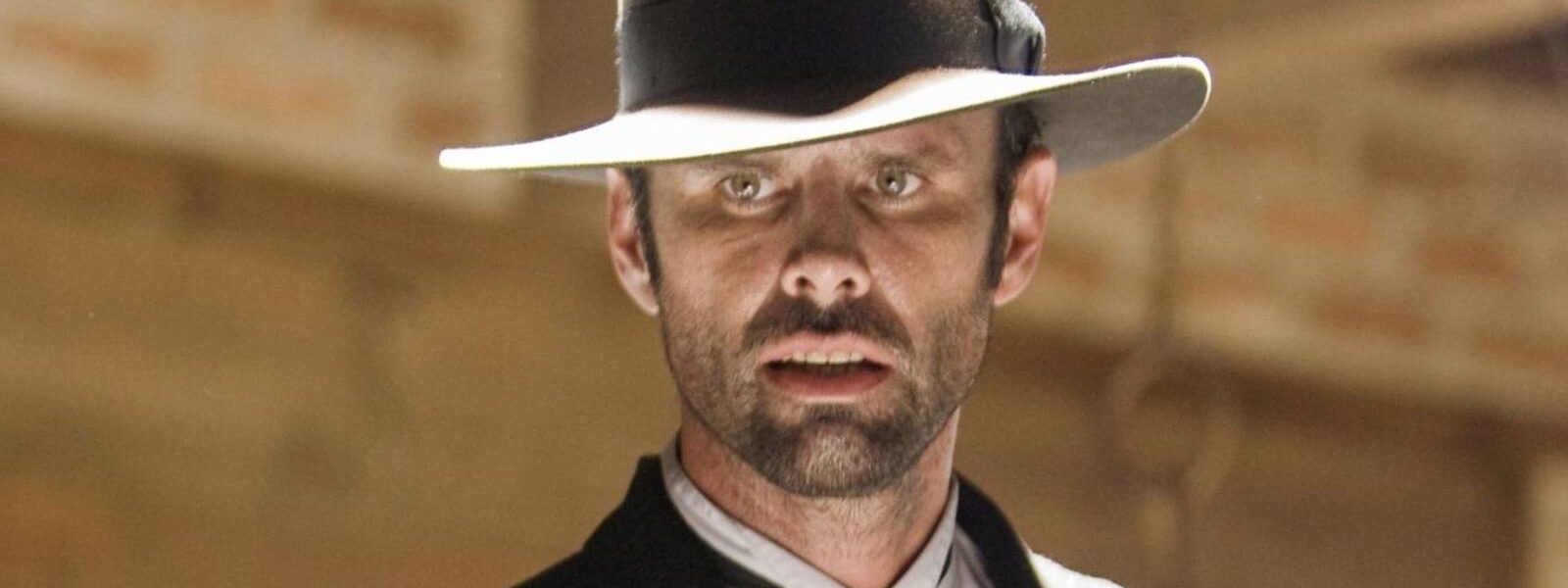
Django Unchained follows in that tradition. Tarantino’s next Western, 2015’s The Hateful Eight, centers on post-Civil War racial tensions, while Django Unchained presents a more direct heroic journey. An enslaved Black man, Django (Jamie Foxx), is freed by German dentist and bounty hunter Dr. King Schultz (Christoph Waltz) and becomes a bounty hunter himself. Unlike many ’60s and ’70s Westerns set in the American Southwest, Django Unchained is rooted in the antebellum South; one of its most striking images shows a villain’s blood sprayed across cotton fields. Django sets out to rescue his enslaved wife, Broomhilda von Shaft (Kerry Washington), from the plantation of Calvin Candie (Leonardo DiCaprio). The film’s references range from Sydney Poitier’s Buck and the Preacher to the romanticized portrayals of slavery in Gone With the Wind and Birth of a Nation, creating a layered conversation with earlier cinema.
How did Django become a spaghetti Western folk hero?
Django Unchained also draws on the spaghetti Western character Django, with the original actor, Franco Nero, making a brief cameo in the film’s second half. The 1966 film Django, directed by Sergio Corbucci, takes place in a Mexican border town, where a cynical Union veteran becomes entangled in conflicts between Mexican revolutionaries and Confederate gangs clinging to their ideology. The film became notorious for its violence and was banned in the United Kingdom. During the press run for Django Unchained, Tarantino said the project grew partly from his interest in writing an unpublished book of film criticism about Corbucci and from his wish to create a Black folk hero. He discussed those motivations with the Village Voice.
The Django character’s story continued without Nero or Corbucci’s involvement after the original film’s success and controversy. Nearly thirty films borrowed the archetype of the rootless, violent drifter, including a Japanese film by Takashi Miike in which Tarantino appeared as a guest performer. Creating a Black folk hero was central to Tarantino’s project. The film also draws on the German folk hero Siegfried, and Tarantino once considered a follow-up in which Django would meet an older Zorro; that idea later became a comic series. The film’s tone and use of Western conventions and Black cultural imagery prompted criticism, including from Spike Lee, a frequent critic of Tarantino’s work. Django Unchained ultimately combines a love story, an epic Western and a tribute to Blaxploitation cinema.