What Makes a Babylon 5 Reboot Worth Revisiting?
- Story plan: Babylon 5 was designed around a pre-planned five-season arc that connected individual stories to a larger narrative.
- Genre roots: The series combines political intrigue and mythic worldbuilding associated with Foundation and The Lord of the Rings.
- Reboot approach: A reboot could modernize the original visuals while preserving the story and character relationships.
- Runway needed: A new version would need enough time to follow the original five-season plan rather than end after one or two seasons.

Babylon 5 is a space opera built around long-term storytelling, and this article considers why its story could work as a reboot and what a new version would need to preserve.
Not so long ago, space operas helped define sci-fi on television. Networks produced one series after another, and although not all were equally ambitious or memorable, some became lasting classics. Babylon 5 remains one of the genre’s standout examples.
When many sci-fi shows gave little attention to long-term storytelling, Babylon 5 presented itself as a television novel. The series followed a planned five-year arc, with each story beat designed to serve a larger five-season narrative. Its story plan also accounted for unexpected cast departures, helping the narrative continue from one season to the next.
Babylon 5 faced a cancellation threat after season 4, but it ended on a satisfying note and established a clear identity as a space opera. Its visuals have not aged as well, and the narrative changes in season 5 affect how smoothly the story unfolds.
A successful Babylon 5 reboot could become a notable science-fiction series by retaining the original’s serialized storytelling while updating its visual presentation.
Could a Babylon 5 reboot unite Foundation-style politics with Tolkien-like worldbuilding?

J. Michael Straczynski’s Babylon 5 tells an original story, yet it shares elements with Isaac Asimov’s political intrigue and J.R.R. Tolkien’s mythic worldbuilding.
Babylon 5, like Isaac Asimov’s Foundation, uses a “Fall of Rome” template to portray decay and the forces leading a galaxy toward ruin. The diplomatic space station also recalls Terminus, the peripheral planet in Foundation. Some character archetypes invite comparison, including John Sheridan and Aragorn from The Lord of the Rings.
G’Kar’s character arc also suggests a spiritual transformation that can be compared with Boromir’s path in The Lord of the Rings. Babylon 5 draws on Newtonian science and references Carl Sagan, while also using high-concept ideas with a mythic, Tolkien-like quality.
The connections to Foundation and The Lord of the Rings show how Babylon 5 brings together political storytelling, mythic characters and science-fiction ideas. Its serialized format was less widely embraced when the series first aired than it is in the streaming era. A reboot modeled on the sustained approach of Apple TV’s Foundation could make that long-form structure central again.
What must a Babylon 5 reboot preserve to succeed?
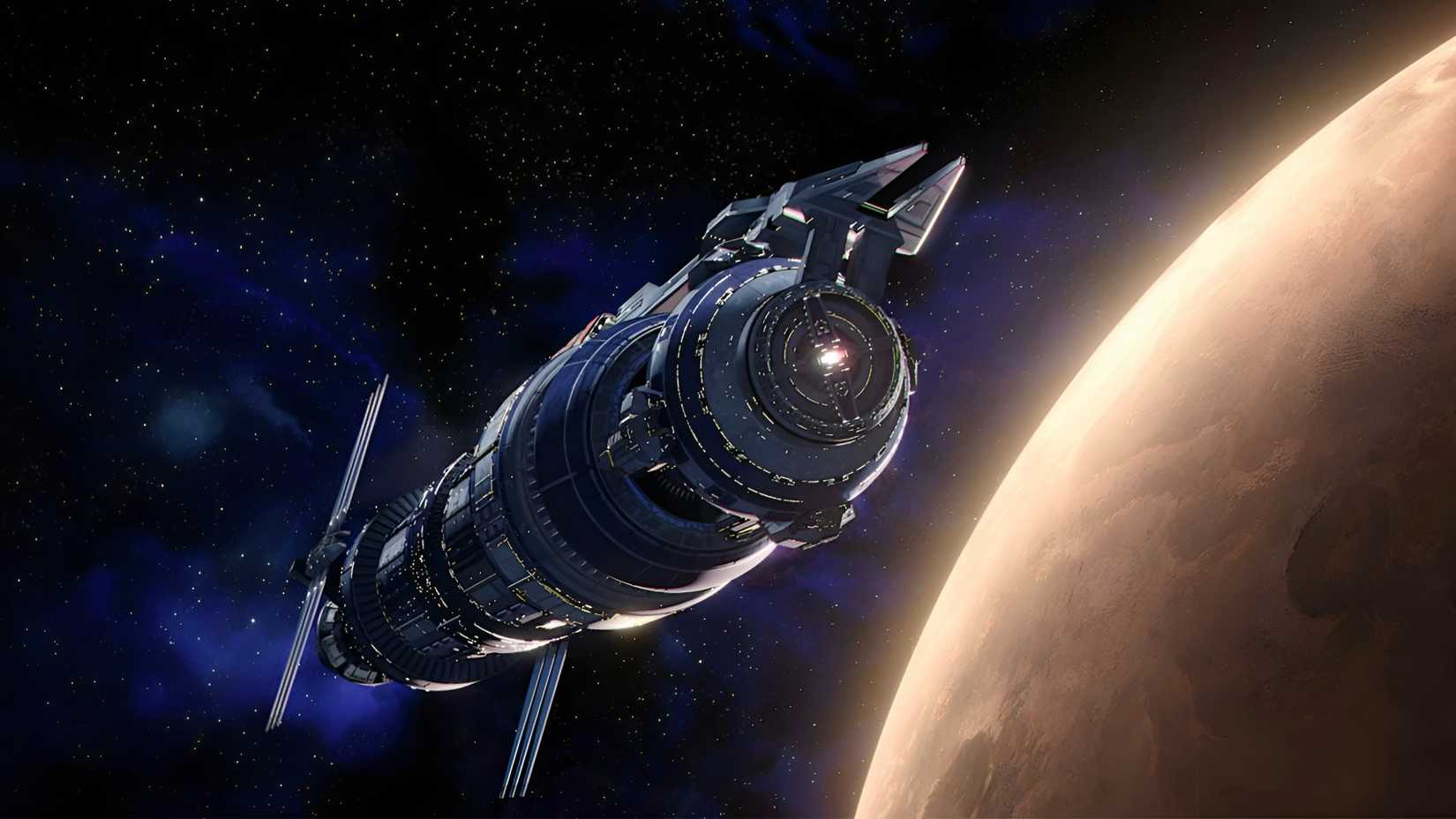
A Babylon 5 reboot would need more than an appealing premise to succeed: it would need enough time to tell the planned story. Many ambitious sci-fi shows are canceled early in the streaming era, but this story cannot be completed in just one or two seasons. A reboot should have the opportunity to follow J. Michael Straczynski’s five-season plan.
Story continuity is the central condition: preserve the original narrative rather than rebuilding it from the ground up, and focus changes on the visuals. The original series’ cast chemistry is also a key part of its identity.
- Keep the story: Avoid replacing the original series’ central narrative with a wholly different one.
- Update the visuals: Modernize the presentation while retaining the story’s established direction.
- Allow enough seasons: Give the five-season plan room to unfold instead of ending after one or two seasons.
- Respect the ensemble: Recognize the character relationships established by the original cast.
Those relationships include the chemistry between Bruce Boxleitner’s Sheridan, Claudia Christian’s Ivanova, Jerry Doyle’s Garibaldi and Peter Jurasik’s Londo Mollari. A reboot would have to contend with the distinctive ensemble dynamic created by those performances.
Babylon 5 remains an iconic space opera, but its legacy risks fading as its visuals age and its story becomes less familiar to new viewers. A reboot that protects the original’s storytelling and character strengths could renew attention to what made the series distinctive.

Common Questions About a Babylon 5 Reboot
Was Babylon 5 planned as a long story? Yes. The series was designed around a pre-planned five-year arc and a larger five-season storyline.
What should a Babylon 5 reboot change? The article argues that a reboot should modernize the visuals while preserving the original story.
Why would a reboot need several seasons? The planned story was designed to unfold over five seasons, so one or two seasons would not provide the same scope.
How does Babylon 5 compare with Foundation? Both use a “Fall of Rome” template to explore decay and the forces that lead a galaxy toward ruin.