There is no ancient Rome movie more synonymous with the genre than Gladiator, but there are several other classics also worth a watch. Ridley Scott’s 2000 epic Gladiator revitalized the historical blockbuster, won five Academy Awards and turned Russell Crowe’s Maximus into one of cinema’s defining heroes. Its combination of political intrigue, spectacular action, practical sets, and emotional storytelling established a benchmark that every Roman epic released since has inevitably been compared against.
The success of Gladiator can sometimes overshadow just how rich the cinematic history of ancient Rome really is. Long before Maximus entered the Colosseum, Hollywood and European filmmakers were using the Roman Empire as the backdrop for stories about political corruption, religious persecution, military conquest, slavery, and social upheaval. Some approached the era with serious historical drama, while others used Rome for comedy, satire, or outright spectacle.
The results range from lavish Biblical epics and Shakespeare adaptations to cult curiosities and classic comedies. Several helped define entire genres, while others remain fascinating snapshots of how different generations imagined the ancient world. For viewers who have already watched Gladiator countless times and want to explore more stories from the Roman era, these films offer some of the best alternatives ever put on screen.
Key Highlights
- Quo Vadis: Mervyn LeRoy’s film is a cornerstone of Hollywood’s Roman epics.
- Carry On Cleo: This comedy offers a humorous take on historical figures like Julius Caesar.
- The Sign of the Cross: A blend of spectacle and religious drama set during Nero’s reign.
- Spartacus: Kirk Douglas portrays a slave leading a rebellion against Rome.
Quo Vadis (1951)
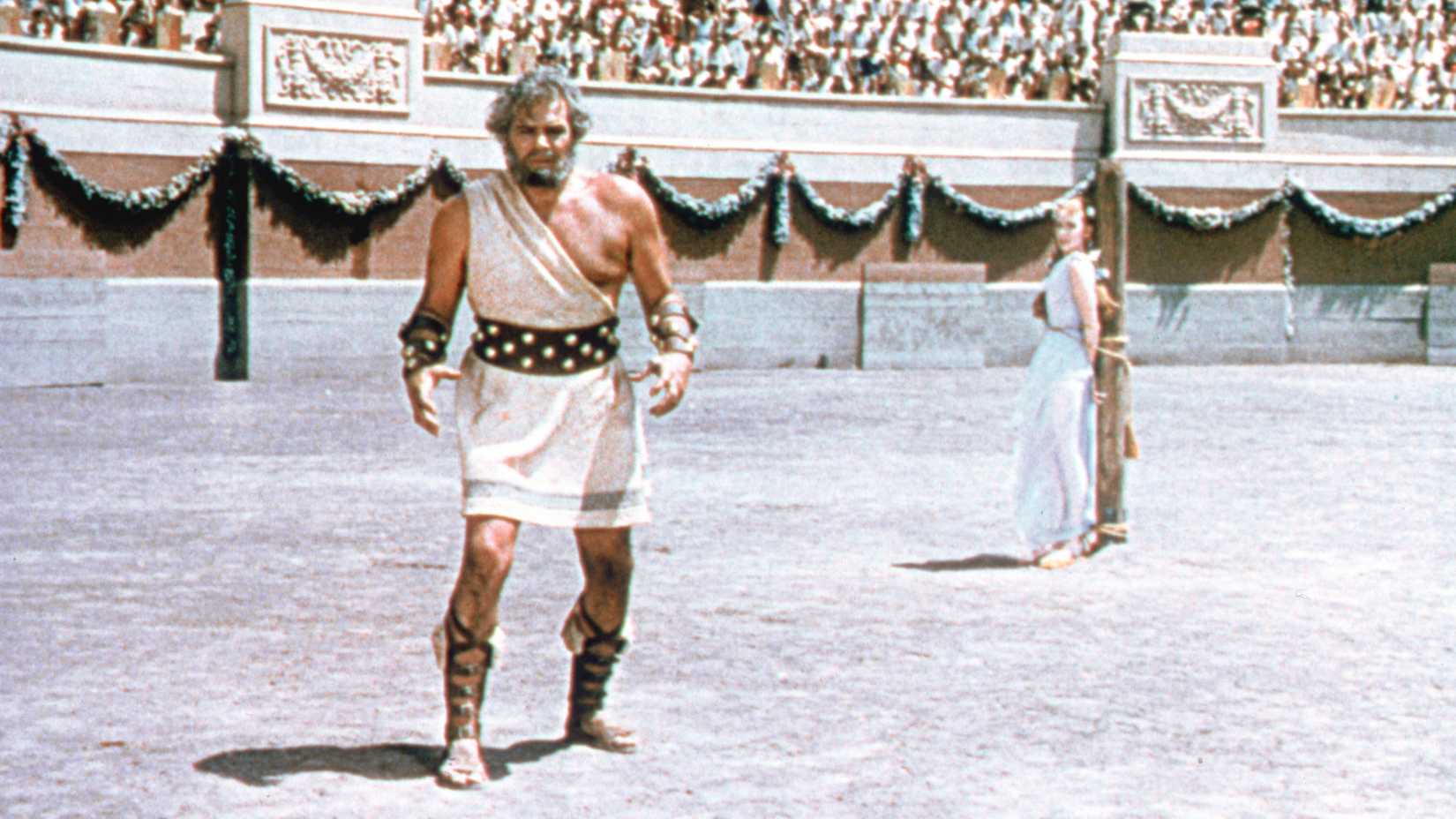
Mervyn LeRoy’s Quo Vadis was one of the movies that helped establish the modern Hollywood Roman epic. Adapted from Henryk Sienkiewicz’s novel, it takes place during the reign of Emperor Nero and follows Roman commander Marcus Vinicius, played by Robert Taylor, as he falls in love with the Christian Lygia.
Quo Vadis’ greatest strength is its scale. MGM spared little expense recreating Imperial Rome, constructing enormous sets and filling them with thousands of extras. This produced one of the most expensive productions of its era and a major box office success.
Peter Ustinov’s performance as Nero is the Quo Vadis’ standout element. Rather than portraying the emperor as a straightforward tyrant, Ustinov presents him as a vain, insecure artist whose delusions of grandeur gradually become dangerous.
The famous sequence depicting the Great Fire of Rome is particularly impressive for a production made decades before digital effects. While later epics would surpass it in realism, Quo Vadis remains one of the foundational ancient Rome movies.
Carry On Cleo (1964)

The Roman Empire rarely receives the full comedy treatment, which makes Carry On Cleo such an unusual entry in the genre. Part of the long-running Carry On series, the film spoofs the story of Cleopatra, Julius Caesar, and Mark Antony through the franchise’s trademark blend of wordplay, innuendo, and British farce.
Sid James plays Mark Antony, Kenneth Williams appears as Julius Caesar, and Amanda Barrie takes on the role of Cleopatra. Rather than attempting historical accuracy, the film focuses entirely on comic chaos, with Caesar’s military campaigns and Egyptian politics becoming vehicles for jokes.
One of the production’s most interesting pieces of trivia is that it reused sets originally constructed for the troubled production of Cleopatra starring Elizabeth Taylor. The lavish Roman backdrops therefore look considerably more expensive and grand than a typical Carry On movie.
Many historical comedies feel dated because they rely heavily on contemporary references. Carry On Cleo works because most of its humor comes from performances and absurd situations.
The Sign Of The Cross (1932)
<source media="(max-width: 1023px)" data-srcset="https://static0.srcdn.com/wordpress/wp-content/uploads/2017/04/The-Sign-of-the-Cross.jpg?q=70&fit=crop&w=825&dpr=1" srcset="https://static0.srcdn.com/wor…