

What to know about the weakest Spider-Man variants
- Power range: Spider-Man variants range from powerless Peter Parker to unusual beings with distinctive abilities.
- Earth-40081: Peter Parker never becomes Spider-Man because a radioactive spider bite paralyzes his arm.
- Unusual origins: Spiders-Man is a colony of spiders with a shared consciousness, while Spider-Monkey comes from a universe of apes.
- Comparing variants: Their abilities, limitations, and circumstances explain why these versions rank below more powerful Spider-heroes.
This guide compares some of the weakest Spider-Man variants in the Marvel multiverse, including their origins, powers, and limitations. Read on to see how alternate versions of Peter Parker and other Spider-heroes differ from the familiar Earth-616 Spider-Man.
Marvel Comics has introduced alternate Spider-Man heroes from different universes, including people with unusual mutations, non-human characters, and beings with extraordinary powers. Comparing their origins and abilities reveals why some variants are far less capable than the best-known Spider-Man, while others stand out for having unusual strengths or limitations.
Why is powerless Peter Parker one of the weakest Spider-Man variants?
On Earth-40081, a radioactive spider bite leaves Peter Parker with a permanently paralyzed arm instead of spider-like powers. His lack of superhuman abilities makes him the clearest example of a powerless Spider-Man variant.
Powerless Peter Parker never becomes Spider-Man on Earth-40081.
First appearance: Powerless #1 by Matt Cherniss, Peter Johnson, Michael Gaydos, Lee Loughridge, and Dave Sharpe
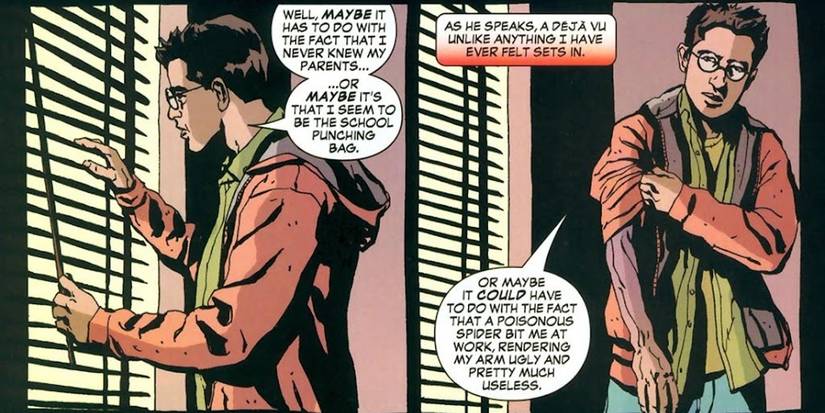
This version might seem an unusual inclusion because Peter Parker never becomes Spider-Man. The spider bite injures him rather than granting the abilities associated with the hero.
The trauma of the bite, followed by the death of his Uncle Ben, leaves Peter depressed and attending therapy. Peter has the heart to act heroically, but without spider abilities he remains far less powerful than the familiar Spider-Man.
Why are the Spider-Webs of Mojoworld so weak?
The Spider-Webs are a group of deliberately bizarre Spider-Man clones whose abilities match their names. Most members have little in common with a capable superhero, although a few have useful physical traits.
The Spider-Webs combine unusual identities with limited crime-fighting abilities.
First appearance: Jeff the Land Shark: Superstar #1 (2026) by Kelly Thompson, Tokitokoro, Jim Campbell, and Joe Caramagna
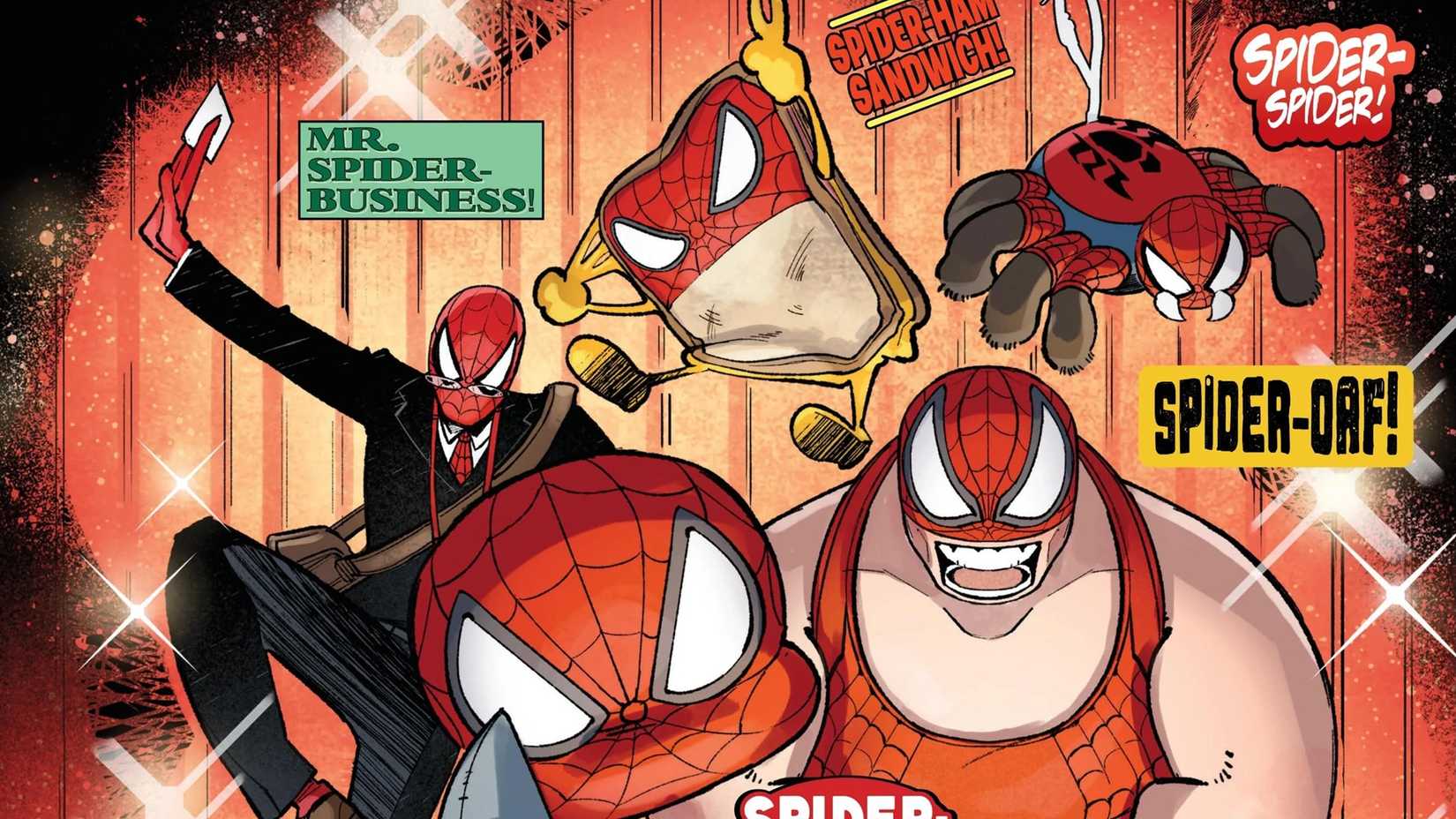
Jeff the Land Shark encounters this odd team in Mojoworld. Mr. Spider-Business is essentially an ordinary Peter Parker in a suit, Spider-Ham Sandwich is a ham-and-melted-yellow-cheese sandwich that swings on webs, and Spider-Head is only a head.
Spider-Spider may be the most useful member because of its enhanced spider-like traits, while Spider-Oaf has a strong physique. The group is still portrayed as unimpressive beside other Spider-Man variants, and each member has a symbiote version.
What makes Plain Peter Parker of Earth-958 different?
On Earth-958, Flash Thompson becomes Spider-Man, while Peter Parker remains powerless and uses inventions to oppose him. Peter’s technical skill ultimately helps him defeat Flash.
Plain Peter Parker defeats the criminal Spider-Man with purpose-built gadgets.
First appearance: What If? #76 by Terry Austin, Stuart Immonen, Marie Javins, and Janice Chiang

Flash uses his powers to pursue fame and wealth, committing crimes and bullying Peter into inventing gadgets for him. Once Peter recognizes Flash’s villainous behavior, he decides to stop him.
Peter designs gadgets specifically to counter Flash and succeeds. His victory leads to an invitation to join The Fantastic Four, demonstrating that intelligence and preparation can compensate for a lack of superpowers.
How does Punisher Peter Parker fight crime?
On Earth-71928, Peter responds to Uncle Ben’s death by taking up guns and seeking revenge rather than becoming a conventional Spider-Man. This version resembles Frank Castle in his approach to vigilantism.
Punisher Peter Parker uses firearms and later abandons vigilantism.
First appearance: What If? The Punisher #1 by Carl Potts and Juanan Ramírez
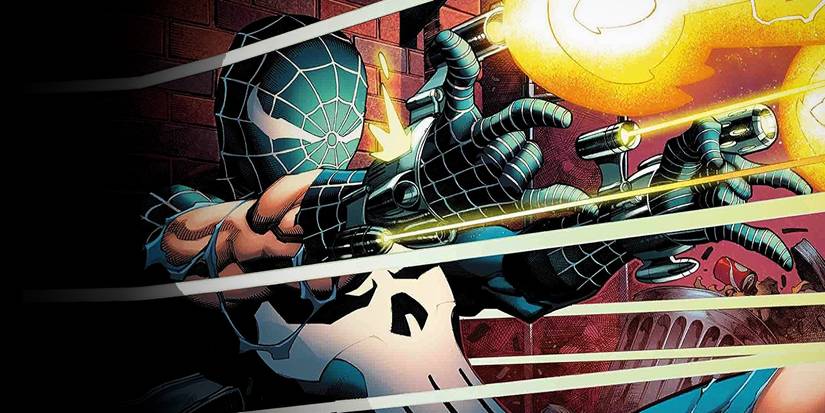
After avenging Uncle Ben, this Peter saves Gwen Stacy and kills the Green Goblin. He eventually ends his vigilante career and settles down, giving this alternate Peter a happier outcome than the Earth-616 version in the account described here.
The defining difference is Peter’s choice of methods: this variant relies on guns and revenge rather than the familiar Spider-Man identity. His story also concludes with him leaving that life behind.
What is Spiders-Man of Earth-11580?
Spiders-Man is a collective being formed from a colony of spiders on Earth-11580. The spiders share Peter Parker’s identity as a collective consciousness, while retaining the ability to disperse and act independently.
Spiders-Man’s body consists of a colony of spiders acting as one collective.
First appearance: Spider-Geddon #3 by Christos Gage and Jorge Molina
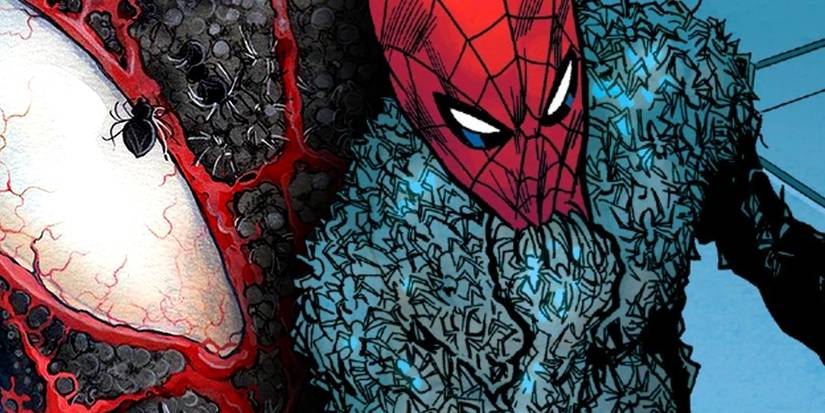
A radioactive swarm changes the familiar radioactive spider origin: when Peter falls into the spiders, he ceases to exist as an individual and Spiders-Man is born. The character lacks many of Spider-Man’s iconic powers, but the collective body can disperse and act in separate parts.
Spiders-Man’s unusual origin and shared consciousness set the variant apart from human Spider-heroes. The colony’s ability to disperse is a distinctive trait, even though it does not give the character all of Peter Parker’s familiar powers.
How did Stan Lee become Spider-Man in an alternate universe?
Stan Lee appears as a Spider-Man variant in Spider-Geddon #5, which shows a version of the creator who became the hero in his universe. The appearance reflects Lee’s role in creating the character.
Spider-Geddon #5 depicts a universe where Stan Lee is Spider-Man.
First appearance: Spider-Geddon #5 by Christos N. Gage, Jorge Molina, Carlo Barberi, Stefano Caselli, and Joey Vazquez
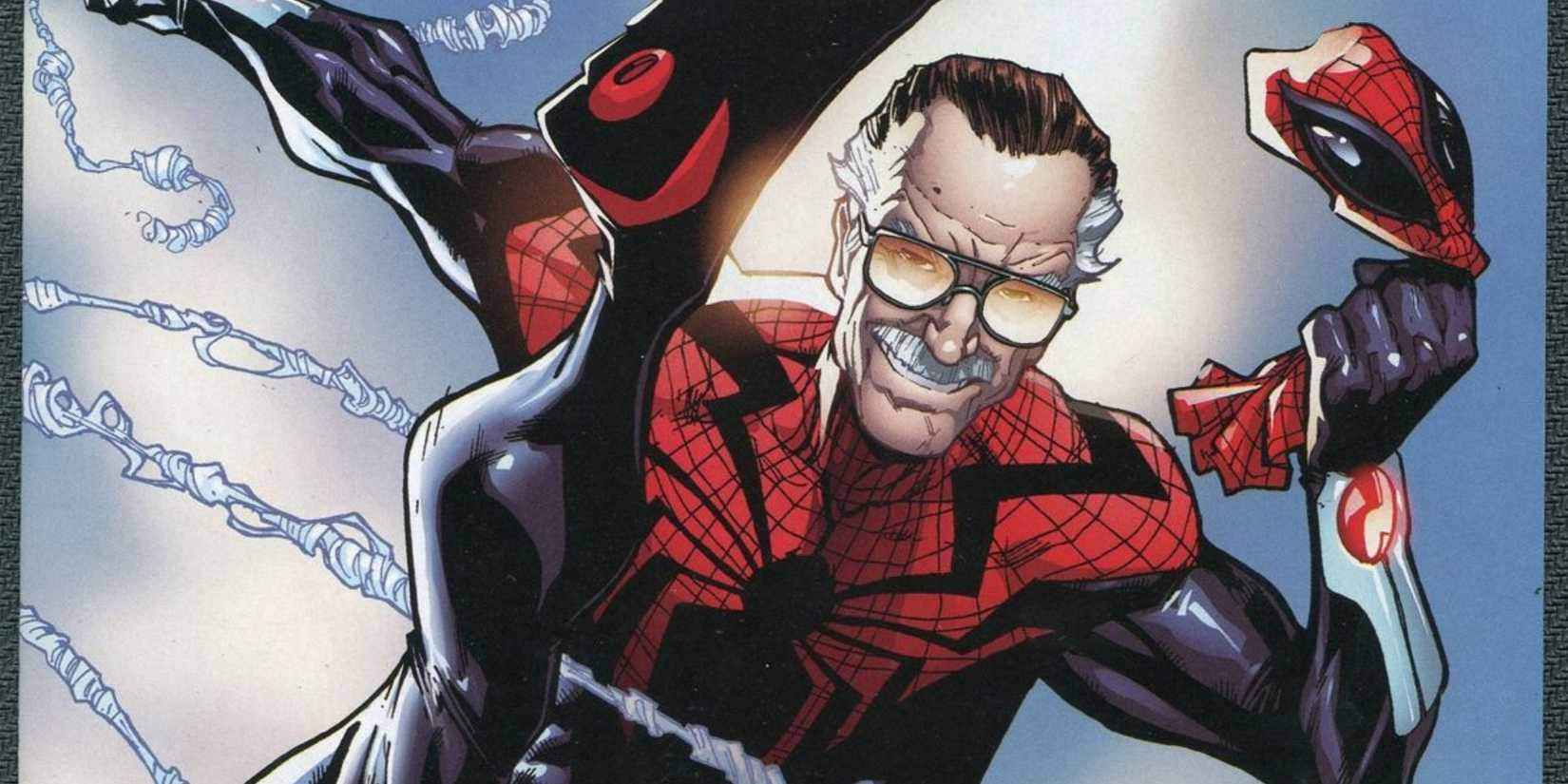
Stan Lee co-created many well-known comic characters, including The Fantastic Four and Iron Man, and is closely associated with Spider-Man. Comics and video games have also depicted him as the hero.
In The Amazing Spider-Man game, players could play as Stan Lee, voiced by Lee himself. Spider-Geddon #5 offers a separate version of the idea by showing a Stan Lee who became Spider-Man in his own universe.
How does Golden Spongecake Spider-Man use snacks?
Golden Spongecake Spider-Man fights crime with Hostess snack cakes rather than conventional superhero tools. The character comes from a reality where superheroes use Hostess snacks to battle criminals.
Golden Spongecake Spider-Man’s crime-fighting method centers on Hostess snack cakes.
First appearance: Marvel Hostess Ads #1 (1975)
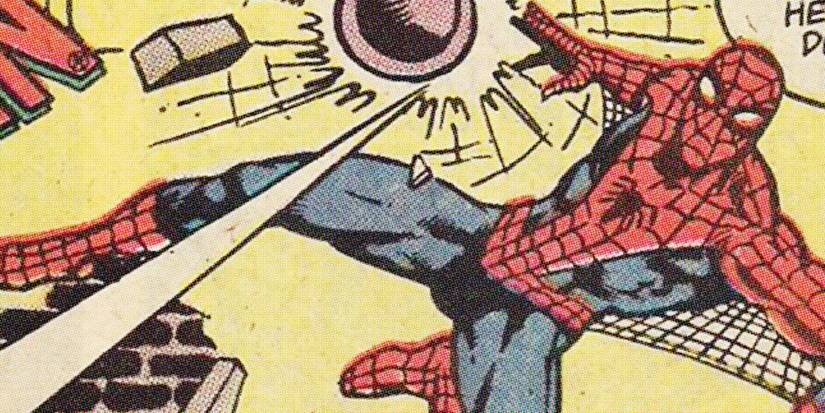
The variant resembles the familiar Spider-Man, with one major difference: he uses Hostess snacks to take down his opponents. His comic origins are in a promotional crossover, but the character later became part of the Spider-Verse.
Relying on snack cakes limits this Spider-Man’s options in a fight. Those limitations prove consequential when the character dies early in the Spider-Verse comic event.
Why is Penelope Parker a lower-tier Spider-Girl?
Penelope Parker becomes Spider-Girl at age 11 after a class field trip and takes to the streets to fight crime. She has familiar Spider-Man powers, but her young age means she lacks the brute strength of adult heroes.
Penelope Parker’s youth is the main limitation described for this Spider-Girl.
First appearance: Spider-Verse #1 (2014) by Katie Cook
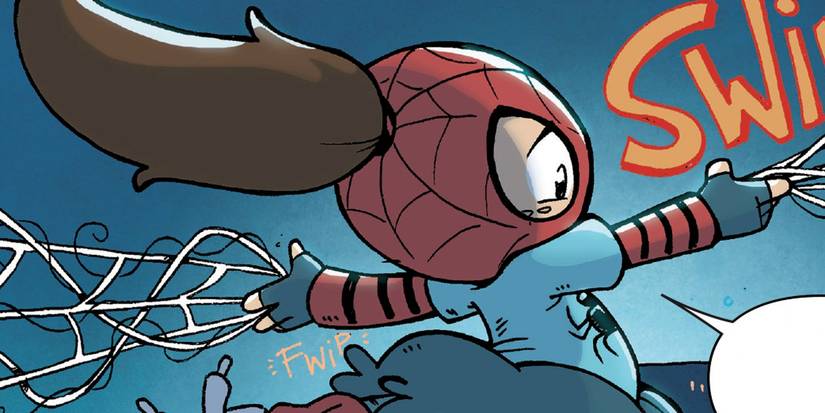
Spider-Girl is one of the more cartoonish variants in Spider-Verse. Like other Spider-heroes, Penelope eventually uses her powers to fight crime.
Penelope appears to have powers similar to Peter Parker, but she does not have the physical strength of the grown heroes. Her abilities may develop as she gets older, but at age 11 she ranks among the less powerful Spider-Verse heroes.
What limits Spider-Monkey’s abilities?
Spider-Monkey comes from Marvel Apes, a universe where many humans are apes. He has essentially the same powers as Peter Parker, but his monkey physique and reduced intelligence limit his effectiveness against human opponents.
Spider-Monkey combines Spider-Man’s basic powers with an ape’s physical form.
First appearance: Amazing Spider-Man Family #1 (2008) by Karl Kesel and Ramon Bachs
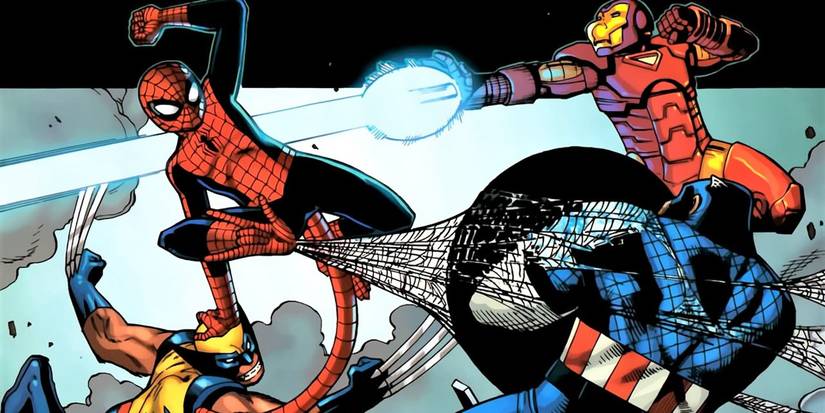
In this universe, the alternate Peter Parker is a monkey bitten by a radioactive spider. The result is a Spider-hero with spider powers and an ape’s body.
Spider-Monkey has trouble matching human opponents in the Spider-Verse, and his reduced intelligence makes him less effective at planning fights than human counterparts.
Who is Pete Spiderman of Earth-91279?
Pete Spiderman is a man whose surname happens to be Spiderman, rather than a conventional superhero identity. His powers are compared to those of a slightly out-of-shape spider, and his mild-mannered personality adds to the joke.
Pete Spiderman’s name is a coincidence, not a superhero title.
First appearance: Edge of Spider-Verse #4 (2022) by Jordan Blum and Michael Shelfer
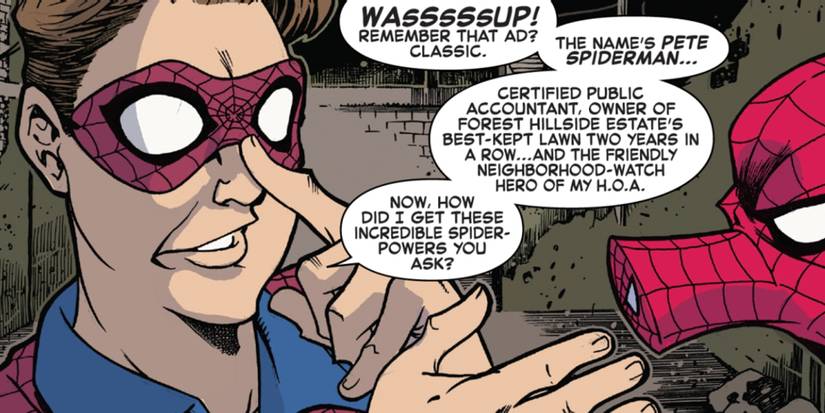
The Web of Life includes many unusual Spider-Man variants, and Edge of Spider-Verse #4 introduces Pete, a certified public accountant who takes pride in his award-winning lawn. His name is the source of the apparent Spider-Man connection.
Pete does have powers, but they resemble those of a slightly out-of-shape spider. His awkward manner and limited abilities make him an especially unimpressive member of the Spider-people.
Which Spider-Man variants have no superhuman powers?
Powerless Peter Parker has no spider-like abilities after the bite, while Plain Peter Parker relies on inventions to defeat Flash Thompson. Their stories show that a Spider-Man connection does not always mean possessing Spider-Man’s powers.
Some alternate Peter Parkers rely on human abilities rather than superpowers.
What makes a Spider-Man variant weak?
A variant may be considered weak because of limited powers, physical disadvantages, age, or unusual constraints on how they fight. The examples here range from a paralyzed arm to a young hero’s lack of adult strength.
Spider-Man variants differ in both their abilities and their specific limitations.
Is Spiders-Man the same as Peter Parker?
Spiders-Man is a colony of spiders that shares Peter Parker’s identity as a collective consciousness. The spiders can disperse and act independently, so this character is not an ordinary human Peter Parker.
Spiders-Man is a collective being rather than a single human body.
Which Spider-Man variant uses Hostess snacks?
Golden Spongecake Spider-Man uses Hostess snack cakes to fight crime. The character first appeared in Marvel Hostess Ads #1 in 1975.
Golden Spongecake Spider-Man’s defining crime-fighting tool is Hostess snack cakes.