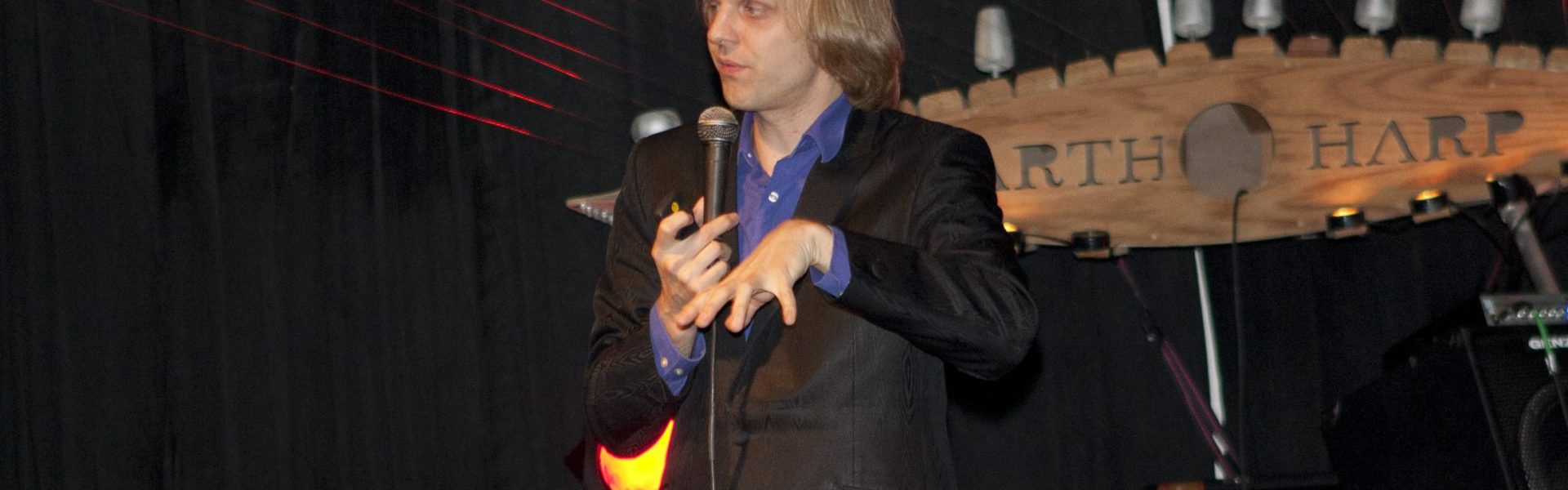

The world of alternative science and paranormal research is mourning the loss of David Wilcock, a controversial yet widely followed figure, whose conspiracy theories captivated audiences for years. Known for his analyses of extraterrestrial life and ancient civilizations, Wilcock built a loyal fan base through books and online content. His death in 2026 sparked renewed interest in his life, legacy and the ideas that made him a standout voice in fringe science communities, despite the controversy he occasionally stirred.
Below, Hollywood Life has five key facts about the late author and researcher.
What Made David Wilcock a Best-Selling Author in the Paranormal Category?
Wilcock made a name for himself through his books that explored topics such as ascension, hidden knowledge and cosmic disclosure. His work includes The Source Field Investigations and The Synchronicity Key, which gained traction among readers interested in spirituality and alternative theories about the universe. His writing often combined scientific language with metaphysical concepts.
How Did David Wilcock Gain Fame Through His Online Presence?
Wilcock expanded his reach beyond books by appearing on various TV programs and streaming platforms. He became a familiar face to viewers who followed shows centered on unexplained phenomena, such as UFOs and aliens. Additionally, his YouTube channel and online lectures attracted millions of views.
What Was David Wilcock’s Claim About Edgar Cayce?
One of Wilcock’s more controversial assertions was his belief that he was the reincarnation of Edgar Cayce, the psychic known as the “Sleeping Prophet.” Wilcock’s claim drew both intrigue and skepticism throughout his career.
Wilcock often referenced Cayce’s teachings in his own work, tying them into his broader theories about human consciousness and spiritual evolution.
How Did David Wilcock’s Work Spark Devotion & Criticism?
While Wilcock had a dedicated fan base, he was also a controversial figure. Critics challenged the scientific validity of his claims, arguing that his theories lacked evidence.
Despite this, his supporters praised him for pushing boundaries and encouraging people to question mainstream narratives.
When Did David Wilcock Die?
Wilcock’s life ended in April 2026 after using an unidentified weapon on himself, according to TMZ. The outlet reported that authorities in Boulder County, Colorado, said that deputies were dispatched on April 20, 2026, and that a communications specialist who was on the 911 phone call believed the caller “might have been in the middle of a mental health crisis.”
Once deputies arrived at the scene, they encountered a man who had a weapon in his possession. He then used the weapon on himself, the outlet reported, and he was pronounced dead.
If you or someone you know is in emotional distress or considering suicide, call the National Suicide Prevention Lifeline at 1-800-273-TALK (8255).