

Key points about Jason Voorhees
- Definitive Jason: Friday the 13th Part III ranks first for its iconic hockey mask and Richard Brooker’s physical performance.
- Zombie Jason: Friday the 13th Part VII: The New Blood features Kane Hodder’s heavily decayed, imposing portrayal.
- Human Jason: Friday the 13th: The Final Chapter presents one of the character’s most aggressive and frightening human portrayals.
- Ranking criteria: This list compares Jason’s design, intimidation, movement, screen presence and fit with the character across live-action appearances.
This ranking compares the major live-action appearances of Jason Voorhees across the Friday the 13th franchise, focusing on the character’s design, movement and screen presence rather than ranking the films themselves. Readers can compare each version, from the sackhead stalker to the undead killer and cybernetic monster, using the same core criteria.
With the Friday the 13th prequel series Crystal Lake now part of the franchise, this list looks across its changing portrayals of Jason. The criteria are costume design, intimidation factor, movement, screen presence and how well each portrayal embodies the character.
- Costume design
- Intimidation factor
- Movement
- Screen presence
- How well each version embodies the spirit of the character
The ranking starts at Camp Crystal Lake and compares the versions of Jason Voorhees that appear across the franchise.
How are the major Jason Voorhees appearances ranked?
Friday the 13th Part III takes the top spot, while the list also includes Jason’s human, undead, sackhead and science-fiction incarnations. The ranking considers each portrayal’s design, physicality and effectiveness as Jason.
Jason Voorhees appearances are ranked by portrayal, not by the quality of the films.
- Friday the 13th Part III (1982) – Definitive Classic Jason
- Friday the 13th Part VII: The New Blood (1988) – Ultimate Zombie Jason
- Friday the 13th: The Final Chapter (1984) – Scariest Human Jason
- Jason Lives: Friday the 13th Part VI (1986) – Best Gothic Jason
- Friday the 13th Part 2 (1981) – Best Sackhead Jason
- Freddy vs. Jason (2003) – Powerful Crossover Jason
- Jason Goes to Hell: The Final Friday (1993) – Grossest Jason Design
- Friday the 13th Part VIII: Jason Takes Manhattan (1989) – Slimiest Jason
- Friday the 13th: A New Beginning (1985) – Nightmare Jason
- Updated Sackhead – Friday the 13th (2009) – Modern Sackhead
- Beginner Sackhead – Crystal Lake Season One (2026)
- Friday the 13th (2009) – Most Aggressive Jason
- Jason X (2001) – Weirdest Jason
- Uber Jason – Jason X (2001) – Most Insane Jason Design
- Sweet Revenge (2025) – Divisive Jason Redesign
Honorable mention: Friday the 13th (1980), the original Camp Crystal Lake legend.

Why is Friday the 13th (1980) an honorable mention?
The original Friday the 13th is an honorable mention because young Jason, played by Ari Lehman, appears only briefly in a dream sequence and through backstory. Even so, his presence shapes the story, and the dream sequence delivers one of the film’s best-known jump scares.
The 1980 film established Jason’s drowning-child mythology but gave the character little screen time.
The drowning-child story became one of horror’s best-known origin stories, and FX artist Tom Savini helped turn the child into an unforgettable character. Young Jason also appears in Crystal Lake, Jason Takes Manhattan, Freddy vs. Jason and, in a limited sense, Friday the 13th (2009); those appearances are not ranked separately.
Release year: 1980
Director: Sean S. Cunningham
Major legacy: Introduced Camp Crystal Lake mythology and Pamela Voorhees
Jason style: Drowning child
Cultural legacy: One of the defining slasher films of the 1980s boom

What makes Sweet Revenge’s Jason redesign divisive?
Sweet Revenge ranks fifteenth because its return to live-action Friday the 13th was notable, but its Jason design received a mixed response. Stuntman Schuyler White delivers menacing moments and effective kills, yet the portrayal can feel less imposing than earlier versions despite White’s 6’4½” height.
Sweet Revenge pairs a new hockey-mask design with a Jason portrayal that divided fans.
The promotional short from Angry Orchard marked the first official live-action Friday the 13th content in sixteen years when it appeared in 2025. The costume and performance have strengths, but the long jacket and Jason’s left-handed machete use do not work as well for this portrayal.
The most significant point of disagreement is the hockey mask. Earlier versions used the familiar 31-hole layout, while Sweet Revenge introduces a 13-hole design that can look effective in some shots and awkward in others. The mask’s proportions, texture and shape make the redesign feel inconsistent.
Release year: 2025
Director: Mike P. Nelson
Major legacy: First official live-action Friday the 13th project in sixteen years
Jason style: Woodland stalker Jason
Cultural legacy: Demonstrated the enduring popularity of Jason Voorhees decades after the original films

What makes Uber Jason memorable in Jason X?
Uber Jason ranks fourteenth because the nanotechnology upgrade is deliberately excessive, yet it suits the film’s science-fiction approach. The chrome mask, red eyes and tank-like physicality make this version distinctive.
Uber Jason combines a cybernetic design with the franchise’s science-fiction setting.
The upgraded nanotech Jason is an over-the-top concept, but the film commits to its science-fiction premise. That willingness to shift from backwoods slasher horror to comic-book-style spectacle is part of the franchise’s range, which also includes lightning resurrection, telekinesis, demonic possession, New York and space.
A rougher design with exposed wires and tubes might have suited the character better than the sleek version on screen. Even so, Uber Jason’s chrome mask, red eyes and unstoppable physicality make the design memorable.
Release year: 2001
Director: James Isaac
Major legacy: Took the franchise into science fiction through Jason’s futuristic cybernetic transformation
Jason style: Science-fiction super-slasher
Cultural legacy: Uber Jason became a cult favorite among horror fans and one of the character’s most widely memed incarnations

Why does the regular Jason design in Jason X rank below Uber Jason?
The regular Jason X design ranks below Uber Jason because its layered clothing, hair and reshaped hockey mask make the character look less imposing. The film explains Jason’s more human appearance through his ability to regenerate damaged or lost tissue.
The regular Jason X design emphasizes regeneration but has a less cohesive costume.
Jason’s regenerated body has fleshy fingers showing through his gloves, but his frizzy hair is a distracting choice. The torn brown straitjacket and button-up shirt add bulk to Kane Hodder’s torso, while the redesigned mask looks small and has a nose shape that can resemble an “angry duck.”
Release year: 2001
Director: James Isaac
Major legacy: Kane Hodder’s final full Jason performance
Jason style: Regenerating brute
Cultural legacy: Once mocked as an absurd attempt to extend the franchise, the film later became a cult favorite

Why is Jason in Friday the 13th (2009) so aggressive?
The 2009 reboot presents Jason as a fast, intense survivalist hunter who uses tunnels, traps, alarms and ambushes to stalk people in the woods. Derek Mears plays this highly capable version, although the costume and makeup make the portrayal less effective.
The 2009 Jason relies on hunting tactics and speed to pursue his victims.
The reboot combines ideas from the first four Friday the 13th films and was made by Paramount and New Line Cinema. Jason’s long jacket hangs to mid-thigh over a dirty, ripped T-shirt, while the low collar and thick cowl make his throat look unusually wide.
The dirty hockey mask works, but the exposed throat can overwhelm it in some shots. The flowing blond hair is another design choice that does not suit this portrayal.
Release year: 2009
Director: Marcus Nispel
Major legacy: Reimagined Jason as a highly capable wilderness predator
Jason style: Survivalist hunter
Cultural legacy: Introduced a faster, more aggressive Jason Voorhees for post-2000 slasher audiences

How does young Sackhead Jason appear in Crystal Lake Season One?
Crystal Lake Season One presents Jason at several ages, culminating in an older version who adopts the sackhead look. The young Jason’s build and oversized mask make this version less intimidating than the other sackhead portrayals.
Crystal Lake depicts Jason’s early sackhead appearance before his familiar hockey mask era.
The first season of Peacock’s Friday the 13th prequel series shows Jason as a four-year-old, played by Kaiden Cullen and Theo Lonsdale, and at age eleven, played by Callum Vinson. Zachary Branch plays an older, larger Jason glimpsed in the woods. In the finale, stuntman David Armstrong and actor Jonathan Tison portray the older Jason, who takes coveralls and turns a bag into a mask. The rope holding the sack in place soon comes off, revealing his face.
The sackhead look recalls Jason’s early appearances, but the young character’s smaller build and oversized sack make him look less threatening. The coveralls also recall Michael Myers’ wardrobe. Since this is Jason at the start of his killing career, the appearance serves as an early point in the character’s evolution.
- Release year: 2026
- Format: Television series, Season One
- Jason performers: David Armstrong and Jonathan Tison
- Jason style: Young Sackhead Jason
- Major legacy: Television portrayal of Jason Voorhees
- Cultural legacy: Brought Jason back to live action in the first television series centered on the Voorhees saga

What distinguishes the updated sackhead in Friday the 13th (2009)?
The 2009 updated sackhead combines Jason’s bag-covered appearance from Friday the 13th Part 2 with the hockey mask he acquires in Part III. The tighter-fitting sack modernizes the earlier look while preserving its place in Jason’s origin story.
The 2009 sackhead portrayal links Jason’s early bag mask to his later hockey mask.
Jason wears the sack when he first appears, then acquires a hockey mask later in the film. The long jacket remains part of the costume, but the sack conceals the exposed neck. The fit differs from the sack in Part 2: it is pulled more tightly around Jason’s head.
Release year: 2009
Director: Marcus Nispel
Major legacy: Reintroduced Jason’s sackhead look to modern audiences while combining elements of Friday the 13th Part 2 and Friday the 13th Part III
Jason style: Primitive survivalist stalker
Cultural legacy: Renewed appreciation for Jason’s pre-hockey-mask era, with fans praising the reboot’s sackhead design

How does hallucination Jason appear in Friday the 13th: A New Beginning?
Jason appears in Friday the 13th: A New Beginning through the hero’s hallucinations and nightmares, rather than as the film’s copycat killer. Those brief appearances count here because Jason kills people in a nightmare sequence.
Jason’s appearances in A New Beginning are limited to hallucinations and nightmares.
Roy Burns, the homicidal paramedic, is not included because he is not Jason. His jumpsuit and blue mask chevrons reveal him as a copycat, although he has memorable kills and takes part in the climactic chase. Jason’s own appearances are brief, making this close to an honorable mention.
Stuntman Tom Morga, who also played Roy, wears clothing similar to Jason’s in Part III and The Final Chapter, but his portrayal is less intimidating than Richard Brooker’s or Ted White’s. Morga’s friend Johnny Hock also played Jason, including in the graveyard nightmare sequence.
Release year: 1985
Director: Danny Steinmann
Major legacy: Transitional bridge toward supernatural Jason
Jason style: Dream-haunting revenant
Cultural legacy: A controversial entry because of its fake-Jason twist that later gained a cult following for its sleazy tone and memorable kills

Why does Jason look so waterlogged in Jason Takes Manhattan?
Jason looks soaked and slime-covered in Jason Takes Manhattan because he spends much of the film in or near water. The damp look suits the story’s repeated references to his childhood drowning, although the final unmasked design is a major departure from his appearance in the previous film.
Jason Takes Manhattan gives Jason a waterlogged, decaying look.
Jason rises from a watery grave, gets rained on and swims toward Manhattan after his victims leave their cruise ship. The movie’s supernatural tone also emphasizes that Jason drowned as a child. The slime on his gloves is a less convincing part of the look, and the film does not explain how he acquired the gloves between The New Blood and this story.
The wardrobe works apart from the gloves. Jason’s newly acquired hockey mask has yellowed, and its chevrons are smaller. The more noticeable change comes when the mask is removed: Jason looks like a rotting gray pumpkin, a look that prompted Kane Hodder to vomit in one of the final moments.
Release year: 1989
Director: Rob Hedden
Major legacy: Cemented the “urban Jason” image in horror culture
Jason style: Sewer-soaked undead monster
Cultural legacy: Despite criticism of its limited New York setting, the film became one of the franchise’s most recognizable sequels

How grotesque is Jason’s design in Jason Goes to Hell?
Jason Goes to Hell gives Jason a grotesque, heavily damaged appearance, with torn clothing, a burned and melted mask and a prosthetic body suit beneath his wardrobe. Kane Hodder wore the full-body suit for the scenes in which Jason appears in his own body.
Jason Goes to Hell uses body horror to make Jason’s familiar design visibly decayed.
KNB’s design made the costume work particularly uncomfortable for Hodder. Jason’s hockey mask is damaged and appears to have sunk into his skin, while the lumpy top of his head suggests exposed brain tissue. The makeup also introduced long hair on Jason, a design choice that recurs elsewhere in the franchise.
Jason appears in his own mangled body in the opening sequence, which ends with him being blown apart, and in the climactic fight, which ends with him being dragged to Hell. For most of the film, he possesses other people, so those appearances are not ranked separately here.
Release year: 1993
Director: Adam Marcus
Major legacy: Expanded Jason mythology into supernatural horror
Jason style: Demonic parasite Jason
Cultural legacy: A divisive and unusual entry that takes a grotesque body-horror approach

What makes Jason’s design work in Freddy vs. Jason?
Freddy vs. Jason gives Jason a powerful, Frankenstein-inspired look built around a ragged jacket, layered clothes and thick-soled boots. Ken Kirzinger stands just over 6’5″, and the boots add to his imposing screen presence.
Freddy vs. Jason combines a larger-than-life costume with Kirzinger’s imposing physical performance.
The jacket was the first proper jacket designed for Jason and initially made the costume feel unfamiliar. Its ragged look recalls the Monster’s fur vest in Son of Frankenstein. Black gloves like those in Jason Takes Manhattan return, along with the long hair seen in Jason Goes to Hell.
The hockey mask works well, and Jason carries a longer machete than before. The design was striking in early behind-the-scenes images, but it comes together effectively on screen.
Release year: 2003
Director: Ronny Yu
Major legacy: One of horror’s biggest crossover events
Jason style: Rage-fueled powerhouse
Cultural legacy: Brought two of horror’s most iconic slashers together in a major pop-culture event

What makes Sackhead Jason effective in Friday the 13th Part 2?
Friday the 13th Part 2 presents Jason as a feral, grounded backwoods stalker wearing a sack over his head. Steve Dash primarily plays the character in this film, where Jason is threatening without yet being an unstoppable supernatural killer.
Friday the 13th Part 2 introduced adult Jason as the franchise’s killer.
Jason wears a flannel shirt and overalls, with a white sack cut to reveal his one good eye. The look resembles the killer in the 1976 film The Town That Dreaded Sundown. Its rough, wilderness-dwelling quality makes Jason an unsettling sight in the woods.
This Jason is more grounded than later versions. He makes mistakes, falls and gets knocked down, but his speed and feral presence make him terrifying.
Release year: 1981
Director: Steve Miner
Major legacy: Introduced adult Jason as the franchise killer
Jason style: Primitive stalker
Cultural legacy: Established Jason Voorhees as a relentless backwoods slasher stalking victims around Crystal Lake

How did Jason Lives establish undead Jason?
Jason Lives: Friday the 13th Part VI marks the beginning of the franchise’s zombie era, resurrecting Jason with a lightning strike. CJ Graham’s robotic, methodical movement makes the undead Jason feel distinct from the more human character in earlier films.
Jason Lives established Jason as a resurrected corpse and supernatural killer.
Whether Jason drowned as a child or survived in the woods, this film presents him as a walking, rotting corpse raised from the dead. Director Tom McLoughlin wanted Jason to move differently, and Graham’s performance gives the character a calm but sinister quality.
The film includes comedy, but Jason remains a formidable threat. He crushes skulls, tears off arms and decapitates three people with one swing. His classic mask and clothing draw on the looks from Parts 2 and 3. Some fans dislike the yellow gloves and utility belt, but those details do not diminish the overall design.
Release year: 1986
Director: Tom McLoughlin
Major legacy: Defined undead Jason mythology
Jason style: Gothic zombie slasher
Cultural legacy: Blended horror and humor while transforming Jason Voorhees into an undead slasher icon

Why is Jason in The Final Chapter one of the scariest human versions?
Friday the 13th: The Final Chapter retains the look established in Part III, adding a bloody axe wound to Jason’s hockey mask and long, blackened fingernails. Ted White’s intense performance makes this one of the most aggressive human portrayals.
The Final Chapter presents Jason as a brutal human slasher rather than an undead monster.
White’s Jason is mean and vicious, and his relentless pursuit makes the violence feel especially personal. Many fans consider this the character’s scariest human portrayal.
Release year: 1984
Director: Joseph Zito
Major legacy: A defining human-era Jason performance
Jason style: Brutal human slasher
Cultural legacy: Widely considered the definitive human Jason film, elevating Jason Voorhees among the 1980s slasher icons

Why is The New Blood’s zombie Jason so iconic?
Friday the 13th Part VII: The New Blood features one of the franchise’s most recognizable Jason designs: a decomposed corpse with exposed spine, torn flesh and ragged clothing. Kane Hodder’s debut gave Jason a heavy, deliberate physicality that defines the zombie portrayal.
The New Blood combines Hodder’s physical performance with a heavily decayed Jason design.
Jason looks like a corpse dragged from the bottom of Crystal Lake, and his movements feel weighty and purposeful. Director and FX artist John Carl Buechler’s design helped establish this version as monster Jason at his most striking.
Some fans say Jason looks like a pirate when his mask comes off. The unmasked design also works as a rotting ghoul, making the reveal an effective extension of the film’s decayed aesthetic.
Release year: 1988
Director: John Carl Buechler
Major legacy: Introduced Kane Hodder and the iconic decomposed Jason look
Jason style: Ultimate undead Jason
Cultural legacy: The heavily decayed zombie design became one of Jason’s most iconic appearances
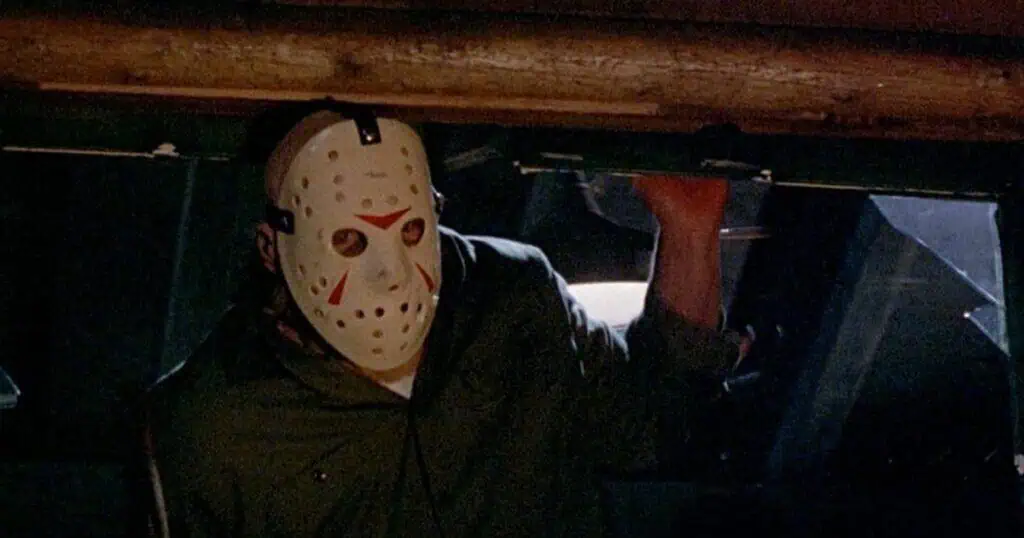
Why is Friday the 13th Part III the definitive Jason portrayal?
Friday the 13th Part III ranks first because it gave Jason his iconic hockey mask and standard wardrobe, while Richard Brooker balanced the character’s human, animalistic and physically imposing qualities. The film’s climactic chase also gives the portrayal an extended showcase.
Part III established Jason’s hockey-mask image and definitive classic look.
Jason first acquires the hockey mask in this film. It remains clean and intact until the final moments, when it receives the axe mark. Richard Brooker’s performance balances the different sides of Jason:
- Human
- Animalistic
- Stealthy
- Quick
- Enraged
- Physically imposing
The hockey-masked killer pursues the final girl through a climactic chase lasting around 13 minutes. The New Blood and The Final Chapter are strong alternatives, but Part III offers the most complete combination of design and performance.
Release year: 1982
Director: Steve Miner
Major legacy: Introduced the hockey mask and finalized Jason’s iconic image
Jason style: Definitive classic Jason
Cultural legacy: Permanently defined Jason Voorhees in popular culture by introducing the hockey mask
Across decades of sequels, reboots, television and crossovers, Jason Voorhees has evolved from a campfire legend into one of horror’s most adaptable icons. His versions range from a feral woodsman to an undead killer and a futuristic cybernetic monster, with each portrayal reflecting a different era of horror filmmaking.
What do viewers ask about Jason Voorhees?
The answers below summarize the ranking’s key comparisons, including Jason’s most recognizable look, his human and undead eras and the actors who portrayed him.
Jason’s portrayals vary by design, performer and place in the franchise’s mythology.
Which version of Jason Voorhees is considered the best?
Friday the 13th Part III features the definitive Jason in this ranking because it introduced the iconic hockey mask and standard look, alongside Richard Brooker’s strong physical performance.
Which Jason Voorhees was the scariest?
Friday the 13th: The Final Chapter is often considered the scariest human portrayal because Ted White plays Jason as aggressive and vicious.
When did Jason first wear the hockey mask?
Jason first wore the hockey mask in Friday the 13th Part III (1982), establishing the character’s best-known visual identity.
Which movie introduced Zombie Jason?
Jason Lives: Friday the 13th Part VI presents Jason as an undead killer resurrected by a lightning strike, beginning the franchise’s zombie Jason era.
Who played Jason Voorhees the most?
Kane Hodder portrayed Jason four times:
- Friday the 13th Part VII: The New Blood
- Friday the 13th Part VIII: Jason Takes Manhattan
- Jason Goes to Hell: The Final Friday
- Jason X
Kane Hodder is the actor most closely associated with the role in these films.
What is the most powerful version of Jason?
Uber Jason from Jason X is presented as the most powerful version because of his cybernetic upgrades, enhanced strength, regeneration and futuristic armor.
Why do fans love Sackhead Jason?
Fans appreciate the sackhead look in Friday the 13th Part 2 because it presents Jason as a grounded backwoods killer before the franchise’s supernatural versions.
Was Jason always undead?
No. The earlier films portray Jason more as a human survivalist living in the woods, while Friday the 13th Part VI fully embraces the undead version.
Why is Jason in Friday the 13th Part VII so popular?
The exposed spine, torn clothing, heavily decayed design and Kane Hodder’s physical performance make this version a popular choice for fans of monster Jason.
What is the difference between human Jason and zombie Jason?
Human Jason is more reactive and physically grounded, while zombie Jason is portrayed as stronger, more durable and closer to a supernatural force.
Who plays Jason Voorhees in Crystal Lake?
Several actors portray Jason at different ages in Peacock’s Crystal Lake. Kaiden Cullen and Theo Lonsdale play him at age four, Callum Vinson portrays him at age eleven, Zachary Branch plays the version glimpsed in the woods, and David Armstrong and Jonathan Tison portray the older Jason in the season-one finale.
The post Every Jason Voorhees Appearance Ranked appeared first on JoBlo.