


What matters most about Clayface?
- Sleep scene: James Watkins staged Matt Hagen and Caitlyn Corr’s observation scene with practical performances and limited visual effects.
- Flash mob: Tom Rhys Harries suggested the dance sequence, which uses Clayface’s shapeshifting powers rather than conventional fighting skills.
- Practical design: The filmmakers tested about 17 versions of Clayface’s final look before settling on a live-action design.
- Batman connection: Watkins described the film as a standalone story in Gotham, with possible background Easter eggs rather than a significant Batman role.
This interview explains how director James Watkins and the Clayface team shaped key scenes, practical effects and the film’s place in the DC Universe.
WARNING: This article contains spoilers for DC Studios’ Clayface.
DC Universe brings one of Batman’s best-known villains to the screen in Clayface.
Since the DCU launched, audiences have seen Superman and Supergirl return to the big screen, with David Corenswet and Milly Alcock playing the Kryptonian cousins in James Gunn’s franchise. HBO also expanded the Green Lantern story with the Lanterns series, starring Kyle Chandler and Aaron Pierre as Hal Jordan and John Stewart. The DC Studios film Clayface brings the franchise to Gotham City and leans into the “Monsters” theme of its current chapter.
I spoke with Clayface director James Watkins about the story of Matt Hagen, played by Tom Rhys Harries, and the film’s status as the DCU’s first R-rated release. Watkins discussed the film’s pivotal scenes, its practical effects, the construction of a practical Clayface suit, whether Batman was ever part of the story and the possibility of working with DC again.
How did Clayface create Matt and Caitlyn’s sleep-observation scene?
Clayface combines practical effects and visual effects to show Matt’s changing body. Director James Watkins says the sleep-observation scene also hinges on the uncertain relationship between Matt Hagen and Caitlyn Corr.
The scene’s central fact is that the filmmakers built its changing images from the actors’ matched performances and practical staging.
In the scene, Naomi Ackie’s Caitlyn Corr watches Matt while he sleeps to understand what her nanite treatment is doing to her patient. Watkins explained how the scene’s unusual tone, actor blocking and selective visual effects shaped the moment.
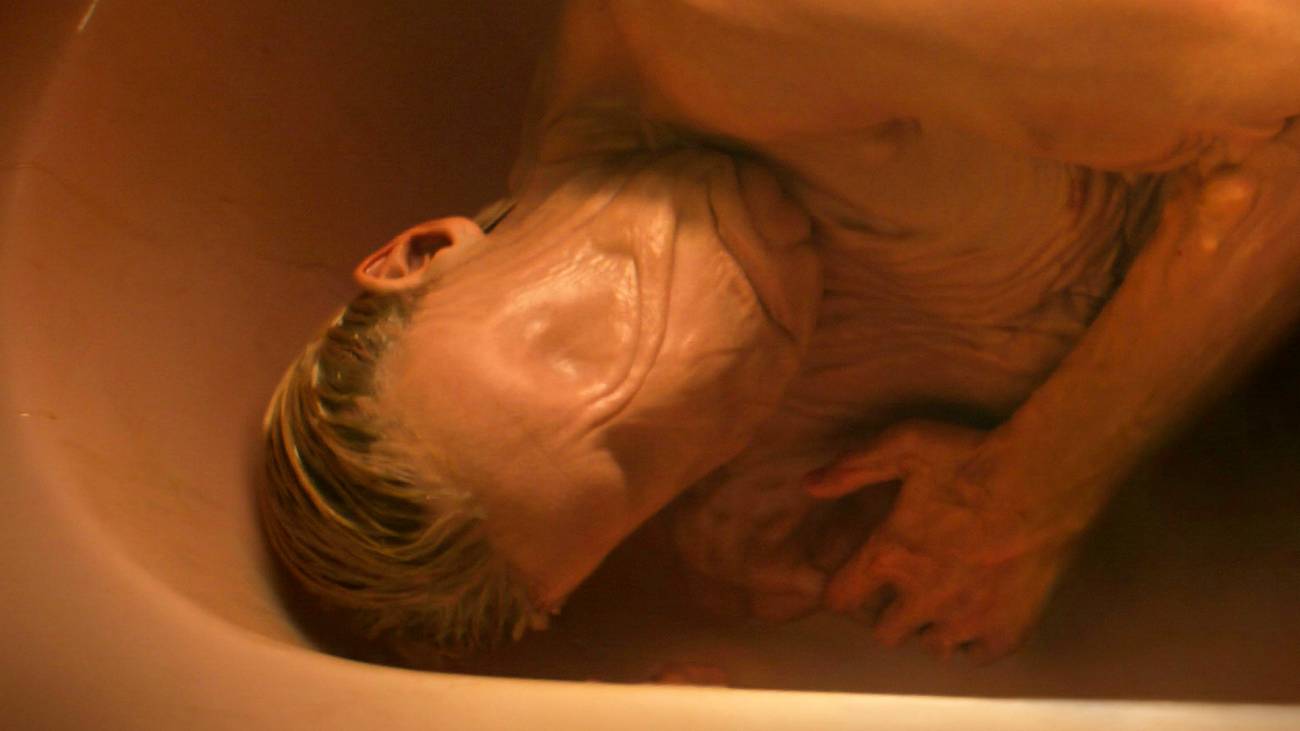
James Watkins: “The scene shows Tom’s character, Matt, beginning to change, while Naomi Ackie’s character, Caitlyn, grows concerned about him. She realizes something is happening in his unconscious and says, ‘I need to observe you while you sleep.’ What I liked about [what] how we approached the scene was its strange psychosexual tone and its focus on character. On their journey, it is a kind of love scene, but an unusual one: she is watching him, and the film asks whether she is looking at him as a scientist or as a woman. He is her project, and that creates a sense of transference between them.
There is attraction, but is it because he cured her, or because she is his doctor and he is her patient? I wanted the scene to hold all of that ambiguity and make the audience lean in. We filmed it in different ways. Sometimes Naomi sat in the chair while nobody was in the bed; sometimes she was there with Tom, or the actors switched positions. At times, we filmed Naomi’s body in the bed while Tom lay just outside the camera’s view, and his hand would move into frame.
We sometimes did it practically to capture a sense of blurring. We made sure their movements matched: Tom performed a take, Naomi watched and replicated him, and then they reversed the process. When one of them did something deliberately sexualized, the other copied it. In the edit, Jon Harris could use a simple mix and overlay in Avid to blend the two performances. I like practical techniques, so we built the scene on a straightforward, grounded base. A few moments needed a layer of visual effects, such as transitions from skin to skin or one eye to another.
The approach was simple, but the fluidity mattered. The music, which I discussed with Volker Bertelmann, helped create a strange, hypnotic feeling. You do not want to lead the audience; you want them to feel slightly hypnotized. Watching the scene with an audience is interesting because people wonder, ‘Should we be watching this? Should we be enjoying it? Is she watching it? Is she enjoying it?’ It has a queasy, voyeuristic complexity. My favorite filmmaker is Hitchcock, and I try to create the kind of dance with the audience that his films achieve, where viewers know they are participating.”
Why does Clayface’s flash-mob scene reveal Matt’s powers?
 © Warner Bros. /Courtesy Everett Collection
The flash-mob sequence became a standout moment in Clayface, even though dancing is an unexpected element in a horror story. The original script did not include it; Tom Rhys Harries asked Watkins whether they could add the idea.
The scene’s key point is that Matt uses shapeshifting and misdirection, rather than suddenly acquiring conventional fighting skills.
Watkins described the choreography as absurd and funny, while also reflecting Matt’s state of mind before the intense nightclub fight. The sequence brings together extras, actors and Harries, with practical effects showing Matt’s transformations in ways distinct from earlier live-action versions.
James Watkins: “I’m pleased you mentioned that. There were several elements to planning and executing the scene. Matt has been through a lot and suffered, and now he wants payback. The audience is invested in that journey and feels he deserves it. Later, he may go too far, but at this point we are with him: these people have wronged him, and we feel he deserves retribution.
Before he reaches Szabo, played by David Dencik, I wanted the audience to wonder how he would get past everyone. The scene needed to show his powers evolving and his discovery of them. We called it a ‘dark glee’: the audience gets to enjoy the moment with him. It also needed to avoid turning him into a ninja warrior. He becomes effective through his superpower, which lets him shapeshift and misdirect.
The scene came in late, and I kept trying to bring it into the film during preparation and shooting. With Cadillac Sal, Matt first tries to disguise himself as Sal and bluff his way in. Rosie stops him, then other gangsters, including Carmine Jr., catch him and drag him to the table. There is a moment that pays homage to Carlito’s Way. When that approach fails, Matt finds another way to create chaos. He uses a transformation into Cadillac Sal to make it seem as if there are more people there and set off a chaotic fight.
That leads into the flash mob, where the gangsters know Matt is there and he toys with them. The lassoing move calls back to the beginning, when Vic Chisler, played by Rob Brydon, brings Matt onto his talk-show set in a similar way. Tom and I discussed how Matt could look at the gangsters with gleeful defiance. We started with a dance move, and Tom suggested taking it further and turning it into a flash mob.
We then had to plan the scene over the next couple of days so everyone could learn the dance. I spoke to choreographer Pip Jordan, because a sequence like this needs preparation. Pip had a strong team of dancers and organized the work. Tom and I designed the move to convey an aggressive kind of glee, which felt earned in that moment.
You are never completely sure whether a scene has gone too far until you see it with an audience, but we realized Matt had earned that moment. The audience’s connection with him helps when he goes too far later and strengthens the tragedy. I’m proud of the scene, and it is gratifying to hear that it connected with people.”
How did KM Effects design Clayface’s practical suit?
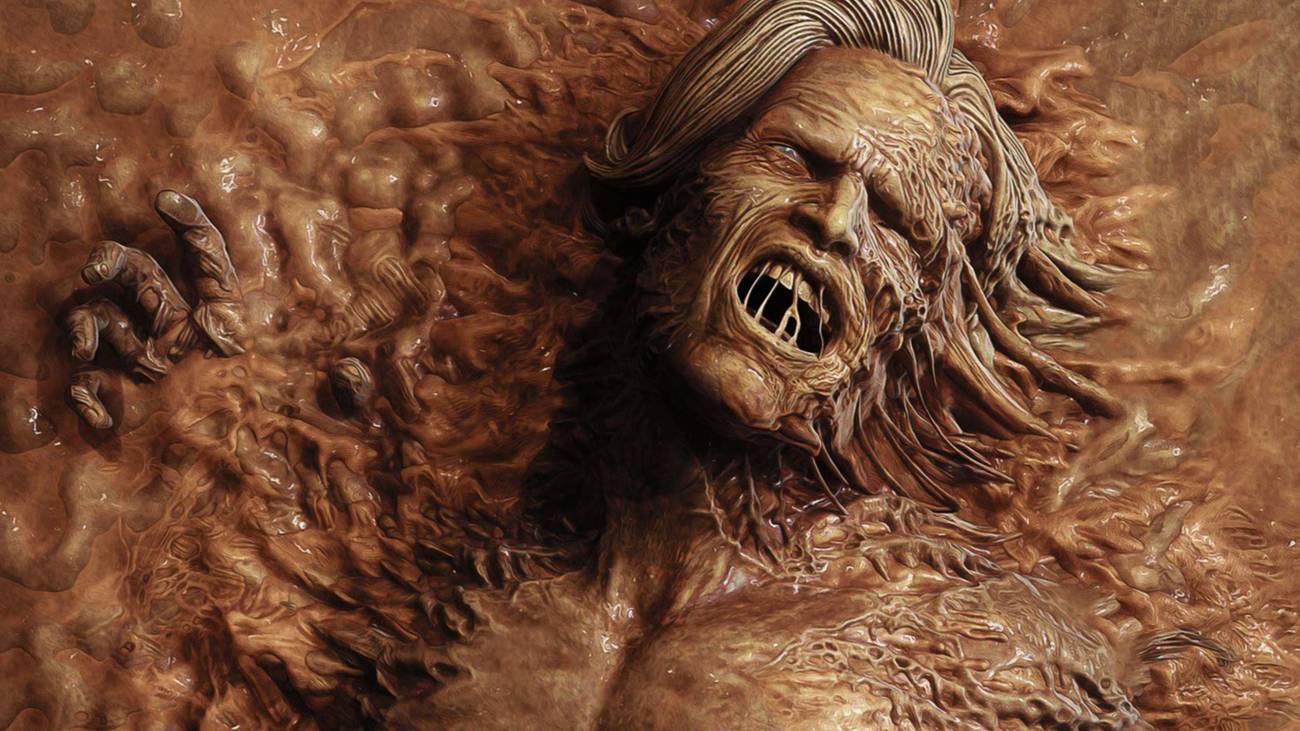
The ending of Clayface reveals Matt in a form recognizable from the comics, transforming into the DC monster known to Batman fans. KM Effects also made a practical suit for the reveal, and shared behind-the-scenes material after the film’s release.
The design’s central challenge was to make the comic-inspired monster work in live action while preserving the tragedy of the man inside it.
Watkins said the team explored the transformation in detail, including the balance between Matt’s yellow eye and his remaining human eye. The contrast was intended to show the last trace of his humanity.
James Watkins: “It took a lot of iterations and attempts with James Price, the designer, and the rest of the team. We went through about 17 versions because we wanted to honor the comics and the animated series while making the design work in live action.
When I read Mike Flanagan’s first draft, the tragedy and the sense of a man trapped inside a monster were important to me. This is an origin story about how a man becomes a monster, and I never wanted to lose sight of that in what the audience sees or hears. The scream combines the monster’s scream with Tom Rhys Harries performing a human scream, so the pain comes through. I was also focused on the eye in the light and the other eye in shadow, as well as the mouth, to convey humanity, heartbreak, loss and delusion.
If there is too much on top of his head, he can look like he has an ice-cream cone on it. It is a Rorschach effect: viewers see what they see. We went through many versions and made small adjustments to bring out the humanity. We also had to figure out the teeth. Some versions looked too frightening, while others became unintentionally comedic. It took trial and error to make the design feel monstrous and tragic in the right way.”
Was Batman almost part of Clayface?
Before the film’s release, Comicbook.com asked Tom Rhys Harries and Naomi Ackie whether Matt and Caitlyn knew about Batman. Harries suggested that the subject had been discussed and that footage existed.
Watkins said the closest the film came to a direct Batman connection was the possibility of background details and design references.
I asked Watkins what Harries might have meant. Although the DCU did not have an actor playing Batman at the time, the film could have referenced the hero through a magazine or newspaper headline. Watkins explained:
James Watkins: “I’m not entirely sure. The closest we had was probably Easter eggs the art department may have placed in the background, such as posters, design elements or chairs from earlier versions of Batman. What appealed to me about Mike’s original script was that it was a standalone story. You do not need deep knowledge of the background to enjoy this film. It is one person’s story in Gotham, much like Penguin or The Joker. In Matt’s journey into Clayface and his villainous story, he has not yet reached the point where he would attract Batman’s attention in a significant way.”
ScreenRant: “That makes sense. On the subject of Easter eggs, I remember a Joker-related poster that said something about ‘Corruption is the enemy of the people, march against the GCPD,’ and a poster of the Flying Graysons. Even though they were not in the final cut, could we see them in a home-media release?”
James Watkins: “James Price is the person to ask. The graphics department would show me tiny details in the back of a shot, such as a poster or a sticker on a phone box, and I would ask whether anyone could read it. There may be details hidden in the film that become visible in high definition. I would have to speak to James about what is actually there. I was not focused on deliberately smuggling things in, though the team would sometimes joke about sneaking something into the background.”
What did James Watkins say about DC Studios and future projects?
 Credit: Lucy North/PA Images/INSTARimages
The interview took place nearly 24 hours after news broke that James Gunn and Peter Safran were stepping down as co-CEOs of DC Studios. Given the timing, I asked Watkins about the announcement and what it could mean for his future work.
I also asked whether Watkins had discussed other DC projects with them before the news, whether or not a Clayface 2 was in the works, and what the change might mean with Jeremy Latcham taking over on December 1.
James Watkins: “The film is currently in the third week of its run, and it is doing well, with strong reactions. But I am not part of those conversations. I have genuinely had a very good time working with James and Peter. They have been supportive and given me the freedom to make the film I wanted to make. I wish them the best in whatever they do next, but I cannot speak to anything beyond that.”
ScreenRant: “If you had the chance to do another project in the DC space, not necessarily Clayface 2, are there characters you would want to explore?”
James Watkins: “I would like to do something in science fiction, perhaps a grounded survival story. I have a couple of ideas I am developing. I am also interested in horror or horror-adjacent films, because the boundaries of horror have expanded. I have spoken to people who would not normally see a horror film but enjoyed Clayface. I do not like putting films into little boxes. A film works or it does not, and it connects with an audience or it does not.
We live with a lot of anxieties, and horror-adjacent stories can be an interesting way to explore them. I also believe in the cinema as a shared experience. The nightclub scene is best enjoyed with a crowd and the energy of the room; it is like seeing live music when a scene works. Horror-adjacent films can create that communal experience and offer an exciting ride. I want to find films that work in that space.”
Will viewers see Aaron Paul’s deleted Clayface scenes?
 AMC
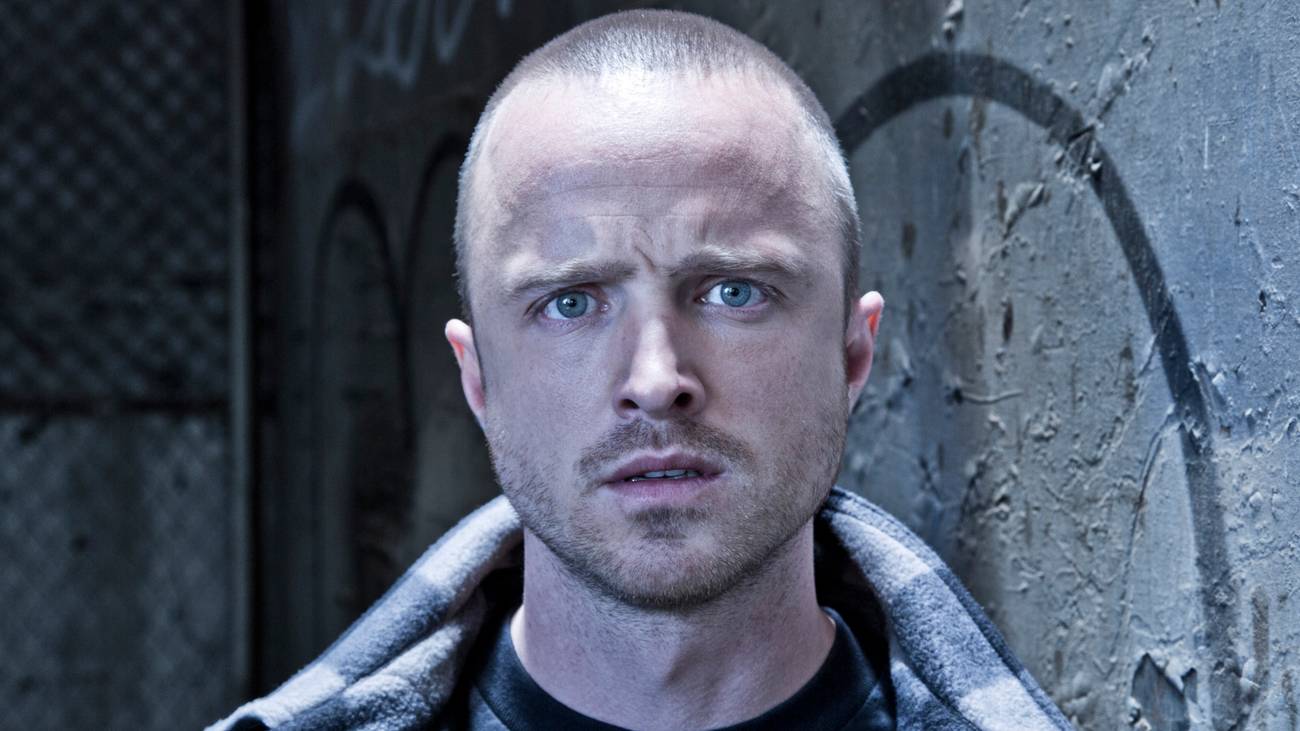
Watkins had previously said that Aaron Paul was cast as Jimmy Hagen, Matt’s father. As production and editing progressed, the film’s plans changed, as they often do.
Paul ultimately appears in a brief, easy-to-miss cameo during the nightclub fight, when Matt briefly shapeshifts into his abusive father. Watkins said he did not know whether the deleted material would be included in a home-media release.
James Watkins: “Honestly, I don’t know. I do not yet know what we are doing for DVD, so I cannot say.”
ScreenRant: “It was funny when someone asked if I had spotted Aaron Paul. I had not recognized him. How deliberate was that?”
James Watkins: “I love that. Aaron is a lovely person and a good actor. He has a small moment that is almost like a ghost appearing for Patches at the end. It says, ‘Okay, I’m not my father.’ Once you recognize Aaron, it feels like a lovely little ghost moment and an Easter egg.”
ScreenRant: “That says a lot about the makeup, prosthetics and costume, because even in a screenshot, he does not look like Aaron.”
James Watkins: “Part of that is hair and makeup, and part of it is Aaron being a very good, transformative actor. He plays a rough father and deliberately embodies the character as distressed.”
How does Clayface use practical filmmaking to tell a character story?
 Credit: © Warner Bros. /Courtesy Everett Collection
Clayface is a horror film with quiet, intimate and psychological elements, alongside practical sets and effects used to build Gotham City. Although it was produced by major studios Warner Bros. and DC, its filmmaking approach can feel intimate and independent in scale.
Watkins’ central point is that spectacle works best when it serves character and gives a scene a clear purpose.
The film was reportedly made on a $40 million budget. Watkins said its nightclub sequence depends on character and audience connection, not simply the size of the action.
James Watkins: “Stories connect us to characters and show how those characters connect with one another. In the nightclub scene, there are many fight scenes in films. With enough resources, filmmakers can do almost anything with computer-generated imagery, second units and stunts. That can lead to what I call fight fatigue: people hit one another, but the action has no purpose. It is like a love scene without character. I wanted this scene to be about character.
It is about the evolution of Matt’s journey, with some wit and humor. We seek intimacy and connection at the cinema, and I think people sometimes forget that. Making something bigger does not automatically make it more interesting. A film can be epic, but it also needs intimacy. Gotham gives us the scale of a city, but the story is still about one character. As a director, I wanted to hold on to that.”
What happens during Clayface’s nanite-overdose scene?
Matt becomes fixated on Caitlyn’s treatment and overdoses on nanites, a moment that triggers his transformation. In the gruesome scene, Matt spits out material that looks like teeth, prompting theories that the treatment is curing him by making him expel his disease.
Watkins said the material was gelatin and described the overdose as the trigger for the changes that follow.
James Watkins: “It was a kind of gelatin, and Tom actually had it in his mouth. On set, Naomi started laughing because every time we reset, he put more and more in his mouth and said, ‘I can fit more in.’ He was actually spitting it out. I think of it as his wound healing, almost like scar tissue coming out. It is the beginning of his enhanced healing, as the pieces that have become untethered are expelled.
That is how I understand it. I wanted the scene to be extreme. The skin bubbling involves visual effects, but the material he spits out and the blood are real and then augmented. The overdose triggers everything that follows. It was important to feel the ripple of the overdose beneath his skin.”
Clayface is playing in theaters.

- Release Date
-
October 23, 2026
- Runtime
-
108 Minutes
- Director
-
James Watkins
-

Tom Rhys Harries
Matt Hagen / Clayface
-

Naomi Ackie
Dr. Caitlin Bates