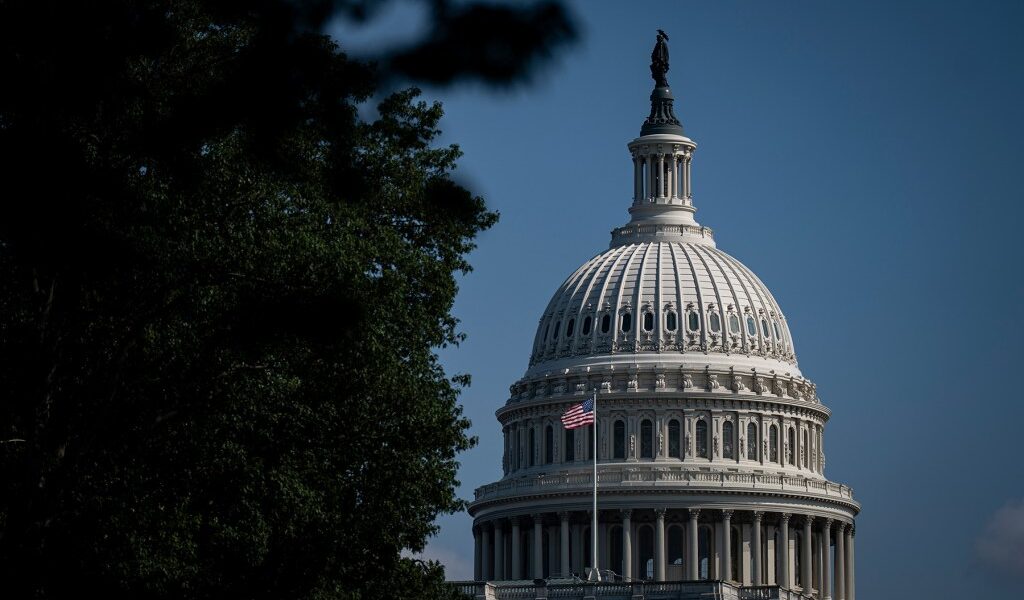
There are several pending bills before the 119th Congress that are being closely monitored by the music industry. These pieces of federal legislation could impact artists, consumers, and companies across various sectors of the business, including songwriting, licensing, tourism, royalties, ticketing, and live performances.
Many of these bills have bipartisan support from both Democrats and Republicans in Congress, and industry stakeholders have been actively advocating for their passage: The Recording Academy and Recording Industry Association of America (RIAA) have endorsed many of them, along with major corporations like the leading record labels and Live Nation.
The legislative process is lengthy and often complex. Many bills are introduced multiple times over the years, frequently with different versions in the Senate and House of Representatives. There are committee reviews, hearings, and revisions before a bill reaches the floor for a congressional vote and, if passed, the president’s desk to be signed into law.
To compile all the information in one place, Billboard has created a list of all music-related legislation currently before the 119th Congress. Below, you can read about the history behind each bill, who supports it, and what impact it would have on the industry.
We’re tracking developments for each proposed piece of legislation, and this list will be updated as bills progress through the House and Senate. We’ll also add new bills as they are introduced and explain their significance for the music business.
-
RAP Act
First introduced in 2022, the Restoring Artistic Protection (RAP) Act aims to limit the use of rap lyrics in federal prosecutions. It has long been controversial to cite lyrics as evidence of a crime, but this prosecutorial strategy has gained attention in recent years as it has been used against high-profile rappers like Young Thug, Gunna, and Lil Durk.
The RAP Act was reintroduced in 2023 and again in the House in July 2025, after which it was referred to the House Judiciary Committee.
Co-sponsored by Reps. Hank Johnson (D-Ga.) and Sydney Kamlager-Dove (D-Calif.), the RAP Act enjoys broad support within the music industry. The Recording Academy and RIAA have backed the bill, along with Warner Music Group (WMG), Universal Music Group (UMG), and Live Nation. -
NO FAKES Act
The Nurture Originals, Foster Art and Keep Entertainment Safe (NO FAKES) Act represents Congress’ effort to protect artists from artificial intelligence (AI) deepfakes. This legislation would transform a person’s digital likeness into a form of intellectual property, enabling artists to license these rights and sue those who publish deepfakes without their consent.
The NO FAKES Act was first introduced in 2024 and subsequently revamped twice — once in April 2025 and again in May 2026. The updated version of the bill in both the House and Senate includes additional notice and takedown provisions that could protect hosting sites from liability – with platforms such as YouTube and Spotify now supporting it. The proposed law cleared a significant hurdle in June 2026 when it received unanimous endorsement from the Senate Judiciary Committee. The next step will be a full Senate vote.The music industry’s major players have endorsed NO FAKES, including the Recording Academy, RIAA, WMG, UMG, and Sony. The bills are sponsored in the Senate by Sens. Marsha Blackburn (R-Tenn.) and Chris Coons (D-Del.), Thom Tillis (R-N.C.) and Amy Klobuchar (D-Minn.); and in the House by Rep. María Elvira Salazar (R-Fla.), Madeleine Dean (D-Penn.), Nathaniel Moran (R-Tex.), Becca Balint (D-Vt.), and Joe Morelle (D-N.Y.).
-
American Music Fairness Act
Legislators and music industry stakeholders have been attempting for decades to pass a law requiring terrestrial radio stations to pay performance royalties to artists and record labels. The latest version of this proposed law was introduced in 2021 as the American Music Fairness Act, which has since been reintroduced twice.
Most recently brought back to both chambers in January 2025, these bills aim to close a loophole that allows AM/FM radio stations in the U.S. to only pay publishing royalties – unlike satellite radio stations and online streamers that must compensate both songwriters and performers when they play a track. The bills have been referred to both chambers’ Judiciary Committees. The Senate Judiciary Committee’s intellectual property subcommittee held a hearing in December 2025 during which KISS rocker Gene Simmons testified that it’s “un-American” not to support this legislation.
The American Music Fairness Act is co-sponsored in the Senate by Blackburn, Tillis along with Sens. Alex Padilla (D-Calif.) and Cory Booker (D-N.J.), and in the House by Reps. Darrell Issa (R-Calif.) and Jerry Nadler (D-N.Y.). It’s supported by the Recording Academy, RIAA, SoundExchange, and the American Federation of Musicians. -
MAIN Event Ticketing Act
The Mitigating Automated Internet Networks (MAIN) for Event Ticketing Act was initially introduced in 2023 with aims to enhance enforcement of President Obama’s Better Online Ticket Sales (BOTS) Act.
This legislation would establish new reporting and security requirements for online ticket sellers to combat automated bots that bypass human buyers in line. Bills were reintroduced in the Senate in January 2025 and in the House in April 2025. The proposed legislation has received approval from both the Senate Committee on Commerce, Science and Transportation and the House Committee on Energy and Commerce; it is now headed to both chambers’ floors.
The bills are sponsored in the Senate by Blackburn along with Sen. Ben Ray Luján (D-N.M.), while in the House they are backed by Harshbarger along with Rep. Troy A. Carter Sr. (D-La.). They’ve gained support from organizations such as the Recording Academy, RIAA, Live Nation, and the National Independent Venue Association (NIVA).
-
TICKET Act
The Transparency in Charges for Key Events Ticketing (TICKET) Act was first introduced in 2023 with an objective to reform ticket-buying processes for concertgoers. This proposed legislation would enhance pricing transparency by mandating event promoters to clearly display a ticket’s full price—including fees and taxes—before checkout.
The legislation passed through the House in 2024 but did not advance at the end of the 118th congressional term. Versions were reintroduced in both chambers; they were brought back to the Senate in January 2025 and again to the House in February 2025; it passed through the House once more in April 2025. The Senate Committee on Commerce, Science and Transportation approved its bill during that same month; it is now headed for a vote on the Senate floor.The bills were introduced in the Senate by Sens. Ed Markey (D-Mass.) and Eric Schmitt (R-Mo.), while Reps.Jan Schakowsky (D-Ill.) and Gus Bilirakis (R-Fla.) sponsored them in the House. Supporters include organizations such as the Recording Academy, Live Nation, Vivid Seats, and StubHub.
A prior version of this list incorrectly stated that NIVA supports the TICKET Act; this error has been corrected.
-
Protecting Outdoor Concerts Act
First introduced in 2021 and reintroduced twice since then, the Protecting Outdoor Concerts Act would create a pathway for the Federal Aviation Administration to restrict airspace around outdoor music festivals and concerts.
Currently, existing law permits major sporting events to apply for such low-flying plane restrictions; however, organizers of music events cannot do so under current regulations. The bill was most recently introduced to the House in April 2025 by Rep.Raul Ruiz (D-Calif.)and has been referred to the House Committee on Transportation and Infrastructure.
Ruiz represents California’s Coachella Valley district where he has cited safety concerns regarding low-flying airplanes around Coachella and Stagecoach music festivals; AEG supports this proposed legislation as they organize both festivals.
-
TRAIN Act
The Transparency and Responsibility for Artificial Intelligence Networks (TRAIN) Act was first introduced in the Senate in 2024; it aims to provide musicians and other creators with legal means to discover if their work was used without permission to train a generative AI model. Technically speaking, this bill would allow artists to subpoena AI developers for their training data through processes similar to those already established for combating internet piracy.
It remains uncertain whether AI companies are legally obligated to obtain licenses when training their models on existing creative works; numerous copyright lawsuits regarding this matter are currently progressing through courts—including one initiated by major record labels—although some claims have been settled through licensing agreements with AI music services Suno and Udio.
The TRAIN Act was reintroduced into Senate proceedings in July 2025 by Blackburn alongside Sens.Peter Welch (D-Vt.), Adam Schiff (D-Calif.),andJosh Hawley (R-Mo.), while its first introduction into House proceedings occurred in January 2026 led by Dean alongside Moran.The bill has received endorsements from both RIAAand Recording Academy; it has been referred to both chambers’ Judiciary Committees.
-
CLEAR Act
A nother AI training-focused bill is known as Copyright Labeling & Ethical AI Reporting(CLEAR)Act which mandates tech companies submit publicly available reports detailing all protected works utilized during training data for generative AI models.The legislation also proposes an enforcement mechanism: civil fines imposed on AI companies failing these disclosures.
Schiff originally proposed this legislation under its former title Generative AI Copyright DisclosureAct during his tenure within House Representatives backin2024.The initial proposal failed without action; subsequently Schiff collaborated with Sen.John Curtis(R-Utah)to reintroduce CLEARActinFebruary2026.
This bill has garnered backing from numerous music industry groups including RIAA ,RecordingAcademy,NMPA,and SoundExchange.
-
Protect Working Musicians Act
T he Protect Working MusiciansAct(PWMA)allows independent musicians team up collectively negotiate licenseswithAIcompanies streaming platforms .In technical terms ,thebillaimstoachievethisby exempting indieartistsfromantitrustscrutiny overgroupbargaining.Similar exemptions already existforMajorLeagueBaseball ,aswellasforfarmers agricultural producers .
ThePWMAwasfirstintroducedin2021focusingonstreamingroyalties ,thenretooledin2023toaddressAI.ThePWMAwasonceagainintroducedintheHouseinMay2026byReps. Deborah Ross ( D-N.C.) , Steve Cohen ( D-Texas )andLloyd Doggett ( D-Texas ).It hasbeenreferredtotheHouseJudiciaryCommittee.
SupportersofthePWMAincludeRecordingAcademy,NMPA,A2IMandMusicArtistsCoalition.
AI LabelingAct
T he AI LabelingActwouldrequirethatAI-generatedcontentincludingaudioincludewatermarkdisclosinguseoftechnology.TheonuswouldbeonAIcompaniesandsocialmediaplatformstocreatethesetags.Ascurrentlywritten,musicstreamingplatformsarenotincluded.
VersionsofthebillwerefirstintroducedinbothHouseandSenatein2023butdidnotmoveforward.ItwasreintroducedintheSenateinJune2026bySens. Brian Schatz ( D-Hawaii ), John Curtis ( R-Utah ),and Mark Warner ( D-Va.).MusicindustrysupportersincludeMusicCreatorsNorthAmerica,theSocietyofComposersandLyricistsandtheSongwritersGuildofAmerica.
DEFENDIPAct
TheDeterringExtraterritorialForeignExploitationofNetworksDamagingIntellectualProperty(DEFENDIP)ActproposesanewmethodforU.S.copyrightholderstocombatoverseasdigitalpiracy.Specifically,thelegislationwouldgiveU.S.judgesthepowertocommandthecountry’sinternetserviceproviderstoblockforeignsitesthat host infringingmusic,videosorbooks.
BothHouseandSenateintroducedversionsoftheDEFENDIPActforthefirsttimeinSeptember2026,andthebillsarenowwithbothchambers’judiciarycommittees.AnearlierlegislativeproposalcurbingforeigninternetpiracyknownastheStopOnlinePiracyAct(SOPA)failedin2012amidbacklashfromthetechindustry.
ThelegislationissponsoredintheSenatebyTillis ,Coons ,BlackburnandSchiff,andintheHousebyReps. Zoe Lofgren ( D-Calif.)and Ben Cline ( R-Va.).It’sbeenendorsedbyRIAA ,RecordingAcademyandA2IM.

Sign Up
Here you can find original article; photos images used our article also come from source . We are not authors ; they have been used solely informational purposes proper attribution original source .
[INPUT_HTML_END]