

Legendary Star Trek producer Brannon Braga suggests that Star Trek: The Next Generation didn’t need to be canceled after 7 years and could have gone on for 10 seasons.
Star Trek: The Next Generation‘s 7 seasons aired in syndication from 1987 to 1994. Essentially creating the syndication model for first-run original series, TNG became a ratings juggernaut, acclaimed by critics and fans. However, Paramount made the call to end Next Gen‘s TV run and transition it to feature films after 7 years, with Star Trek: Deep Space Nine filling the void in syndication starting in 1993 while Star Trek: Voyager launched the new United Paramount Network in 1995.
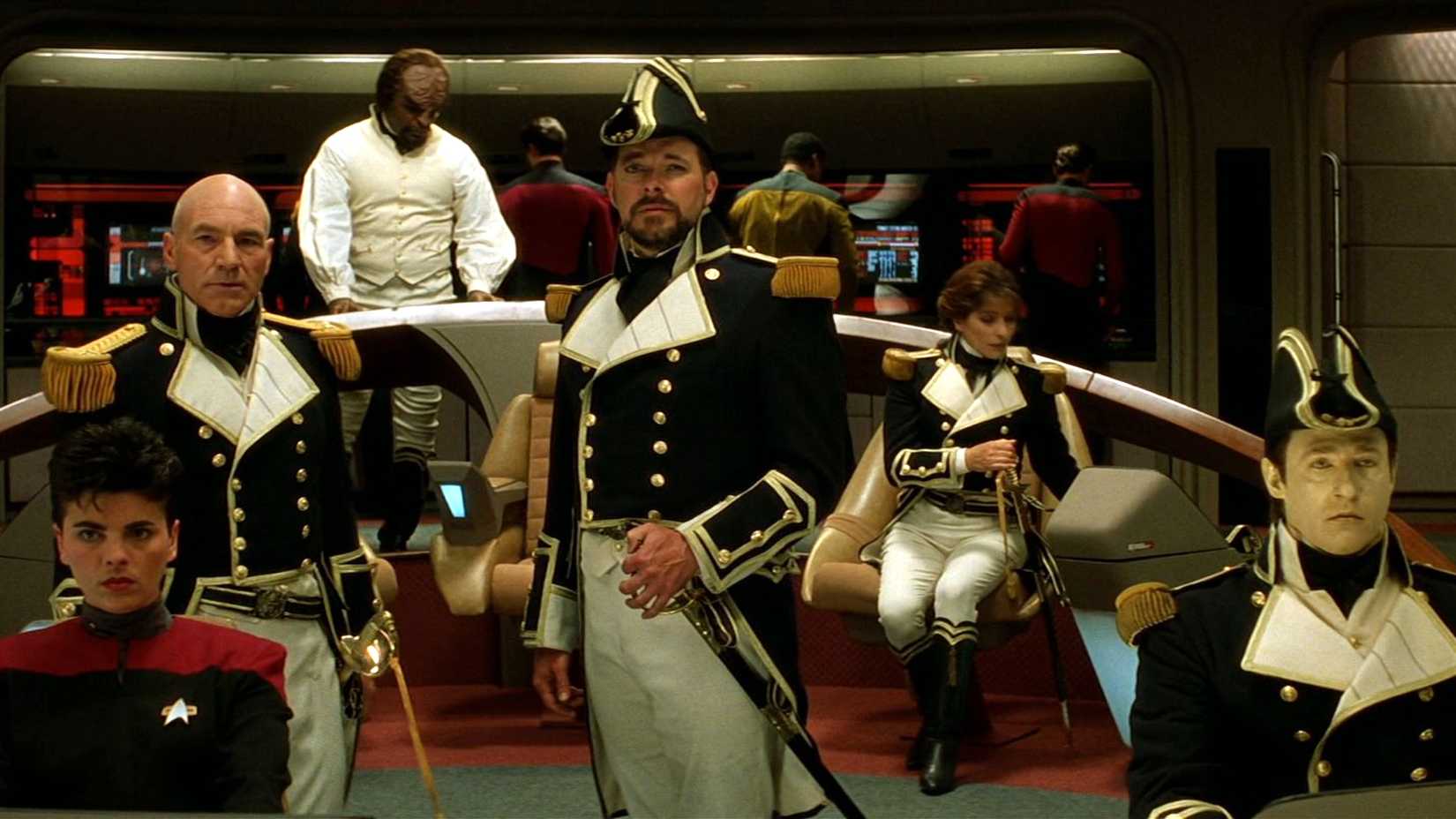
Appearing on The 7th Rule with Cirroc Lofton and Ryan T. Husk, Brannon Braga helped wrap up the hit podcast’s 3-year journey reviewing every episode of Star Trek: The Next Generation. Braga looked back at the busy timeframe of when TNG ended, when the movies were being produced, Star Trek: Deep Space Nine was in full swing, and Star Trek: Voyager was being developed. Brannon then shared his belief that TNG had “another 3 years, easy” and could have gone 10 seasons. Read his quote below:
Brannon Braga: “In my mind, TNG never ended. I mean, it was taken off the air at the height of its popularity. It had another 3 years, easy.”
Answering Cirroc Lofton’s follow-up question about why it was decided that 7 seasons was the cutoff for Star Trek series, Braga noted the rising costs of producing a Star Trek series for so many years, and that, at the time, 7 seasons guaranteed re-airing in syndication in perpetuity (before the rise of streaming changed television). Read Brannon’s response to Cirroc’s question:
Brannon Braga: “It seemed… I think the thinking was after 7 years, you’ve accumulated enough episodes to have an incredible syndicated life. And things start to get more expensive by that point. Actors’ salaries, everyone, really… Enterprise ended after 4 seasons, but we also did [98] episodes. Do you know how many episodes the [Alex] Kurtzman era produced? Grand total? It might not even be 100. I don’t know. Because their seasons are so short. Seven, I wanna say, was kind of arbitrary, but I think it just… seemed about right.”
Watch Brannon Braga on The 7th Rule below:
Star Trek: The Next Generation‘s 7-season run became ‘the number’ that other Star Trek series aspired to. DS9 and Voyager also ran 7 seasons, while Enterprise was considered a ‘failure’ for only lasting 4 seasons. Paramount+’s Star Trek series ceiling became 5 seasons, although the initial idea for Star Trek: Discovery was to match TNG‘s 7 seasons before Paramount Global’s sale to Skydance Media changed everything.
To answer Brannon Braga’s question about the cumulative number of episodes of executive producer Alex Kurtzman’s Star Trek era on Paramount+, noting that Star Trek: Lower Decks and Star Trek: Prodigy‘s episodes were 30 minutes in length, and with the addition of the made-for-streaming movie Star Trek: Section 31, the sum total of Kurtzman Star Trek is 251 episodes and one movie.
|
Alex Kurtzman Era Star Trek |
Seasons |
Episodes |
|---|---|---|
|
Star Trek: Discovery |
5 |
65 |
|
Star Trek: Picard |
3 |
30 |
|
Star Trek: Lower Decks |
5 |
50* half-hour |
|
Star Trek: Prodigy |
2 |
40* half-hour |
|
Star Trek: Strange New Worlds |
5 |
46 |
|
Star Trek: Starfleet Academy |
2 |
20 |
|
Star Trek: Section 31 |
Movie |
1 |
| Total |
20 + movie > >
 |






