Nightborn: Rupert Grint’s Horror Film Takes a ‘Very Meta’ Turn After Baby News
Key Takeaways
- Film Overview: “Nightborn” explores the terrifying aspects of parenthood through the lens of a horror narrative.
- Director's Vision: Hanna Bergholm aims to depict the painful and confusing journey of becoming a parent.
- Actor Insights: Rupert Grint and Seidi Haarla discuss the physical and emotional challenges of their roles.
- Unique Approach: The film intentionally avoids showing the baby’s face to enhance its eerie presence.
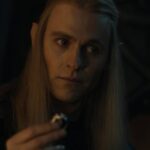
Nightborn stars Rupert Grint and Seidi Haarla and director Hanna Bergholm spoke with ComingSoon about the wild new horror movie. The trio discussed its bloody scenes, making a baby seem terrifying, and much more. It begins streaming on Shudder on July 31, 2026.
“With dreams of starting a perfect family, Saga (Seidi Haarla, Compartment No. 6) and her British husband Jon (Rupert Grint, Knock at the Cabin) move to the isolated house where she spent much of her childhood, deep in the Finnish forest. But as soon as their baby is born, despite the reassurance of all around her, Saga knows there’s something terribly wrong with her son. As their marriage starts to crack, Jon struggles to support his wife, but only Saga suspects the terrible truth about her newborn,” says the official synopsis.
Tyler Treese: Hanna, there’s a very bloody birthing scene early on in Nightborn. You never want to hear the words “a lot of patching up” during a birth. That’s not a good sign. Can you speak to that depiction and choosing that scene to really set the tone?
Hanna Bergholm: First of all, I wanted to set the tone of the film very early on. That was the technical reason.
More deeply, what I wanted in this film was to show the confusing or painful side of becoming a parent, first of all becoming a mother, and all the changes that might happen in your body very unexpectedly. How do you deal with all these physical changes that could happen in your body?
If this baby that you have been looking forward to is breaking your body, how do you accept that? How do you then connect with this baby and your own body image, which has somehow changed? I wanted to explore that.
I’m also often thinking that, in films, we are very used to showing people dying or heads being chopped off, but it’s kind of taboo to show people being born and being pulled out. It’s the way we all came into the world, so why is it taboo? That’s why I wanted to show that.
I love that decision because we often see birth romanticized in film. This was an interesting, stark look at how it can be different.
Seidi, there’s a pretty wild breastfeeding scene early on, and then we see the aftermath. That’s just the start of what this film asks of you. Obviously, it’s a movie, and it’s not actually happening, but there’s still such a vulnerability in being depicted that way. Can you speak to your willingness as an actress to go all out for what this film asked of you?
Seidi Haarla: Do you mean the physical parts or mentally?
A little bit of both because there are a lot of physical aspects. There are also embarrassing situations that you’re put through and have to show, and you’re very vulnerable in those scenes.
Haarla: Acting, for me, works like I’m really exploring life all the time. I think I do that with everything I do. I like to question, and I like to really think from all angles.
At the same time, I’m certain that I chose this profession because it gives me the opportunity to really investigate and try out what it is like to live a life and be a human being. I couldn’t do it in this way in any other profession.
Maybe the answer is that I have chosen to be brave, even though I’m afraid of everything all the time.
It’s quite the fearless performance, so you don’t come across as afraid at all.
Rupert, I was curious about the two scenes where blood is splattered all over you. Can you tell me a bit about what that process is like as an actor? You know it’s going to go right in your face, but you have to act like it’s not. The stakes are also high because if you mess it up, there’s a whole lot of cleanup involved.
Rupert Grint: It’s actually really hard. You really don’t want to anticipate it, but it’s so hard to turn your instincts off.
In one of the instances, a mug of blood was literally chucked in my face. You really have to—I don’t know. I still feel like I slightly anticipated it.
I’d love to have another go at it. It’s something I definitely didn’t master. There was a lot of blood in this one. I haven’t really worked with a lot of blood before, so this was a new thing for me. It’s really sweet as well. I swallowed loads of it. It was actually quite tasty.
No wonder the baby was drinking all the blood.
Grint: Exactly.
Hanna, you make a very deliberate choice not to show the baby’s face early on, and you shroud it so well during these key scenes. Can you speak to the challenge of making this cute little baby seem like the scariest thing alive? I thought you did that brilliantly.
Hanna Bergholm: One of the most important choices was not to show the baby’s face because babies’ faces are cute. That’s one reason why I didn’t want to show it.
I also wanted to share Saga’s experience of wondering whether there is something wrong with the baby or not. I wanted to keep the audience wondering that.
What we see of the baby is that it’s quite hairy and has long fingernails, but it’s on the edge where it’s still possible that it’s normal. I wanted to keep the audience on edge, wondering whether this was real or not. It was very carefully planned because we didn’t want to show the baby’s face. Since babies generally are not scary, we had to figure out how to shoot it and use sound design in a way that made it appear scary.
Of course, we used a lot of animatronics—these robotic puppets that were moved with rods—and a little bit of a real baby. It was a combination.
Seidi, at first as Hanna was saying viewers are unsure whether something unnatural is occurring or if it’s just the mother struggling to bond with her child. It becomes obvious later on but how did you play with that uncertainty as an actor? Does that factor into your performance when you know viewers are going to be reading this in multiple ways?
Seidi Haarla: I think the question all the time is that we don’t know how other people see us. At least I am afraid that you are the only one who is feeling like this; no one has ever felt like this before; and you are totally alone.
There’s also the experience of not being heard or understood and how scary that is. Maybe I also connect to her trying to be in control of reality; my observations—or her observations—of the baby are more true compared to those of the father.
What is truth? I think it’s a real question in this reality because we never know who gets to say what is true?
Rupert, there are always worries, excitement, and insecurities that come with having your first child. You’ve gone through that in real life. How was it conveying that unique mix of emotions and heightening it for this film once it takes a weirder turn?
Rupert Grint: It’s actually very helpful having experienced this because it is one of the most terrifying things a person can do, I think.
The week I got the script for this movie; I found out I was expecting my second child. It felt very meta; probably not wise making this movie after learning that information.
For me personally; it made everything feel quite real; very meta; useful for drawing upon my experiences as well. Reading particularly about the birth scene felt traumatic; palpable anxiety because you never know what will happen; what will be at stake; or what will happen next.
This moment can be dangerous yet beautiful; truly horror movie material itself; something exciting for me to face head-on.
Thanks to Rupert Grint, Seidi Haarla, and Hanna Bergholm for taking the time to talk about Nightborn.