Key Takeaways
- Rocky’s performance: James Ortiz brought the alien character to life through practical puppetry and physical acting in Project Hail Mary.
- Puppeteer team: Ortiz worked with three to seven performers to operate Rocky’s appendages.
- Improvised moments: Ortiz and Ryan Gosling developed scenes through extended improvisation, including Rocky’s “Fist my bump” line.
- Practical effects: The production used puppets in most shots, with some scenes combining puppetry and CGI.
James Ortiz, an actor and puppeteer, is eligible for a Best Supporting Actor nomination at the 99th Academy Awards for playing Rocky in <em>Project Hail Mary</em>. Ortiz performed the lovable alien through practical puppetry, leading a team on set and improvising opposite Ryan Gosling through take after take, in what he likened to Waiting for Godot in space.
Filmmakers Phil Lord and Chris Miller adapted Andy Weir’s novel in a screenplay by Drew Goddard. The story follows a man out of his depth and a rocky, five-legged alien on a dangerous mission to save their home planets.
At the SCAD Savannah Film Festival, Collider’s Steve Weintraub moderated an in-depth Q&A with Ortiz about creating one of the film’s most memorable characters. Ortiz discussed practical puppetry, the creative possibilities of working within a puppet’s limitations, the origins of Rocky’s best-known moments and his collaboration with Gosling. The full Q&A is available in the video above, with a transcript below.
How Did James Ortiz Develop Rocky’s Most Memorable Lines?
“I was working so hard on just trying to make Rocky as truthful as possible.”
James Ortiz developed Rocky’s dialogue and movement through improvisation, guided by the character’s physical design. Ortiz said he focused on making Rocky feel truthful rather than simply delivering catchphrases.
Rocky’s dialogue and physical performance developed together through improvisation.
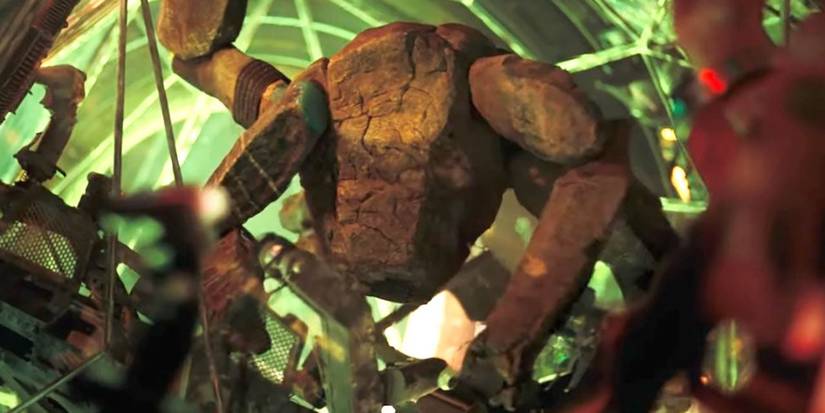 Image via Amazon MGM Studios
COLLIDER: Let’s start with your background. How did you join the project?
JAMES ORTIZ: I was cast as an actor a long time ago by casting director Jeanne McCarthy. I was in a television pilot that was never aired.
Shortly after that, I was based in New York and developing a side career that became my full-time work: puppeteering and designing puppets for theater. Puppetry gave me the chance to play characters I might never otherwise have been cast as. It was exciting to take on different kinds of roles.
Jeanne remembered me and would sometimes bring me in for projects, but I would tell her I had a puppet commitment. She asked, “Puppets?” Eventually, she called to tell me about this story. I thought it sounded incredible, but wondered whether they really wanted a puppet. I met with Phil [Lord] and Chris [Miller], and we connected immediately. Then I was on set, trying to make a faceless, five-legged creature lovable.
If Rocky watched Project Hail Mary, what would he say the filmmakers got wrong about him?
ORTIZ: I think Rocky would hear everybody laughing and say, “Not funny, not funny.” He probably wouldn’t think they were funny.
If you could sit down with Jim Henson, what would you want to talk about?
ORTIZ: I don’t know if I’d say anything. I’d probably just sit there feeling awkward. I’ve been fortunate to meet many of his children, who run different puppet organizations around the country, and that has been special. I did a New York show called The Woodsman a long time ago, and Cheryl Henson moderated a talk-back. She told me how much her father loved the Oz stories, and hearing that meant a lot.
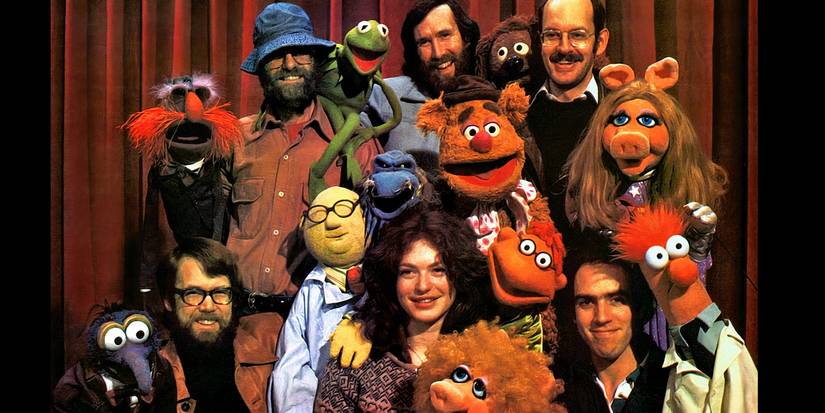 Image via ATV
How many voicemails have you recorded for friends and family as Rocky?
ORTIZ: There is no limit. I couldn’t even begin to give you a number.
How do you feel about doing Rocky’s voice in public, like you’re doing now?
ORTIZ: What are we trying to communicate?
I’m sure someone in the audience would like a voicemail from Rocky.
ORTIZ: It would probably go: “You reach voicemail of this human. Make no sense. Leave message after beep. Beep now. It’s time for a beep. Where is beep, question? Make no sense. Make no sense. Uh, uh, uh.” Then it would get cut off, because I don’t think Rocky fully understands what’s happening.
When did you first say, “Fist my bump,” and did you realize it would become a catchphrase?
ORTIZ: I had no idea. We worked so hard on the film, and I left after having a great experience without any sense that people would like it. Even when everyone involved does everything right, it doesn’t always translate or land with audiences. The fact that it did is pretty wild, so I didn’t think that far ahead.
I was originally there to help Ryan [Gosling] and the director of photography. I was the steward of the character, borrowing Rocky for the production. The fact that they eventually entrusted the character to me is something I’ll keep processing for the rest of my life.
Do you remember when you first said, “Fist my bump”?
ORTIZ: It must have happened during one of the scenes, probably in an improvised moment. I was working hard to make Rocky feel truthful, and sometimes I forgot that there were catchphrases I needed to include. Phil and Chris had an earpiece in my ear and could offer suggestions between takes, or even during them. They might say, “Say ‘Fist my bump,’” and I’d remember to add it. I can’t tell you exactly when it happened, but it would have been during that process.
How Did Ryan Gosling and James Ortiz Improvise Rocky’s “Very Demure” Moment?
“Rocky is very mindful. Rocky doesn’t do too much.”
Ryan Gosling and James Ortiz improvised during long stretches on set, allowing unexpected exchanges to shape the characters. One riff prompted Gosling, playing Ryland Grace, to call Rocky “very demure.”
Improvisation gave Gosling and Ortiz room to discover spontaneous character moments.
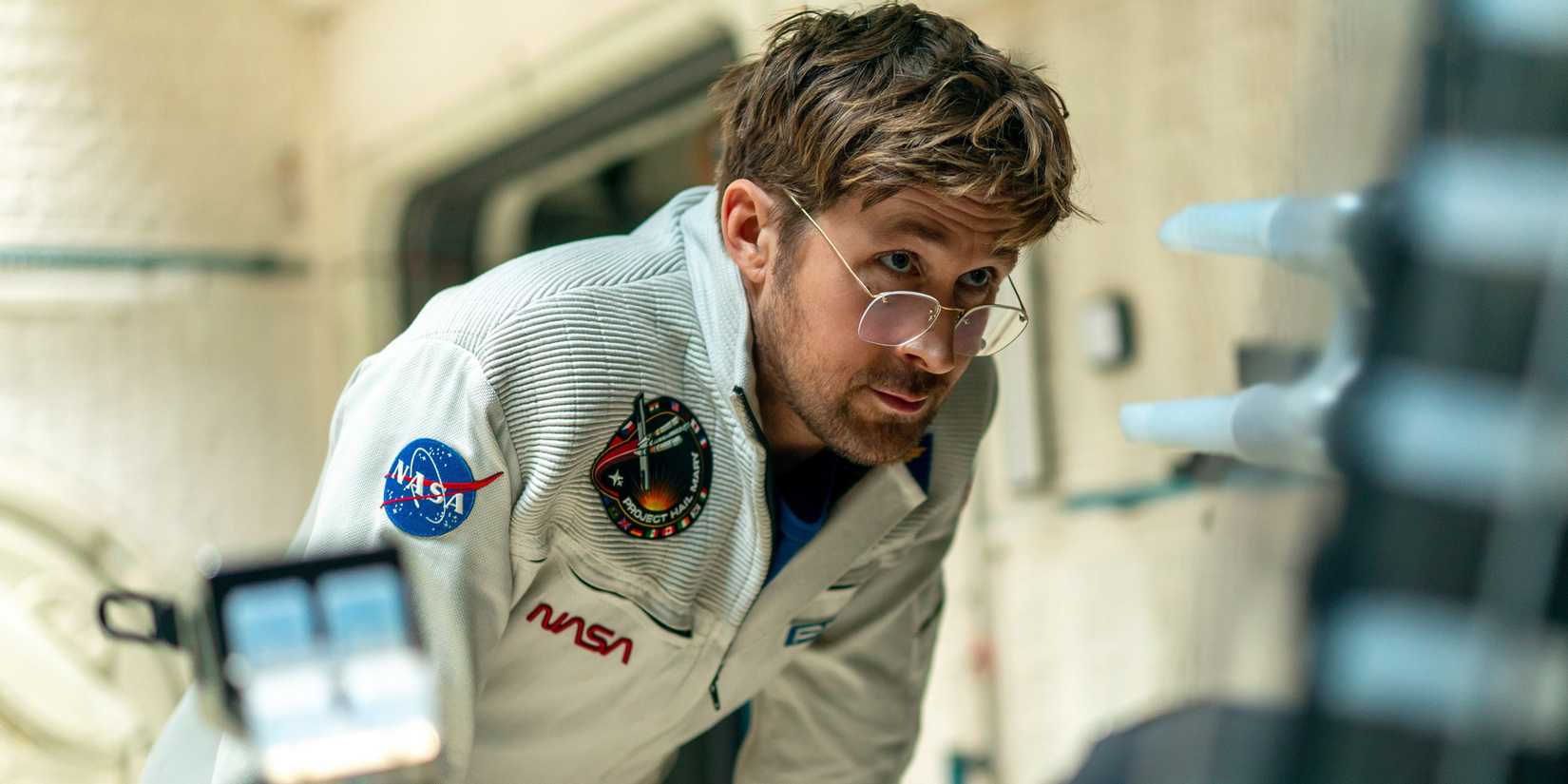 Image via Amazon MGM Studios
You said you and Ryan sometimes improvised for long stretches. What did he do or say as Grace that caught you off guard, and how did you respond as Rocky?
ORTIZ: The one thing that comes to mind is a meme that was going around a few years ago: “very demure.” One day, we were riffing about Rocky, and Ryan said, “It’s very demure.” He immediately realized what he’d said and tried to take it back. I think I responded, “What is demure, question?”
We would just keep going and use up camera time.
We’re at SCAD, with many students in the audience. What advice would you give people who want to do what you do? And what advice did you receive that was completely wrong?
ORTIZ: Oh, damn!
Sorry for the language.
ORTIZ: I may need to swear to answer, too. An acting professor once told me, “This is one motherfucker of a business.” It is hard, but I don’t think that makes it bad. The most rewarding things I’ve done have been hard-won.
For anyone who wants to play characters that are difficult to define, act as much as you can. Look for chances to play roles you wouldn’t usually be cast in, and read parts that initially seem wrong for you. Puppetry is a physical art form, so work on using your body to create a character.
I’ve often said that Rocky’s movement is his subtext. What Rocky feels comes out through his body, while what he says is the best the translator can manage. I was always tracking what Rocky might be feeling, even though he may not understand those feelings himself. Over the course of the story, Rocky learns what feeling is through Grace.
My advice is to explore movement theater, try unusual roles and let your imagination work without limits.
From my perspective, people may not realize how much work a performance takes. You have to give almost everything to something you love if you want to succeed.
ORTIZ: I agree. I knew when I got the job that I wouldn’t be the person seen on screen, but that didn’t matter. My job was to serve the film and make Rocky work as a character. Rocky has five legs, no face, an unfamiliar way of speaking and a culture that is difficult to imagine. I wanted to make the performance feel consistent, alive and surprising, while helping cinematographer Greig Fraser find where the camera should go and supporting Ryan through long scenes. Imagine trying to do that opposite a tennis ball.
The objective was to go all the way. I already have a tendency to do too much, so I couldn’t help myself.
Was there a moment when you realized people on set saw Rocky as a real character, not just a puppet?
ORTIZ: People were talking to Rocky instead of me. That was the moment. [Laughs]
During the first few weeks, we were still finding our footing. Phil gave me useful advice after we shot a scene that didn’t make the film but appears in the deleted scenes. It was my first day of filming, and we were in bunk beds. The scene was great to perform, and I could feel the crew, some of whom might have been unsure the idea would work, relax and lean in.
Phil brought me and the other Rocketeers into his tent to watch footage from that day. He told me to trust stillness more. I had been overcomplicating the idea that Rocky had no face and needed to communicate through movement. Phil reminded me the movie was in IMAX, so I didn’t need to move constantly. [thrashes around]
It was a valuable lesson, similar to learning how to use stillness and camera direction as an actor, but applied to a creature without a face.
That advice Michael Caine gave about not blinking is accurate.
ORTIZ: It’s completely true.
Acting students should practice controlling their blinking. Great actors often blink deliberately, as if a blink marks a character moment.
ORTIZ: Yes.
It’s a small skill worth practicing.
ORTIZ: There’s footage of Michael Caine explaining it. It’s valuable because it’s about using the medium. Theater performers use their whole bodies, while film actors must consider the camera frame and how to use it. That’s always part of the exercise.
How Many Puppeteers Brought Rocky to Life?
One of Rocky’s most iconic moments began as a “happy accident.”
James Ortiz operated Rocky’s main body, while three to seven other performers controlled the creature’s appendages. The team trained together for eight weeks and used emotional cues to keep the performance expressive when the puppet’s mechanics limited a movement.
Rocky’s puppetry team combined coordinated physical operation with improvisational performance.
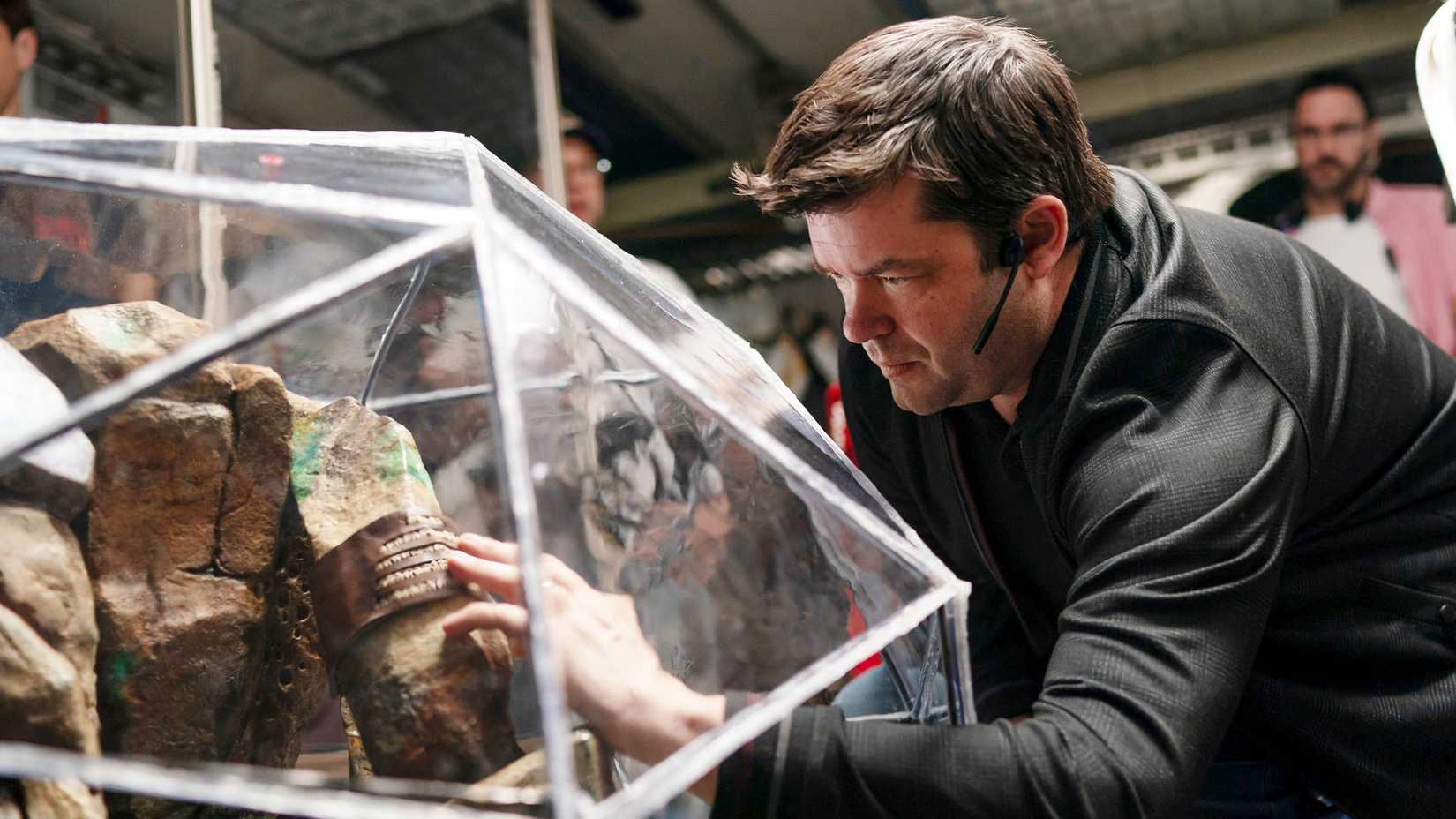
Image via Amazon MGM Studios/Couresy Everett Collection
What was the physical rig like? How many people operated Rocky, and how did the team stay in sync?
ORTIZ: I was usually on the carapace, or main body. Handles extended from Rocky’s mid-back, like a fighter pilot’s controls, and I used them to animate the head. Three to seven other people sometimes operated the appendages, and I led the movement.
We spent eight weeks learning to work together as a company. Puppetry can be technical, so I promised Ryan from the start that he could improvise with me and that I wouldn’t let the mechanics get in the way. The performance had to remain emotional.
If I sensed another performer getting frustrated because a leg couldn’t move as intended, I’d suggest focusing on the feeling instead of perfect execution. After a take, I might ask everyone to try again with an emotional cue, such as sneaking downstairs on Christmas morning. That feeling could help us reach the scene’s emotional beat, even if the image didn’t literally relate to the action.
That approach was especially useful when we were improvising and needed to stay open to what might happen.
Did the puppet’s limitations ever improve the performance?
ORTIZ: [Thumbs down] The filmmakers once suggested that Rocky give a thumbs-up. I pointed out that Rocky’s elbows don’t rotate and he has no wrists. Without a wrist, a thumbs-up wasn’t possible. Trying to move a finger instead looked like he was signaling “One minute!”
One of the puppeteers suggested that Rocky ask, “Thumbs up?” [shakes head] [Thumbs down] It worked as a joke and became a happy accident.
How Did Rocky’s Trauma Shape His Story in Project Hail Mary?
“Grace say Grace will die, Rocky fix.”
Rocky’s history of being alone for 80 years aboard a spaceship was not fully addressed in the original cut, according to Ortiz. A line added about a month before the film’s release gave that experience a more positive emotional payoff.
The added line connects Rocky’s painful past with his decision to help Grace.
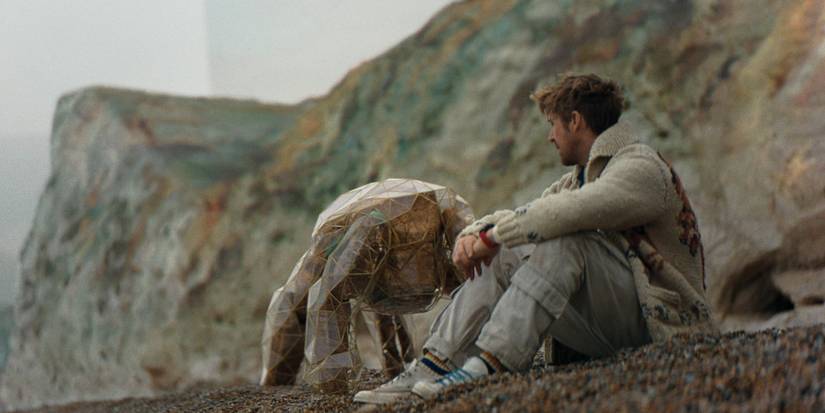 Image via Amazon MGM Studios
Phil and Chris are known for finding movies in the editing room. Did they make any editing choices that surprised you about Rocky’s performance?
ORTIZ: Yes. I loved working with them because I came from theater, and theater credits don’t always carry over into film. They would shoot scenes until everyone’s ideas had been explored. We started with Drew Goddard’s excellent script, then Ryan or I might suggest something, or Phil and Chris would offer an idea. Sometimes we spent 45 minutes on a three-line scene, trying it again and adding new details.
We captured so much material that I often left without knowing exactly what we had done. I was focused on staying in the scene. The different edits I saw felt like very different films, because placing scenes next to one another changed their meaning.
When I saw the final cut, I wanted to use the ADR booth to complete more of Rocky’s character arc. The movie is told from Ryan’s perspective, and the audience is inside his head for much of the story. Once Grace realizes Rocky can communicate, the film also gives us Rocky’s point of view, but there was limited room to develop Rocky’s story.
Rocky’s trauma from spending 80 years alone on a spaceship did not have a clear resolution. Through trial and error, I suggested changing a line in the scene where Rocky gives Grace the astrophage. The line, “Grace say Grace will die, Rocky fix,” was added about a month before the film came out. I was glad we found a way to give the trauma a positive direction: Rocky turns a painful experience into help for someone he cares about.
That’s a roundabout way of answering the question.
What has it been like meeting fans of a film that means so much to them, and what do they want to talk about?
ORTIZ: It’s incredible. We made the film in a bubble, and then it came out. I also wanted to tell the story of the first time I met Steve. Do you want to do it?
This is your Q&A. Do whatever you want.
ORTIZ: We were doing a press junket in Los Angeles before the film was released. Only the press had seen it. While Ryan was being interviewed downstairs, I was upstairs with the Rocketeers, doing a meet-and-greet with Rocky. People came in for a quick interaction, a photo or a video.
We should explain that the room was in a hotel and had curtains, so you couldn’t see what was inside. The publicist just said, “We have something we want you to do.” We weren’t told what was in the room. I was simply asked to go in.
ORTIZ: Cameras were set up so people could see Rocky on a table, alive and saying, “Hello, friend!” Each visit lasted about two minutes. The interactions had become a little routine, and people would say, “I loved the movie,” which made us wonder if they really had.
Then someone walked in, the curtain opened and Steve’s face changed. We invited him over for a picture, but he just moved toward us, completely absorbed. It was moving because it was the first sign I had that the character might be working. I was still puppeteering, but I broke character to ask, “Steve, do you want to sit down?” We took extra time so he could have the experience, and it meant a lot to me.
I’m very lucky to do what I do, and, as I told you backstage, I’ve interviewed Kermit and Miss Piggy. You become a child and see the characters, not the puppeteers. I was in London recently and saw the Rocky puppets in a room; everyone was excited.
ORTIZ: That’s nice to hear. I wanted to tell you the story because we had met before, and it meant a lot to me, Steve.
Thank you.
Why Did Rocky and Mary’s Knock-Knock Joke Miss the Final Cut?
Ortiz also explains how practical puppetry and CGI worked together.
Rocky and Mary’s knock-knock joke was an improvised moment that did not make the final film. Ortiz also described how the production used puppets and CGI in different shots rather than relying entirely on computer-generated imagery.
The film combined practical puppetry and CGI according to the needs of each shot.
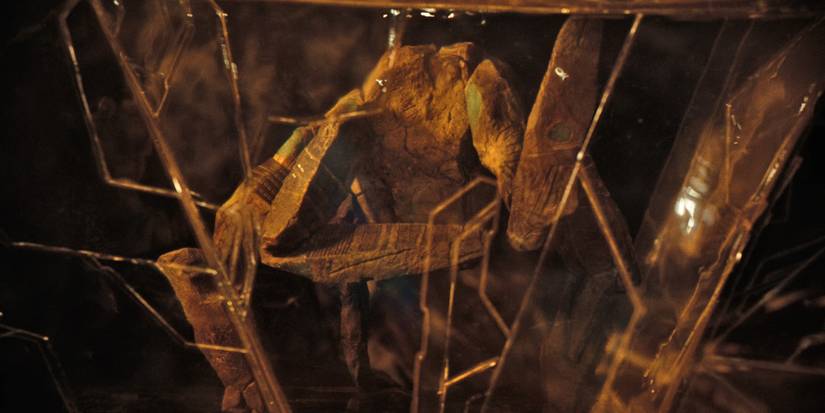 Image via Amazon MGM Studios
Is there a deleted Rocky scene or extended sequence fans would love to see?
ORTIZ: There’s one small moment that wasn’t exactly a deleted scene; it was an addition to another scene. During the fishing-training scene, Priya [Kansara], who voiced Mary, joined us on set for a few days. She’s an incredible actor. Ryan and I had been filming together for five months, so having another scene partner made everyone’s energy shift.
We had an idea for a moment that made it into only one or two takes. While Grace was asleep, Mary and Rocky had supposedly been spending time together, and Mary had taught Rocky knock-knock jokes. In the scene, Rocky says, “Tell joke now.” Then he starts, “Knock, knock,” and Grace replies, “Who’s there?” “Rocky!” It didn’t go anywhere or serve the story, but it was a silly moment on set.
What was the most technically difficult Rocky scene, and what would audiences not realize went into those few seconds?
ORTIZ: I can’t single out one scene as the hardest. Every scene presented a challenge. Whenever Rocky appears on camera, we were usually there with him. The challenge was making sure there was enough room for the puppeteers in every shot. Some shots used CGI, some used a mix of CGI and puppetry, and others used a full puppet or a two-part puppet.
The tape-measure scene was especially fun. Only one or two shots in the back-and-forth sequence used CGI; the rest were us. I want to recognize puppeteers Claire Roi Harvey and Fred [Buhagiar]. They used mechanical fingers to perform the action, and we played through it. It was a very silly day on set.
One challenge came from the materials. Rocky was made of fiberglass, which is lightweight, while the Xenonite was made of plexiglass. Fiberglass scratches plexiglass, and the scratches can’t be polished away. We had to avoid touching our “home,” because contact could leave a deep mark and prevent Greig from filming through it. The crew initially added protective transparent layers, but those made the image blurrier, so they had to find another solution.
Only two shots in the film, in the clock when Rocky pulls it out, used real glass. Real glass did not scratch in the same way as the plexiglass. In other shots, the risk of damaging the set meant we couldn’t touch our home.

- Release Date
-
March 15, 2026
- Runtime
-
157 minutes
- Director
-
Christopher Miller, Phil Lord
- Writers
-
Drew Goddard, Andy Weir
- Producers
-
Aditya Sood, Amy Pascal, Andy Weir, Christopher Miller, Phil Lord, Rachel O’Connor, Ryan Gosling