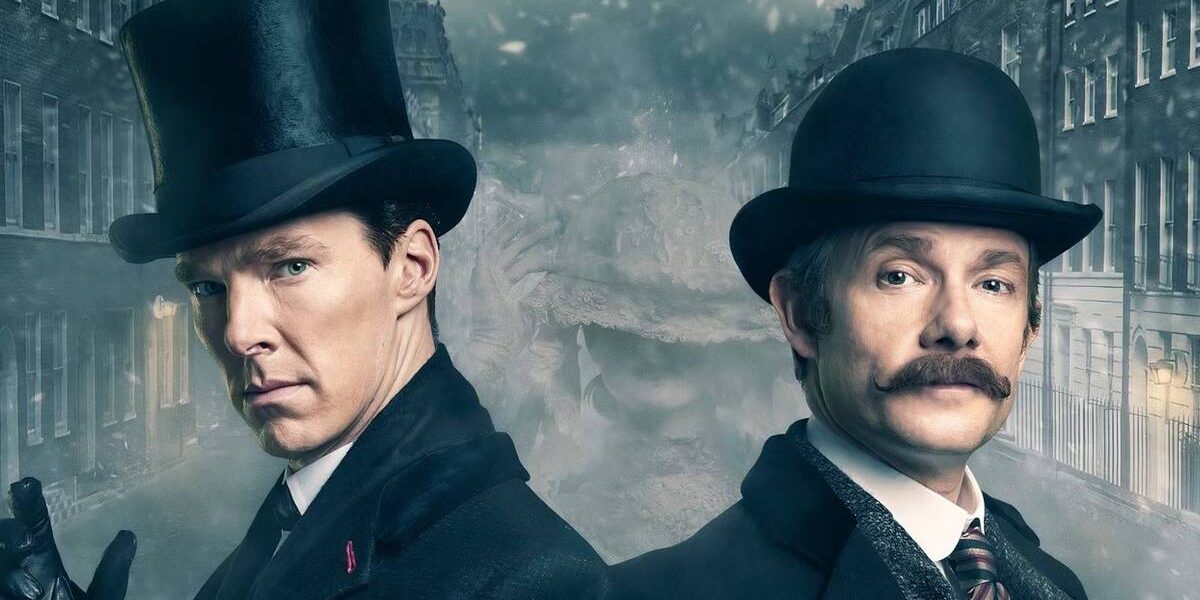
Sherlock Holmes has survived just about every adaptation trend imaginable. Prestige BBC drama, big-budget action franchise, modern procedural, and there’s even a version where he solves crimes in the 22nd Century. For well over 100 years, writers have offered fresh interpretations of how to outfit Arthur Conan Doyle‘s detective without significantly altering the core elements of his character.
For many modern viewers, Benedict Cumberbatch’s Sherlock remains the defining reinvention of the detective, translating Holmes’ methods and personality into the present day. Yet even that celebrated adaptation largely worked from the character’s most familiar stories rather than exploring the mysterious years he spent presumed dead. Sky’s upcoming series The Death of Sherlock Holmes, starring Rafe Spall and set to premiere in 2027, finally changes that.
Many adaptations of Sherlock Holmes draw from the same basic set of elements: the location at 221B Baker Street, his sidekick Watson, his arch-enemy Moriarty, his love interest Irene Adler, etc. Even the most original retellings of Holmes’ story rely on the remaking of stories that already exist and do not take advantage of the virtually untapped possibility that Doyle left to future creators. Instead, The Death of Sherlock Holmes plants itself inside the one stretch of Holmes canon that adaptations almost always skip over entirely: the three years between Sherlock Holmes’ apparent death at Reichenbach Falls and his eventual return in The Adventure of the Empty House.
Sherlock Holmes Has Been Adapted Endlessly, but Rarely Expanded
Sherlock Holmes, created by Doyle, has become one of literary history’s most enduring characters. His character’s adaptability has led to more than 75 actors playing Sherlock Holmes on screen, including Cumberbatch, Basil Rathbone, Robert Downey Jr., and Jonny Lee Miller. The character is a template for storytelling.
ABeing part of something larger than myself — a cause, a rebellion, a fight for freedom that outlasts me.
…
…
…
…
This flexibility is a major reason why this character has remained popular for so long. You can place him in Victorian London, modern New York, London during World War II, or even Tokyo, and it all still works. This is something that viewers immediately identify with: the impossible deductions, the self-confidence, the eccentricities, and the enjoyment of watching someone much smarter than everyone else in the room.
Rather than retelling Doyle’s most famous stories, The Death of Sherlock Holmes builds itself around what Doyle intentionally left vague. The Sky seriesthough,insteadof retellingDoyle’smost famousstories,built itselfaroundwhatDoyleintentionallyleftvague.Picking up afterHolmes’ supposeddeathduringhis confrontationwithProfessorMoriartyatReichenbachFallsin1891,theworldbelievesHolmesisdead,butaninjured,amnesiacEnglishmanturnsupinaswissvillageafterbeingpulledfromanicystreambyalocalwomannamedAlmaandher son ,Franz. … Sherlock’s usual role is control; when he walks into a room, he can usually see things that no one else can, and then he solves any problems before anyone else can. However,The Death of Sherlock Holmes takes away that same certainty. This particular version of Holmes doesn’t really know who he is either. … This reversal by itself setsThe Death of Sherlock Holmes apart from adaptations that merely bringthe detective into themodernworldthroughnewclothesortechnology. … This shift turnsHolmes himself into the central mystery rather thantheperson solvingeveryone else’s.The snowyAlpine settingalreadyfeelsradicallydifferentfromthefoggyLondonimageryassociatedwiththefranchise,andthepremiseleansin to amoodier,morespsychologicaltone thanaudiencestypicallyexpectfromSherlockHolmesstories. … This flexibility is a major reason why this character has remained popular for so long. You can place him in Victorian London, modern New York, London during World War II or even Tokyo and it all still works. This is something that viewers immediately identify with: the impossible deductions, self-confidence, eccentricities and enjoyment watching someone much smarter than everyone else in the room. This flexibility is a major reason why this character has remained popular for so long. You can place him in Victorian London modern New York London during World War II or even Tokyo and it all still works. This is something that viewers immediately identify with: impossible deductions self-confidence eccentricities enjoyment watching someone much smarter than everyone else in room. This flexibility is a major reason why this character has remained popular for so long. You can place him in Victorian London modern New York London during World War II or even Tokyo and it all still works. This is something that viewers immediately identify with: impossible deductions self-confidence eccentricities enjoyment watching someone much smarter than everyone else in room. This flexibility is a major reason why this character has remained popular for so long. You can place him in Victorian London modern New York London during World War II or even Tokyo and it all still works. This is something that viewers immediately identify with: impossible deductions self-confidence eccentricities enjoyment watching someone much smarter than everyone else in room. This flexibility is a major reason why this character has remained popular for so long. You can place him in Victorian London modern New York London during World War II or even Tokyo and it all still works. This is something that viewers immediately identify with: impossible deductions self-confidence eccentricities enjoyment watching someone much smarter than everyone else in room. This flexibility is a major reason why this character has remained popular for so long. You can place him in Victorian London modern New York London during World War II or even Tokyo and it all still works. This is something that viewers immediately identify with: impossible deductions self-confidence eccentricities enjoyment watching someone much smarter than everyone else in room. This flexibility is a major reason why this character has remained popular for so long. You can place him in Victorian London modern New York London during World War II or even Tokyo and it all still works. This is something that viewers immediately identify with: impossible deductions self-confidence eccentricities enjoyment watching someone much smarter than everyone else in room. This flexibility is a major reason why this character has remained popular for so long. You can place him in Victorian London modern New York London during World War II or even Tokyo and it all still works. This is something that viewers immediately identify with: impossible deductions self-confidence eccentricities enjoyment watching someone much smarter than everyone else in room. This flexibility is a major reason why this character has remained popular for so long. You can place him in Victorian London modern New York London during World War II or even Tokyo and it all still works. This is something that viewers immediately identify with: impossible deductions self-confidence eccentricities enjoyment watching someone much smarter than everyone else in room. This flexibility is a major reason why this character has remained popular for so long. You can place him in Victorian London modern New York London during World War II or even Tokyo and it all still works. This is something that viewers immediately identify with: impossible deductions self-confidence eccentricities enjoyment watching someone much smarter than everyone else in room.
‘The Death of Sherlock Holmes’ Turns the Detective Into a Mystery Himself
The Series Finally Uses Reichenbach Falls as More Than Iconography