
Key Insights
- Writing Process: Ronald D. Moore described the collaborative effort behind “Yesterday’s Enterprise” as chaotic yet effective.
- Initial Doubts: Despite its success, the team initially believed the episode would be a failure.
- Directorial Influence: David Carson’s direction significantly contributed to the episode’s visual appeal.
- Legacy: “Yesterday’s Enterprise” remains a pivotal episode in the history of Star Trek: The Next Generation.
Ronald D. Moore was convinced Star Trek: The Next Generation‘s “Yesterday’s Enterprise” was going to be a “disaster” while it was being written.
Moore joined Star Trek: The Next Generation‘s writers’ room in season 3 under new showrunner Michael Piller, after the tumultuous writer turnover from the first two seasons. “Yesterday’s Enterprise” is credited to Moore, Hans Beimler, Richard Manning, and Ira Steven Behr, but it was an all-hands-on-deck effort to tell the tale of the USS Enterprise-D transported to a war-torn alternate reality where Lieutenant Tasha Yar (Denise Crosby) was still alive.
Ronald D. Moore joined The 7th Rule with Cirroc Lofton and Ryan T. Husk to look back on his years as one of Star Trek: The Next Generation‘s most legendary writers. Moore reveals the process of how “Yesterday’s Enterprise” was written, and his initial fear that what turned out to be one of TNG‘s greatest, fan-favorite stories was going to be “one of the worst episodes.” See Ron’s quote below:
Ronald D. Moore: “I was just one of the people that did ‘Yesterday’s Enterprise.’ We all wrote that together, because we were so behind. We were barely… we went to a production meeting and prepped for that with just a beat sheet. We didn’t really know what the structure was. We were turning in pages. Each of us took an act, and then Michael sewed them all together and plopped them on the stage.
When we were doing that episode, we were convinced it was a disaster. We were all like, ‘This is gonna be one of the worst episodes.’ Seriously, I’m not hyping it. We were like, ‘Wow, This is just one of the worst things. This is all gonna fall apart. This doesn’t make any sense. What does Guinan know? What is she talking about? Is anybody gonna buy this?’
And then you start seeing the dailies, and it’s like, ‘Oh, it looks cool. We’re getting some interesting performances, and the bridge looks really interesting and different.’ And it wasn’t until we saw the first cut, the director’s cut, that we went, ‘Oh! This is actually a pretty good episode.’”
Watch Ronald D. Moore on The 7th Rule below:
“Yesterday’s Enterprise” was directed by David Carson, who would later direct Star Trek Generations. Carson applied similarly dramatic lighting to the first Star Trek: The Next Generation movie, which was co-written by Moore and Brannon Braga. Over three decades later, “Yesterday’s Enterprise” is more highly regarded by fans than Star Trek Generations.
Moore’s description of “Yesterday’s Enterprise”‘s writing process denotes how challenging the production of Star Trek: The Next Generation was in an era when the show was cranking out 26 episodes a year. “Yesterday’s Enterprise” was the fifteenth episode of season 3, and while it’s a seminal and groundbreaking tale, it was produced with the same necessary speed as every other TNG episode.
The particularly special alchemy of “Yesterday’s Enterprise” was a surprise to Moore, but every crucial element of Star Trek: The Next Generation came together in this episode. Michael Piller deserves credit as showrunner for “sewing” together what the writers came up with into a coherent story that is no less as powerful, haunting, and thrilling 36 years later.
“Yesterday’s Enterprise” pushed the boundaries of what Star Trek: The Next Generation could be. It’s one of the milestones that led to TNG becoming one of the greatest science fiction TV series of all time, even if Ronald D. Moore didn’t expect greatness from “Yesterday’s Enterprise” while he was co-writing it.
Star Trek: The Next Generation is streaming on Paramount+
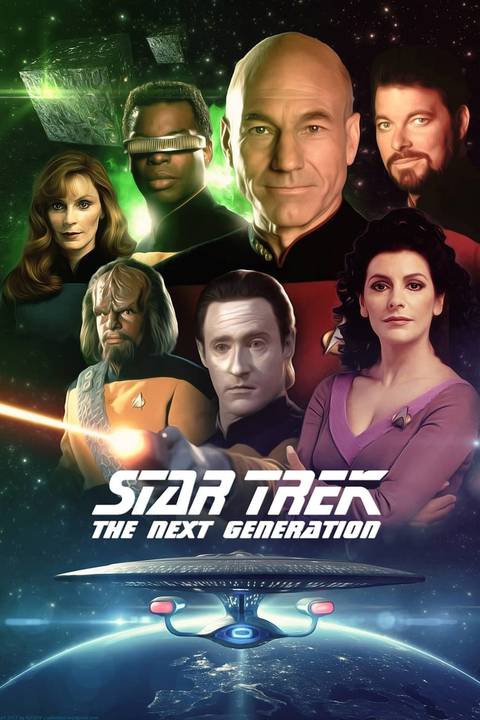
- Release Date
-
1987 – 1994-00-00
- Network
-
Syndication
- Showrunner
-
Gene Roddenberry
- Directors
-
Cliff Bole, Les Landau, Winrich Kolbe, Rob Bowman, Robert Scheerer, Jonathan Frakes, Robert Wiemer, Gabrielle Beaumont, Alexander Singer, David Carson, Paul Lynch, Corey Allen, Patrick Stewart, Chip Chalmers, Joseph L. Scanlan, James L. Conway, Robert Lederman, Tom Benko, Timothy Bond, Robert Legato, Adam Nimoy, Robert Becker, David Livingston, LeVar Burton
- Writers
-
René Echevarria, Maurice Hurley, Richard Manning, Melinda M. Snodgrass, Tracy Tormé, Hannah Louise Shearer, Stuart Charno, Ira Steven Behr, Sara B. Cooper, Peter Allan Fields, Herbert Wright, Frank Abatemarco, Burton Armus, Hilary Bader, Morgan Gendel, David Kemper, Michael I. Wagner, Philip LaZebnik, Robert McCullough, Susan Sackett, Nick Sagan, Fred Bronson, Robert Hewitt Wolfe, Sam Rolfe
Here you can find the original article; the photos and images used in our article also come from this source. We are not their authors; they have been used solely for informational purposes with proper attribution to their original source.[/nospin]<!– PLAN:
INTENT: informational
ENTITIES_PRIMARY: Ronald D. Moore,, “Yesterday’s Enterprise”, David Carson
ENTITIES_RELATED: Michael Piller,, Paramount+,
PHRASES_CORE: writing process,, fan-favorite stories,<strong Star Trek
ASPECTS:
– writing process: collaborative effort,challenges faced
– legacy: pivotal episode,timeless storytelling
SECTION_MAP:
– Key Insights: writing process,fans' opinions,pivotal moments
– Watch Ronald D. Moore on The 7th Rule below:: insights from interviews
– Legacy of Yesterday's Enterprise:: impact on TNG
PAA_QUERIES: What is "Yesterday's Enterprise"? Who directed "Yesterday's Enterprise"? What makes "Yesterday's Enterprise" special? How did Ronald D. Moore feel about writing it? What impact did it have on Star Trek?
FIRST200_MUST_INCLUDE: writing process,"Yesterday's Enterprise", Ronald D. Moore,TNG
PREDICTIVE_PAIRS:
– writing process ↔ challenges faced
– legacy ↔ timeless storytelling
RICH_FORMATS: list
ENTITIES_CANONICAL: Ronald D. Moore → Ronald D. Moore,