Key Takeaways
- Recent adaptations like The Super Mario Bros. Movie have revitalized the genre.
- The movie Borderlands faced significant financial and critical challenges upon release.
- Despite its failures, Borderlands has gained popularity on streaming platforms.
- Director Eli Roth encountered production issues leading to extensive reshoots.
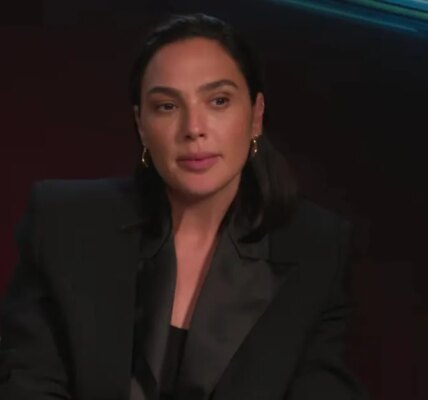
While video game adaptations have mostly turned their reputation around after a disastrous few decades, one recent movie set them back significantly with its poor critical and commercial reception. In recent times, films such as The Super Mario Bros. Movie, A Minecraft Movie, and shows such as The Last of Us have achieved major success, pushing video game adaptations into a new era. For most of the 2000s and 2010s, video game movies were either critically reviled or commercially unsuccessful. Studios invested heavily in projects such as Warcraft and Assassin's Creed, but weren’t able to turn them into long-running franchises. A movie released theatrically in 2024 was received just as poorly as the earlier titles, not only failing to launch a franchise, but also emerging as a historic flop.
The movie in question recently saw a resurgence on streaming, perhaps attracting curious audiences wondering just how bad it could be. The film featured a stacked cast that included proven box-office draws such as Jack Black and Kevin Hart, alongside one of the most admired actors of her generation, Cate Blanchett. It was directed by Eli Roth, who broke out as a horror filmmaker before diversifying into children’s movies and action thrillers. Roth’s video game adaptation ran into production troubles and was overhauled in post-production by the studio. Tim Miller was hired to conduct reshoots, while the original writer, Craig Mazin, preferred taking his name off the project entirely. Mazin won accolades for his work on HBO’s The Last of Us.
Which Sci-Fi World Would You Survive?
The Matrix · Mad Max · Blade Runner · Dune · Star Wars
Five universes. Five completely different ways the future went wrong — or sideways, or up in flames. Only one of them is the world your instincts were built for. Eight questions will figure out which dystopia, galaxy, or desert wasteland you’d actually make it out of alive.
The Matrix
Mad Max
Blade Runner
Dune
Star Wars
01
You sense something is deeply wrong with the world around you. What do you do?
The first instinct is often the truest one.
02
In a world of scarcity, what resource do you guard most fiercely?
What we protect reveals what we believe survival actually requires.
03
What kind of threat keeps you up at night?
Fear is useful data — if you’re honest about what you’re actually afraid of.
04
How do you deal with authority you don’t trust?
Every dystopia has a power structure. Your approach to it determines everything.
05
Which environment could you actually endure long-term?
Survival isn’t just tactical — it’s physical, psychological, and very much about where you are.
06
Who do you want in your corner when things fall apart?
The company you keep is the clearest signal of who you actually are.
<label c_option_btn_cg_opt_b for=q_q6b"B ONE OR TWO PEOPLE I’D TRUST WITH MY LIFE. ANY MORE THAN THAT AND SOMEONE TALKS.
<label c_option_btn_cg_opt_c for=q_q6c"C NOBODY IDEALLY. ALLIANCES ARE LIABILITIES. I WORK ALONE UNLESS I HAVE NO CHOICE.
<label c_option_btn_cg_opt_d for=q_q6d"D A COMMUNITY BOUND BY SHARED HARDSHIP AND MUTUAL SURVIVAL — PEOPLE WHO NEED EACH OTHER TO LAST.
<label c_option_btn_cg_opt_e for=q_q6e"E A RAGTAG TEAM WITH WILDLY DIFFERENT SKILLS AND TOTAL COMMITMENT WHEN IT COUNTS.
07
Where do you draw the line — if you draw one at all?
Every survivor eventually faces a moment that tests what they’re actually made of.
<label option_btn_cg_opt_a for=q_q7a"A
I WON’T HARM THE INNOCENT — EVEN THE ONES WHO’D REPORT ME WITHOUT HESITATION.
<label option_btn_cg_opt_b for=q_q7b"B
I DO WHAT I HAVE TO PROTECT THE PEOPLE I’VE CHOSEN.
EVERYTHING ELSE IS NEGOTIABLE.
<label option_btn_cg_opt_c for=q_q7c"C
THE LINE SHIFTS DEPENDING ON WHO’S ASKING AND WHAT’S AT STAKE.
<label option_btn_cg_opt_d for=q_q7d"D
I DRAW A LONG TERM LINE— NOTHING THAT COMPROMISES MY PEOPLE’S FUTURE EVEN IF IT’D HELP NOW.
<label option_btn_cg_opt_e for=q_q7e"E
SOME LINES ONCE CROSSED CAN’T BE UNCROSSED.
I KNOW WHICH ONES THEY ARE.
08
What would actually make survival worth it?
Staying alive is one thing.
Having a reason to is another.
<label option_btn_a_for=q8a"A
WAKING OTHERS UP—DISMANTLING THE ILLUSION SO NO ONE ELSE HAS TO LIVE INSIDE IT.
<option_btn_b_for=q8b"B
FINDING SOMEWHERE—OR SOMEONE—WORTH PROTECTING.
A REASON TO KEEP MOVING.
<option_btn_c_for=q8c"C
ANSWERS.
UNDERSTANDING WHAT I AM,
WHAT ANY OF THIS MEANS,
BEFORE TIME RUNS OUT.
<option_btn_d_for=q8d"D
LEGACY—SHAPING THE FUTURE IN A WAY THAT OUTLASTS ME BY GENERATIONS.
<option_btn_e_for=q8e"E
FREEDOM—FOR MYSELF,
FOR OTHERS,
FOR EVERY WORLD STILL LIVING UNDER SOMEONE ELSE’S BOOT.
You’d Survive In…
Your answers point to the world your instincts were built for.
This is the universe your temperament,
your survival instincts,
and your particular brand of stubbornness were made for.
The Resistance,
Zion
You took the red pill a long time ago—
probably before anyone offered it to you.
You’re a systems thinker who can’t help but notice the seams in things.
- You’re drawn to understanding how the system works before figuring out how to break it.
- You’d find the Resistance,
or it would find you—
your instinct for spotting constructed realities is the machines’ worst nightmare. - You function best when you have access to information and the freedom to act on it.
- The Matrix built an airtight prison.
You’d be the one probing the walls for the door.
The WastelandMad Max
The wasteland doesn’t reward the clever or the well-connected—
it rewards those who are hard to kill and harder to break.
That’s you.- You don’t need comfort,
community,
or a cause larger than the next horizon. - You need a vehicle,
a clear threat,
and enough fuel to outrun it—
and you’re good at all three. - You are unsentimental enough to survive that world,
and decent enough—
just barely—
to be something more than another raider. - In the wasteland,
that distinction is everything.
Los Angeles,
2049Blade Runner
You’d survive here because you know how to exist in moral grey areas without losing yourself completely.- You read people accurately,
keep your circle small,
and ask the questions others prefer not to answer. - In a city where humanity is a legal designation rather than a feeling,
you hold onto something that keeps you functional. - You’re not a hero.
But you’re not lost either.
ArrakisDune
Arrakis is the most hostile environment in the known universe—
and you are precisely the kind of person it rewards.- Patience,
discipline,
and political awareness are your core strengths—
and on Arrakis,
they’re survival tools. - You understand that the long game matters more than any single victory.
- Others come to Dune and are consumed by it.
You’d learn its logic and earn its respect. - In time,
you wouldn’t just survive Arrakis—
you’d begin to reshape it.
A Galaxy Far,
Far AwayStar Wars
The galaxy far,
far away is vast,
loud,
and in a constant state of violent political upheaval—
and you wouldn’t have it any other way.- You find meaning in being part of something larger than yourself—
a cause,
a crew,
a rebellion. - You’d gravitate toward the Rebellion,
or the fringes,
or whatever pocket of the galaxy still believes the Empire’s grip can be broken. - You fight—not because you have to,
but because standing aside isn’t something you’re capable of.
[nospin]Here you can find the original article; the photos and images used in our article also come from this source. We are not their authors; they have been used solely for informational purposes with proper attribution to their original source.[/nospin]

- You find meaning in being part of something larger than yourself—
- Patience,
- You read people accurately,
- You don’t need comfort,