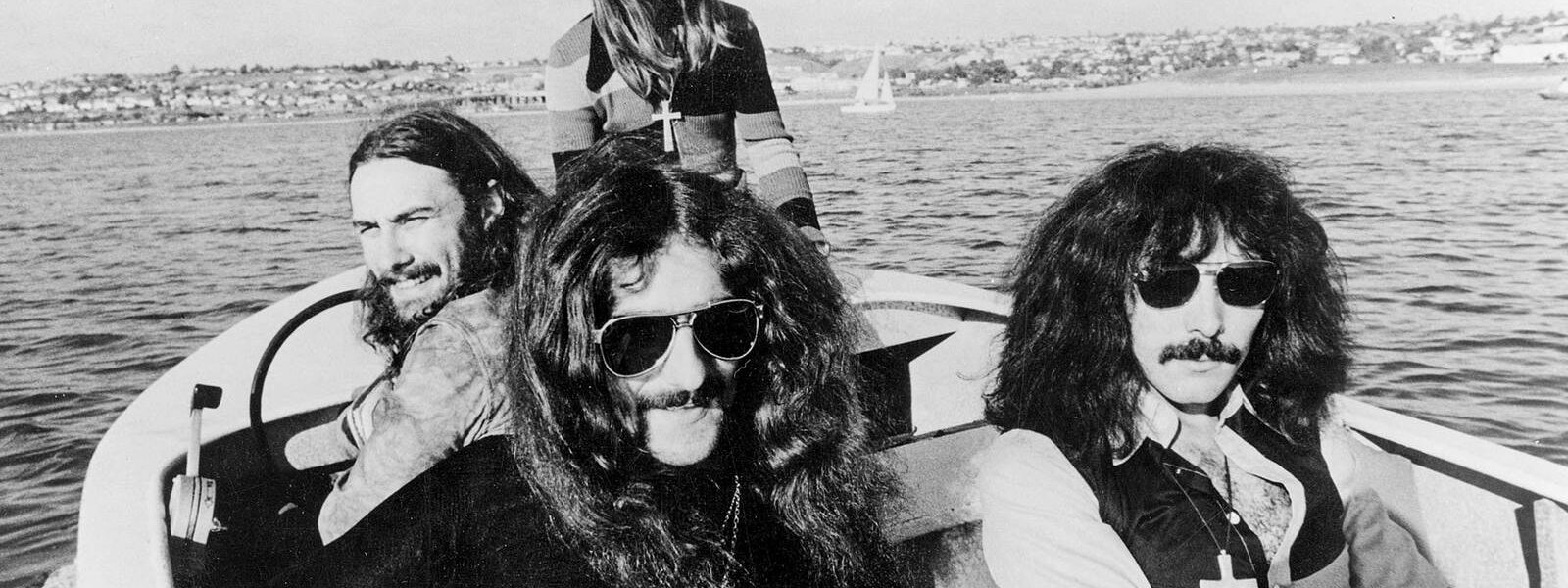
Black Sabbath were the godfathers of metal. While they’re often remembered for their dark, heavy sound, what frequently gets ignored on these early Sabbath records is the sharpness of their lyrics, mostly penned by bassist Geezer Butler. While Sabbath’s vocalist, Ozzy Osbourne, would become well known beyond the rock world, and Sabbath would transcend to legendary status, just like many young bands, Sabbath came into music mad at the world and ready to show it.
“War Pigs” is the Perfect Primer for Black Sabbath’s Politics
Fans don’t have to look far to find political lyrics in Black Sabbath, as one of the band’s biggest hits, “War Pigs/Luke’s Wall,” gives a pretty good sample of how Black Sabbath generally handles politics. The first half of the first verse of the song lays out the machinations behind war, drawing an illusion to witches, sorcerers, and generally supernatural evil. It then moves on to describe the grizzly impacts of war. These two ideas get put together in verse two, as the lyrics showcase that the politicians and the upper class start wars, but rely on the poor to actually fight them. This song, however, does end on a note of “justice” as the “war pigs” are left in the arms of Satan following judgment day, as they finally have to repay the carnage and suffering they’ve caused with their own.
The themes of “War Pigs” will be echoed throughout Black Sabbath’s first eight albums, after which Osbourne is replaced by Ronnie James Dio, who brings a more fantastical element to Sabbath’s lyrics on Heaven and Hell and Mob Rules. On Sabbath’s first album, Black Sabbath, we can see Butler’s political lyrics in their infancy on the track “Wicked World.” Just like “War Pigs,” “Wicked World” makes references to war and class struggle. Unlike “War Pigs,” though, it focuses more on the latter than the former. The song points out the hypocrisy of sending people to the moon and financing wars while people at home are starving and dying.
The band’s next record, Paranoid, of course, opens with “War Pigs,” but the political lyrics don’t stop there. “Electric Funeral” and “Hand of Doom” are both comments on issues Black Sabbath has not addressed up to this point. “Electric Funeral” is about nuclear annihilation and the horror it could inflict on the world. “Hand of Doom” talks about drug addiction, which in this case, stems from watching the horrors of war. While both of these are filtered through the familiar war lens, these two songs show a meaningful expansion of Butler’s lyrics.
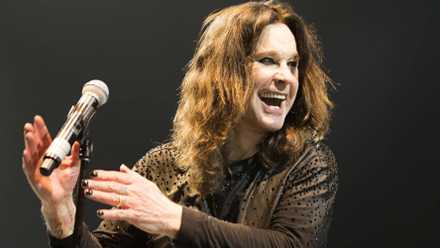
Every Black Sabbath Album With Ozzy Osbourne, Ranked
Back in Black.
The Continued Expansion of Black Sabbath’s Political Lens
This continues onto Master of Reality, where Black Sabbath addresses the consequences and reactions to the world in which they exist. In “Children of the Grave,” the band discusses how the ongoing evils of society will traumatize and radicalize its children to strive for better. On “Into the Void,” Black Sabbath talks about leaving the world behind as it rots in favor of trying to find a habitable planet in space. Black Sabbath Vol. 4 also continues to expand with “Under the Sun/ Everything Comes and Goes” as Sabbath reflects on how in a world where religion and politics try to influence people on what to do, the only way to survive is sticking to your own morals.
Throughout the next three records, Sabbath’s political content takes up a smaller ratio of songs on each record, even though there are some clear standouts. Technical Ecstasy features the track “Rock and Roll Doctor,” which is like “Hand of Doom” but much more positive, as the subject is choosing to cope with societal evils via rock music, rather than hard drugs. The band’s final album with Osbourne, Never Say Die!, re-emphasizes the band’s political leanings. On the title track, the band is trying to rally behind hope in the face of the problems they’ve been singing about for over half a decade now, and “Over to You” is another condemnation of the government’s ungratefulness to the working class. The biggest curveball of the album is “Shock Wave,” which is about rich people attempting to cheat death by freezing their bodies in stasis, which, in this case, goes horribly wrong.

Image via Lionel Hahn/Abacausa/startraksphoto.com
As can be seen by the slew of political Black Sabbath songs, world issues were on the mind while creating these classic albums. What’s also remarkable about Sabbath is how consistent their angle on politics is, almost exclusively focusing on class divide and war. While they’ve touched on other topics, most often that is the lens through which it is filtered. The working-class angle of Black Sabbath was informed by their upbringing in the very industrial city of Birmingham, England. Members of the band, like Tony Iommi, even began their careers while working at a metal factory, which is where Iommi had the accident that led him to his iconic prosthetic fingertips. In terms of the war angle, this was a symptom of the Cold War/Vietnam War era that Black Sabbath came of age in.
These tracks fit in nicely with other politically conscious rock at the time, with bands like Creedence Clearwater Revival and Crosby, Stills, Nash & Young, who were advocating against violence in the midst of the Vietnam War. Sabbath’s discussion of class is not incredibly original, per se, as the struggles of the working class have deep roots in blues and country even before the proper formation of rock. However, Sabbath, taking from their sonically lighter contemporaries set the stage for what heavy music could talk about.
Anti-war themes would continue to be a major sentiment with bands like Metallica, Megadeth, and Sodom. The themes of “Under the Sun/ Everything Comes and Goes” would expand to be a criticism of religion in particular, with bands like Slayer and Venom, who’d inspire almost all extreme metal to adopt blasphemy as part of their style. Class issues can be seen tackled in Judas Priest’s biggest hit, “Breaking the Law,” and extremely politically conscious “Killing in the Name” by Rage Against the Machine.
While popular modern metal even from some classic bands tends to avoid talking about politics for most part it’s undeniable that metal’s origins are steeped in it. Plenty of bands are carrying forward what was started by Sabbath not only musically but lyrically. While punk rock is often seen as politically centered genre efforts by Sabbath showcase how anger at society can be conveyed through some of heaviest riffs known.
Black Sabbath – The End – Live In Birmingham
- Release Date
-
November 17, 2017
- Runtime
-
108 minutes
Cast
-

Ozzy Osbourne
Himself – Vocals
-
Tony Iommi
Himself – Guitars
-
Geezer Butler
Himself – Bass
-
div.w-cast-info.flex
p.Adam Wakeman
p.Himself – Keyboards / Guitar
/div
/li
/ul
/div>
input type checkbox id extra-content-40d7-4a79-a36988070b5c name extra-content-40d7-4a79-a36988070b5c class css-menu-checkbox />