


Top 5 Bruce Lee movies
What should you know about Bruce Lee’s five best-known martial arts films?
This ranking compares Bruce Lee’s five major martial arts films, from the unfinished Game of Death to the emotionally forceful Fist of Fury, so readers can explore the titles and the reasons each stands out.
Bruce Lee’s five major martial arts films offer distinct blends of action, drama, humor, and international influence.
- Top-ranked film: Fist of Fury (1972) leads this list for its emotional intensity and iconic fights.
- Global breakthrough: Enter the Dragon (1973) introduced Bruce Lee to worldwide audiences.
- Creator-led action: The Way of the Dragon (1972) pairs Bruce Lee’s direction with the famous Colosseum fight against Chuck Norris.
- Unfinished production: Game of Death (1978) was released after Lee’s death using footage from his incomplete project.
Following the death of martial arts legend Chuck Norris, we have recommended and ranked films from his career that deserve recognition. Norris was a friend of Bruce Lee, the martial arts icon; the two trained together and shared techniques before Lee began his action-film career. When Lee directed his own project, he cast Norris in one of the genre’s most celebrated final fight scenes.
This ranking focuses on Bruce Lee’s international-stardom years and his five major martial arts films. Lee had additional screen credits as a child actor, but this list is limited to his adult martial arts movie career. The order reflects one perspective, counting down from fifth place to the top pick.
- 5. Game of Death (1978)
- 4. The Big Boss (1971)
- 3. The Way of the Dragon (1972)
- 2. Enter the Dragon (1973)
- 1. Fist of Fury (1972)
Fist of Fury ranks first here for its emotional intensity, memorable fight scenes, and powerful showcase of Bruce Lee’s screen presence.
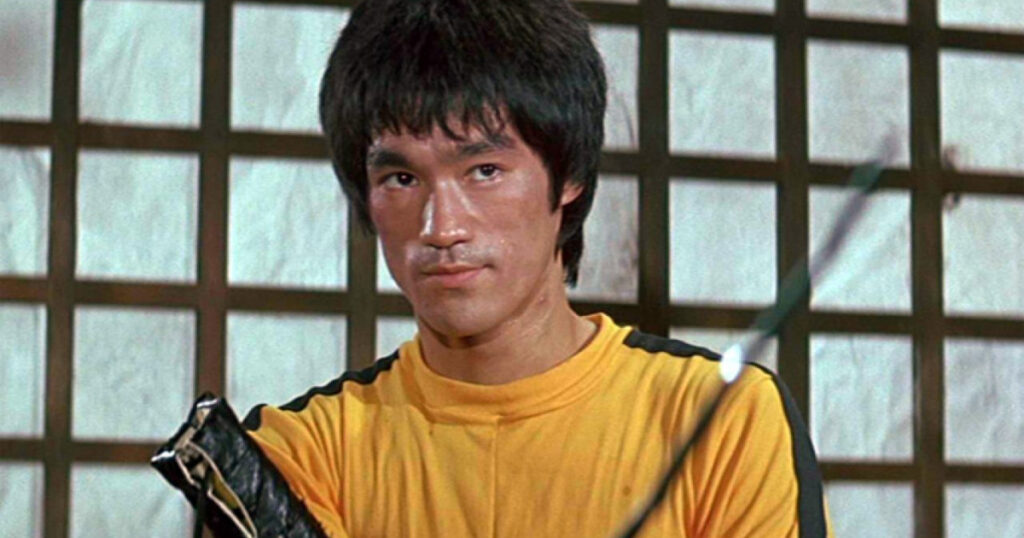
5. Game of Death (1978)
Game of Death ranks fifth because the 1978 release is an incomplete film assembled after Bruce Lee’s death. Its main point of interest is the pagoda fight concept and the surviving footage from Lee’s unfinished project.
Game of Death is a posthumously released film directed by Robert Clouse and co-starring Kareem Abdul-Jabbar.
- Posthumous release / incomplete cult curiosity
- Director: Robert Clouse
- Release year: 1978
- Co-starring: Kareem Abdul-Jabbar
- Tone: Martial arts exploitation
- Why it ranks here: The film was assembled after Bruce Lee’s death and does not represent a completed project.
- Notable element: The iconic pagoda fight concept
The 1978 Robert Clouse version followed the success of Enter the Dragon by five years. It uses footage from Lee’s unfinished film, which was also intended to be called Game of Death, and ranks last because the released version is an incomplete construction rather than the film Lee was making.
The sections featuring Bruce Lee’s original footage offer a glimpse of the project he intended to shoot. Later attempts have re-edited that footage to move closer to Lee’s vision; The Final Game of Death is one such reconstruction.
The production also used footage from Lee’s funeral, including an image of his body. In the reviewer’s view, the film remains a nostalgic guilty pleasure despite the way it was completed: the opening credits feature a John Barry score, Sammo Hung choreographed several fights, and the attempts to incorporate Lee into the rest of the film can play as unintended comedy.
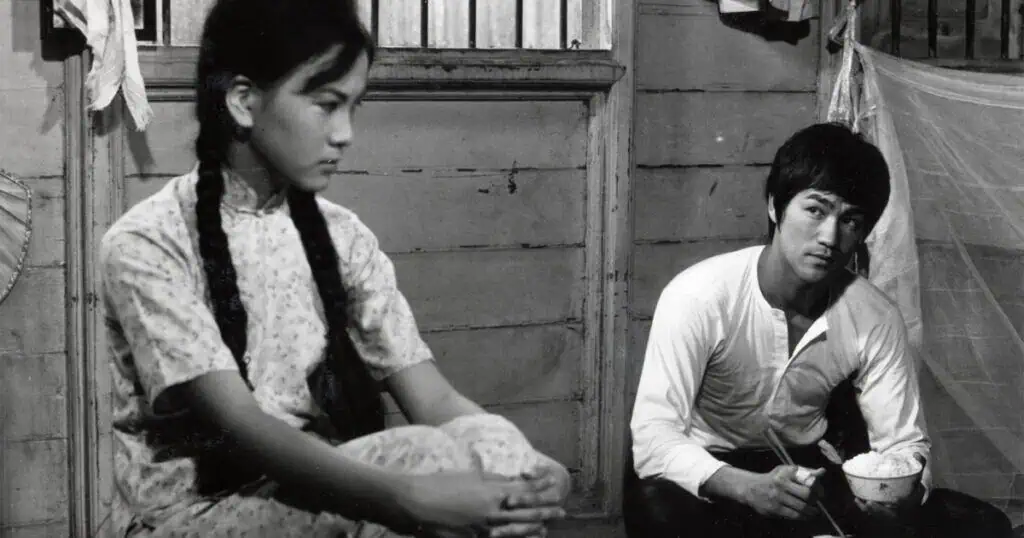
4. The Big Boss (1971)
The Big Boss is a star-making martial arts drama that places Bruce Lee’s character in a new environment and reveals a sinister conflict. Its relatively simple story and rough-edged direction are offset by Lee’s breakout leading performance.
The Big Boss is a 1971 film directed by Lo Wei and co-starring Maria Yi.
- Breakout hit / star-making role
- Director: Lo Wei
- Release year: 1971
- Co-starring: Maria Yi
- Tone: Gritty martial arts drama
- Why it ranks here: A straightforward story with major historical importance to Lee’s career
- Notable element: Bruce Lee’s breakout leading role
The Big Boss is a simple but effective story about a character trying to fit into unfamiliar surroundings before uncovering corruption. The modest budget and unpolished direction distinguish it from Lee’s later work, while the film already shows how his screen presence could captivate audiences.
The film’s conflict between Lee’s character, his cousins, and corrupt bosses gives the story an emotional dimension. The reviewer recalls seeing it at a young age and being drawn into that conflict, even though the filmmaking is less polished than in some of Lee’s other films.
The Big Boss also features unusually raw violence for Lee’s filmography, including knives, dismemberment, and bodies encased in ice. Its graphic imagery gives the film an exploitation-film edge, and it nearly received an X rating on its American release.
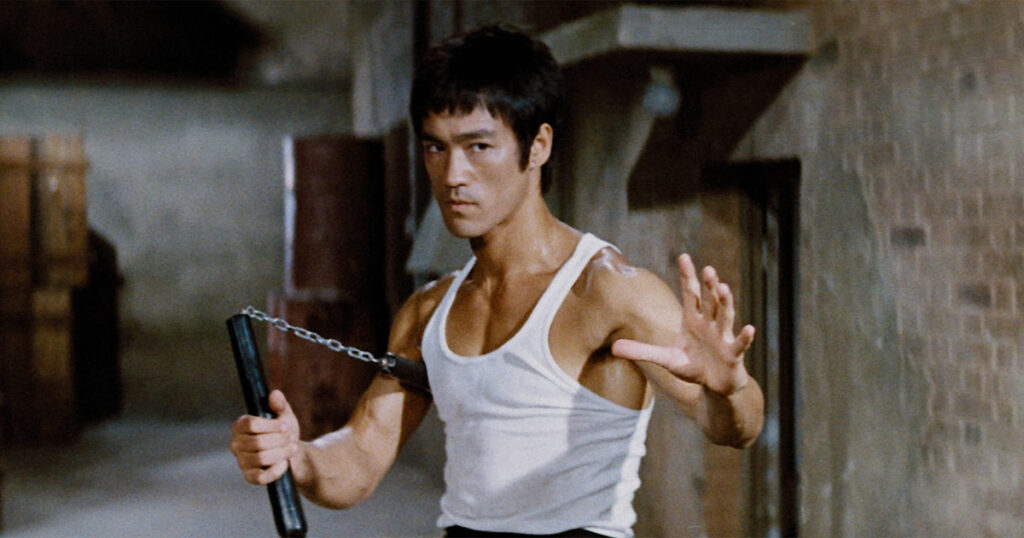
3. The Way of the Dragon (1972)
The Way of the Dragon combines martial arts action with humor and gives Bruce Lee creative control as writer and director. Its best-known sequence is the final fight between Lee and Chuck Norris in the Roman Colosseum.
The Way of the Dragon is a 1972 martial arts film directed by Bruce Lee and co-starring Chuck Norris.
- Cult favorite / creator-driven project
- Director: Bruce Lee
- Release year: 1972
- Co-starring: Chuck Norris
- Tone: Martial arts action with comedic elements
- Why it ranks here: A distinctive blend of humor and action
- Notable element: The legendary Colosseum fight scene
In The Way of the Dragon, Lee’s character travels to Rome to help protect his uncle’s restaurant from a mob. The plot is straightforward, and its main function is to connect the action sequences.
Lee emphasized visual action over dialogue, and the film reflects that approach through its clearly staged fights. The supporting characters bring humor and personality, while the action showcases Lee’s fighting style and physical performance.
The Way of the Dragon also gives Lee room for situational comedy that is less prominent in his other films. The final Colosseum duel with Chuck Norris is the film’s standout fight and the reviewer’s favorite fight scene in Lee’s career.
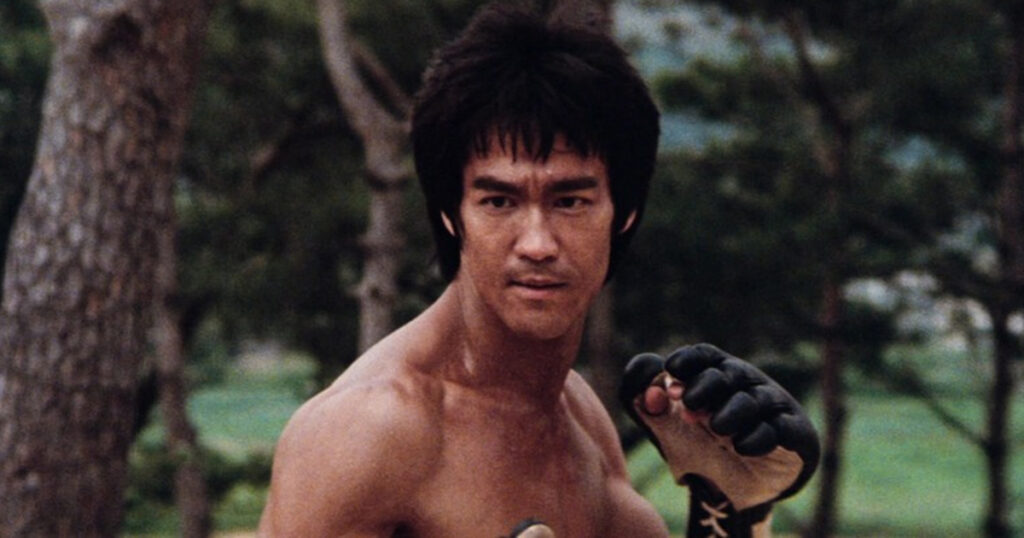
2. Enter the Dragon (1973)
Enter the Dragon ranks second, despite being Bruce Lee’s most internationally famous film and a defining martial arts classic. Its polished production, spy-thriller setup, and tournament story helped introduce Lee to audiences around the world.
Enter the Dragon is a 1973 martial arts and spy thriller directed by Robert Clouse and co-starring John Saxon.
- Global breakthrough / genre-defining classic
- Director: Robert Clouse
- Release year: 1973
- Co-starring: John Saxon
- Tone: Martial arts / spy thriller
- Why it ranks here: A polished film with global influence
- Notable element: Introduced Bruce Lee to worldwide audiences
Enter the Dragon combines a spy story with a martial arts tournament on a fortress island. Its ensemble includes Bruce Lee, John Saxon, and Jim Kelly, whose performances help give the film a broader cast of characters than Lee’s usual everyman roles.
The film’s tournament-on-an-island premise later inspired Mortal Kombat. The ensemble and accessible action help explain its appeal beyond martial arts movie fans, while Lee remains the central attraction.
Lee plays an undercover agent, a role that highlights his physical abilities as well as his acting range. His spy sequences and the film’s action are central to its enduring reputation.
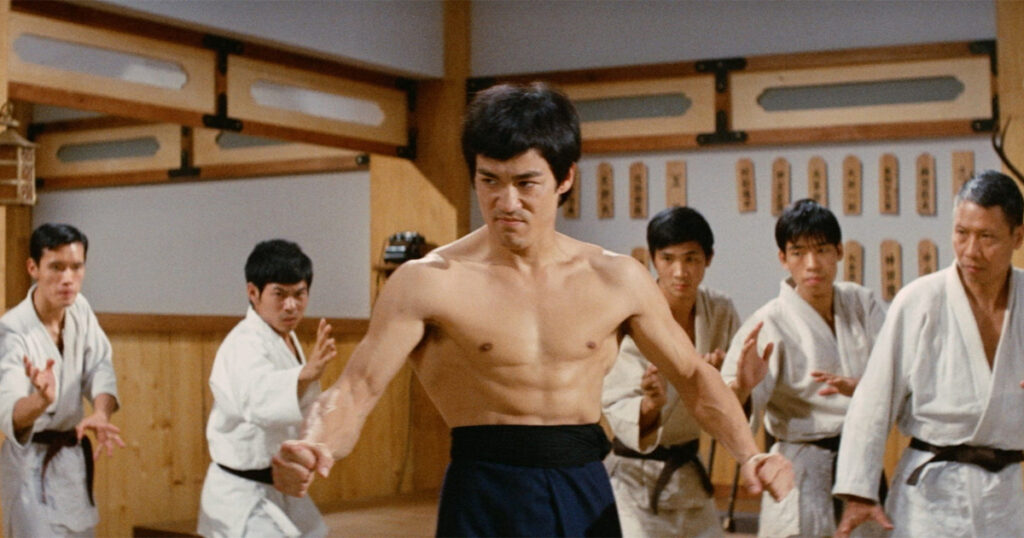
1. Fist of Fury (1972)
Fist of Fury takes the top spot for its emotional force, political themes, and iconic martial arts fights. The film expands on the success of The Big Boss with a more ambitious story centered on injustice and revenge.
Fist of Fury is a 1972 martial arts revenge drama directed by Lo Wei and co-starring Nora Miao.
- Definitive performance / cultural landmark
- Director: Lo Wei
- Release year: 1972
- Co-starring: Nora Miao
- Tone: Martial arts revenge drama
- Why it ranks here: An emotionally powerful performance
- Notable element: The iconic dojo fight and anti-colonial themes
Fist of Fury follows the success of The Big Boss with a larger-scale production and a more ambitious historical drama. The story’s political context and the injustices faced by Lee’s character give his anger a clear dramatic purpose.
The story of Chen Zhen has also been adapted in films starring Jet Li and Donnie Yen. This version made the revenge narrative widely recognizable, and its period setting distinguishes its martial arts action from the weapons-heavy violence of The Big Boss.
Fist of Fury also introduces performers who would appear in Lee’s later films, including Tony Liu. Jackie Chan worked with Lee as a stunt performer on this film, one of two such collaborations. The undercover plot, traps, and dojo fight contribute to the film’s reputation as one of Lee’s most mature works.
| Rank | Movie | Year | Director | Genre / Tone | Key Strength | Notable Element |
|---|---|---|---|---|---|---|
| 1 | Fist of Fury | 1972 | Lo Wei | Martial arts revenge drama | Emotional intensity + iconic fights | Dojo fight sequence |
| 2 | Enter the Dragon | 1973 | Robert Clouse | Martial arts / spy thriller | Global appeal + polished production | Bruce Lee’s international breakout |
| 3 | The Way of the Dragon | 1972 | Bruce Lee | Martial arts with humor | Unique tone + creative control | Coliseum fight vs Chuck Norris |
| 4 | The Big Boss | 1971 | Lo Wei | Gritty martial arts drama | Breakout role | Established Lee as a star in Hong Kong |
| 5 | Game of Death | 1978 | Robert Clouse | Martial arts exploitation | Famous unfinished footage | Pagoda fight concept |
The ranking prioritizes Fist of Fury for emotional impact, while Enter the Dragon stands out for worldwide reach and The Way of the Dragon for its creator-led action. Share your own ranking below.
Frequently asked questions
How many major martial arts films did Bruce Lee star in?
Bruce Lee starred in five major martial arts films between 1971 and 1978.
Bruce Lee’s major martial arts film career includes five films released between 1971 and 1978.
What is Bruce Lee’s best movie?
In this ranking, Fist of Fury (1972) is Bruce Lee’s best movie because of its emotional intensity and iconic fight scenes.
Fist of Fury is the top-ranked film in this article.
What is Bruce Lee’s most famous movie?
Enter the Dragon (1973) is Bruce Lee’s most internationally famous film and helped introduce martial arts cinema to global audiences.
Enter the Dragon is Bruce Lee’s most internationally famous movie.
What was Bruce Lee’s last movie?
Game of Death (1978) was released after Bruce Lee’s death and assembled using footage from his incomplete project.
Game of Death was a posthumous release built around footage from an unfinished film.
Why is Bruce Lee important to cinema?
Bruce Lee helped bring Hong Kong martial arts cinema to global audiences and became one of the most influential action stars in film history.
Bruce Lee’s films expanded the international visibility of martial arts cinema.
Is The Way of the Dragon the movie with Chuck Norris?
Yes, The Way of the Dragon (1972) features Bruce Lee’s famous fight with Chuck Norris in the Roman Colosseum.
The Way of the Dragon features the Colosseum fight between Bruce Lee and Chuck Norris.
The article Bruce Lee Movies Ranked: From The Big Boss to Game of Death first appeared on JoBlo.